Buying Guides & Pricing
Buy Shipping Container at Auction vs Dealer: Set Your Maximum Bid
A low bid is not a low delivered cost. Use a maximum-bid worksheet to compare auction responsibilities with a comparable direct purchase before you commit.
9 min readBy the Lease Lane Containers team
Buy Shipping Container at Auction vs Dealer: When Does Bidding Win?
If you are comparing buy shipping container at auction vs dealer options, an auction wins only when the total cost of getting a suitable unit into service stays below a comparable direct-purchase quote. Subtract fees, applicable taxes, collection, transport, placement and a repair allowance before setting your maximum bid. Leave additional savings to compensate for responsibilities you take on.
That is a stricter test than finding a low opening bid. GSA’s guidance for surplus-property buyers explicitly warns that surplus sales offer neither guaranteed bargains nor guaranteed condition.
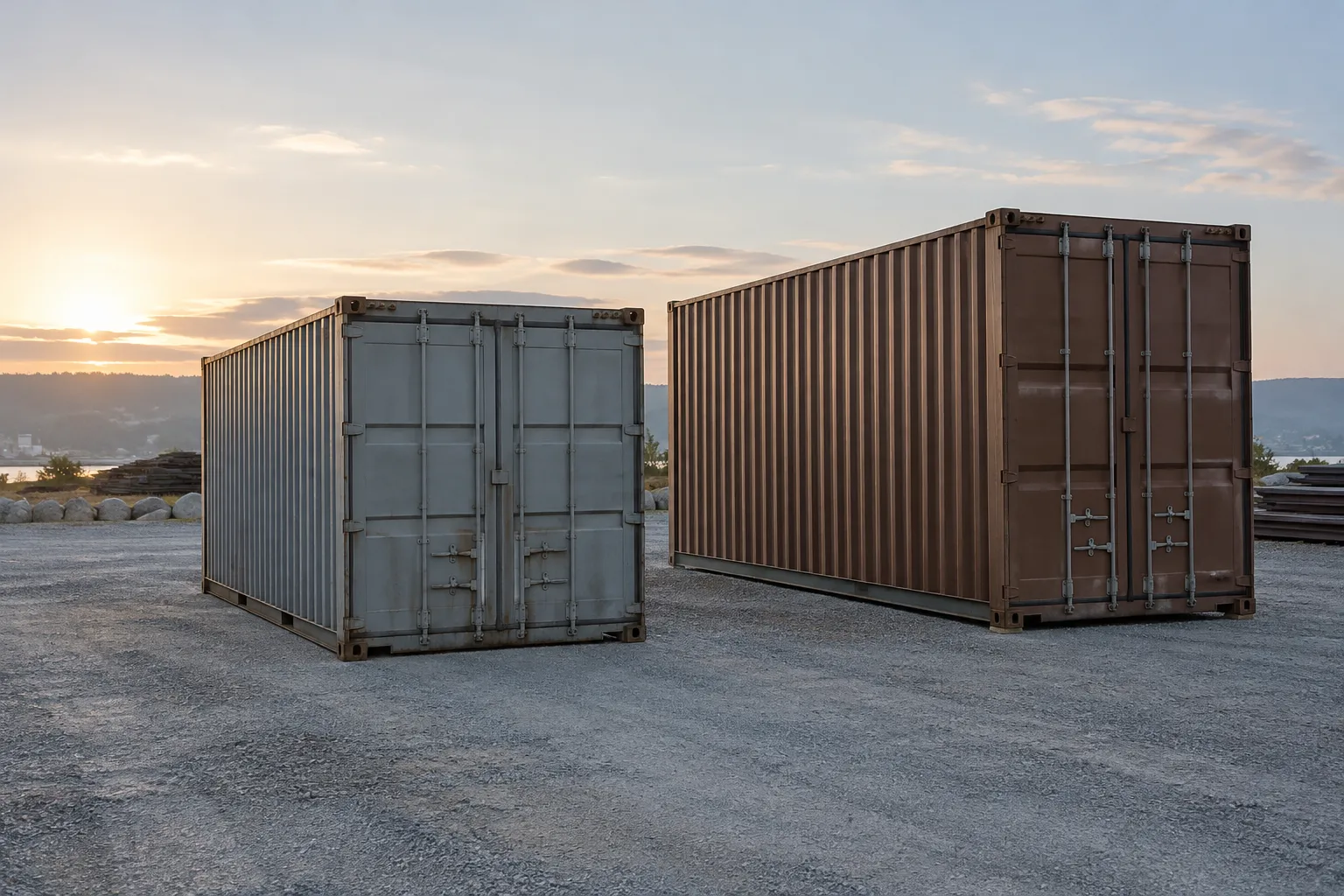
The November 4, 2026 government-surplus auction listings provide a dated example of shipping and storage containers offered across multiple states. Displayed bids are bids, not completed-sale prices or delivered-cost benchmarks. Check the current lot status and terms rather than treating a dated listing as ongoing availability.
An auction is most competitive when you can price collection reliably, accept the stated condition and stop bidding at your calculated ceiling. A direct purchase becomes more attractive when loading, remedies or repair costs remain unresolved.
Is the Lot an ISO Shipping Container or a Different Storage Module?
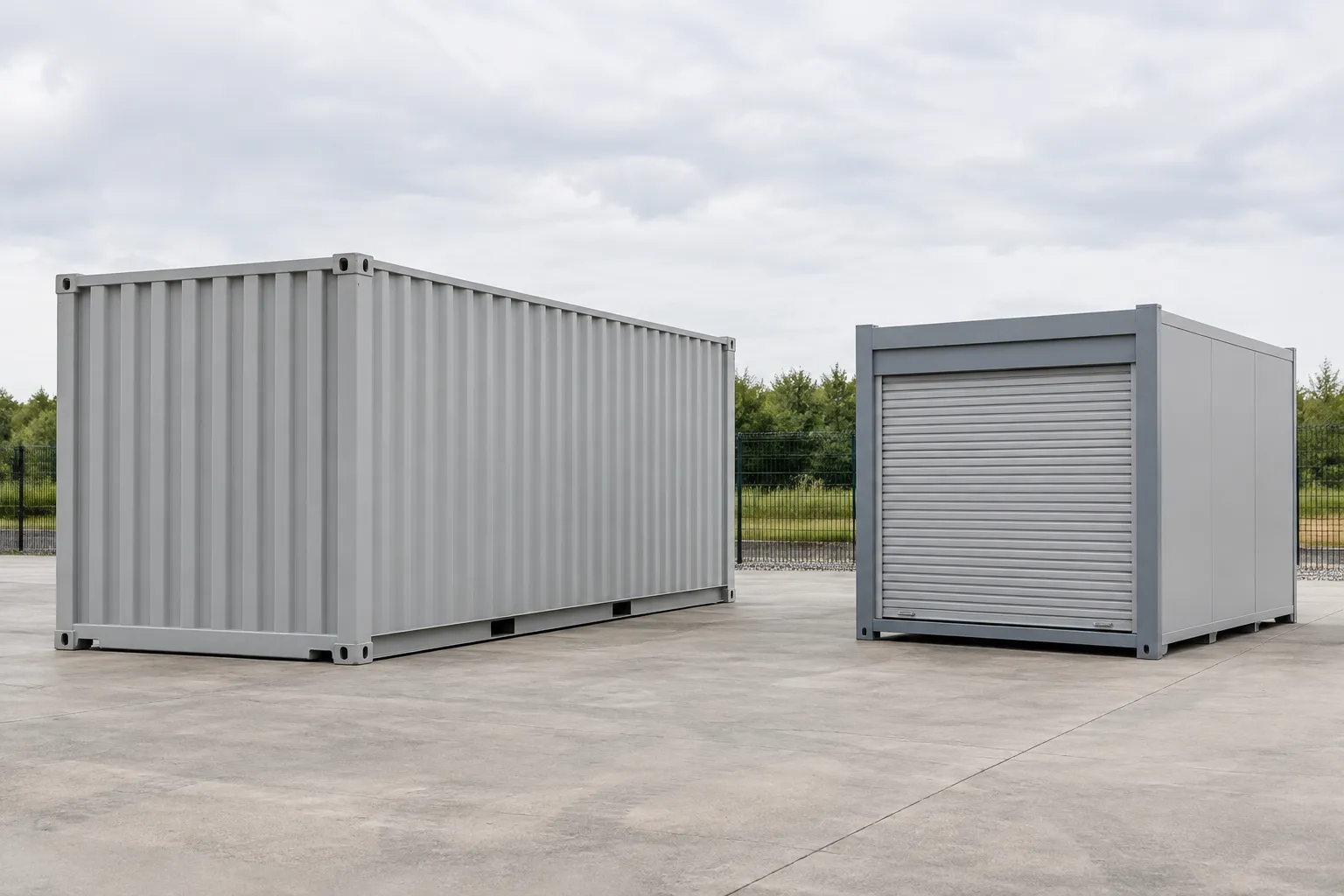
Before comparing money, compare the asset. “Storage container” can describe an intermodal freight container, a fabricated steel store, a flat-pack module or a detached refrigerated body. Similar floor area does not make these interchangeable.
Record the lot’s dimensions, height, door arrangement, construction, lifting provisions and included equipment. Confirm whether the sale covers one unit or several, and whether the bid applies per unit or to the whole lot. Do not assume nearby items shown in photographs are included.
Choose a direct-purchase benchmark that matches your intended use:
- For basic ground-level storage, compare a 20ft storage-class used container, currently $2,295.
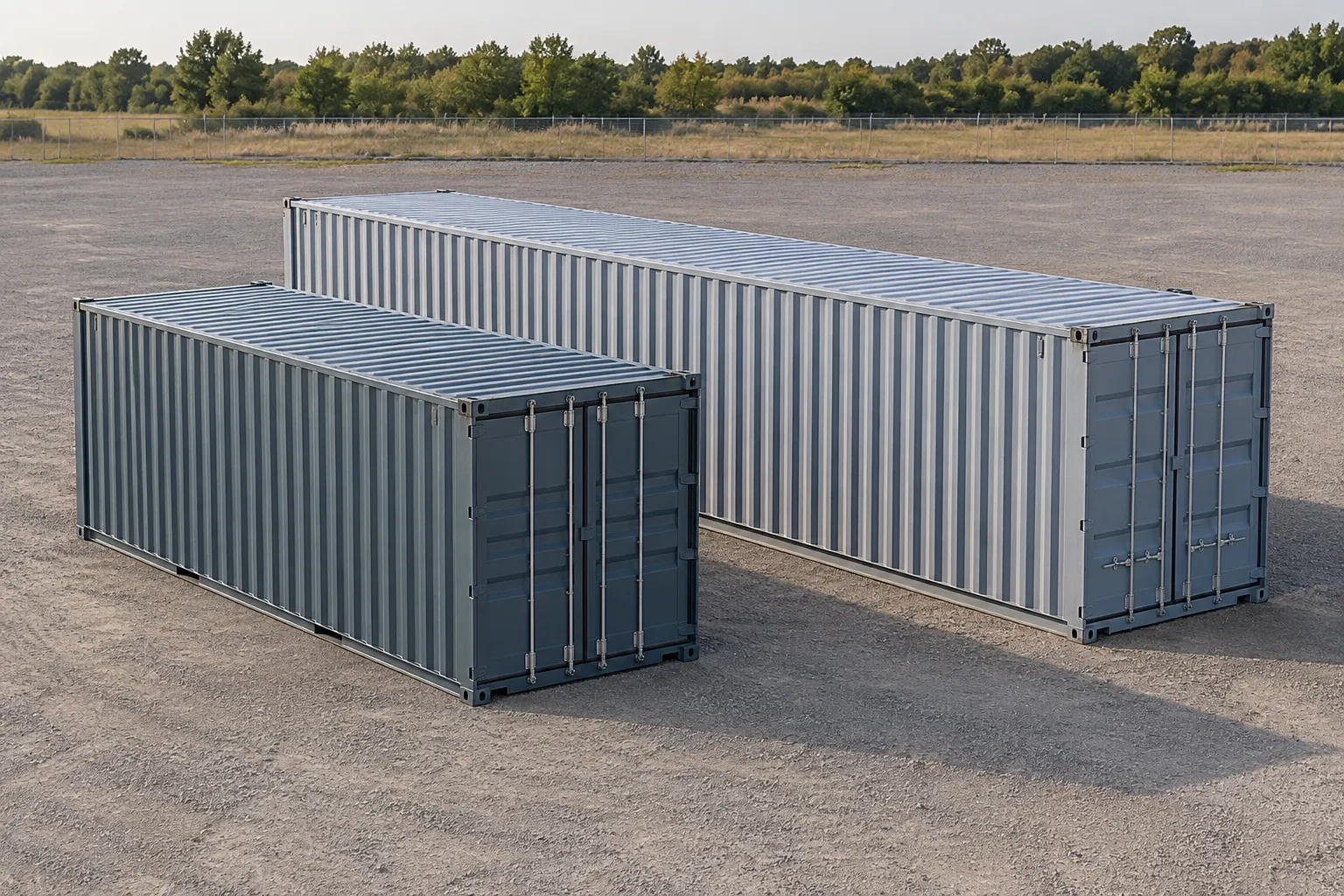
- For larger standard-height storage, compare a 40ft storage-grade used container, currently $2,945.
- Where extra height matters, compare a 40ft used high cube container, currently $2,895.
- For a compact fabricated store, a 10ft non-ISO storage container is a different comparison from a freight container.
Use our container-grade explanations to keep condition categories separate. If the unit must travel overseas, follow the overseas-shipping approval guide; dimensions or a plate alone do not establish acceptance for your shipment.
Do not pay for specifications you do not need, but do not compare a storage-only module with a freight-capable unit and call the difference auction savings.
Which Buyer Fees, Taxes and Payment Terms Apply?
Government surplus shipping containers for sale do not all share one fee schedule. Read the specific sale and lot terms, including any amendments. General platform information may not resolve lot-specific charges.
Identify these costs before bidding:
- Buyer’s premium or transaction fee, including minimum charges or tiered rates.
- Applicable sales or use tax and the amount on which it is calculated.
- Documentation, release or administrative charges, if listed.
- Any permitted payment-method surcharge.
- Storage, missed-appointment or late-removal charges triggered by your collection arrangements.
For shipping container auction fees, the calculation basis matters as much as the percentage. Tax may apply to the bid plus premium rather than the bid alone. Some charges are fixed; others grow with the bid. Obtain clarification from the seller or a qualified tax adviser when the taxable base is unclear.
Also record when payment becomes due, when the award becomes binding, whether seller approval is required and what happens if you cannot complete collection. Do not assume a winning bid can be canceled because transport proves expensive.
For the direct comparison, use the final written total rather than a product price alone. At Lease Lane Containers, Sales tax is included and paid by Lease Lane Containers, so nothing is added at checkout. Our payment policy explains accepted methods and purchase terms.
Who Loads the Container, and What Does Collection Cost?
A search for “shipping container auction near me” can help narrow collection distance, but proximity is not a transport quote. A nearby unit without loading assistance may be less economical than a farther unit with clearly defined handling arrangements.
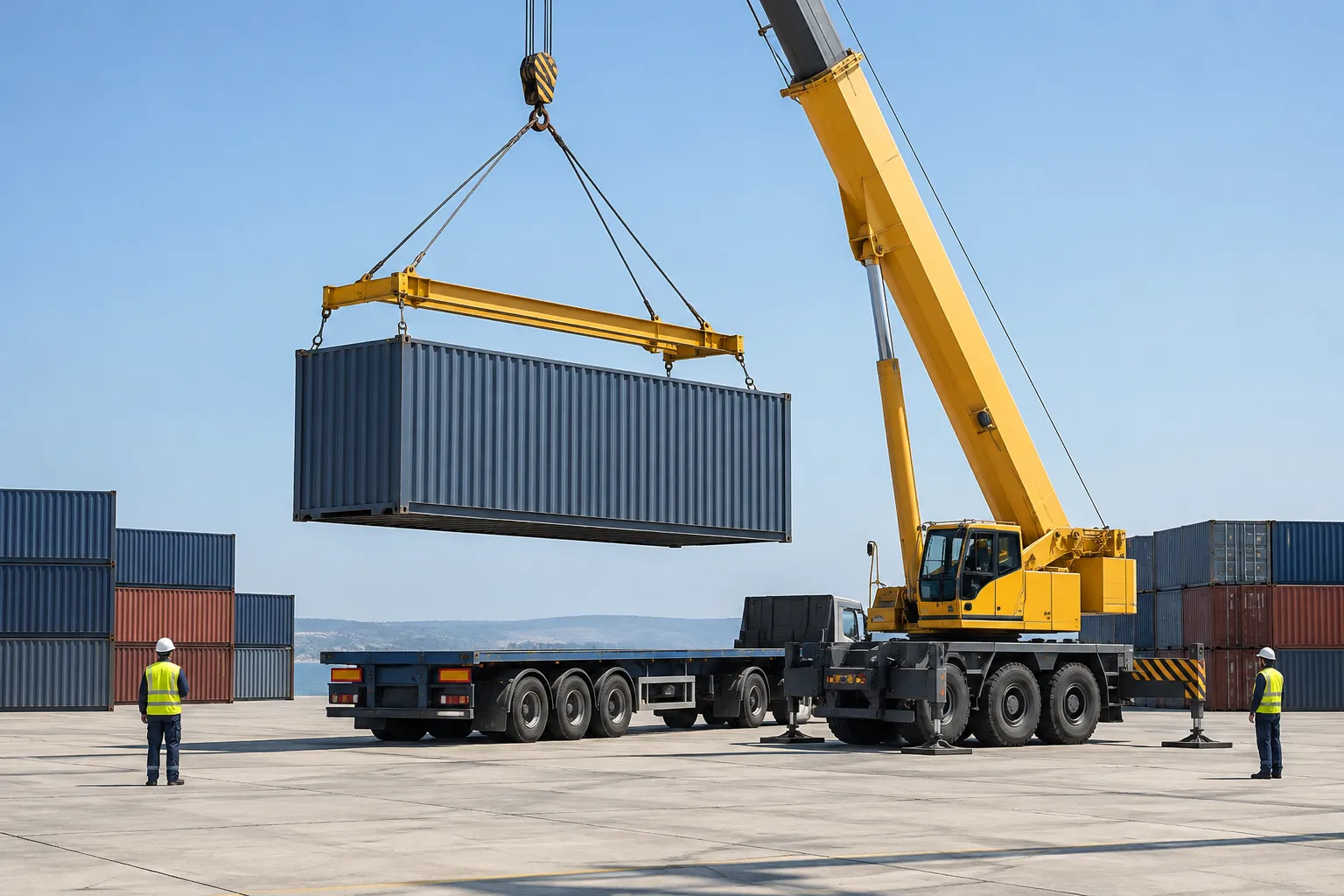
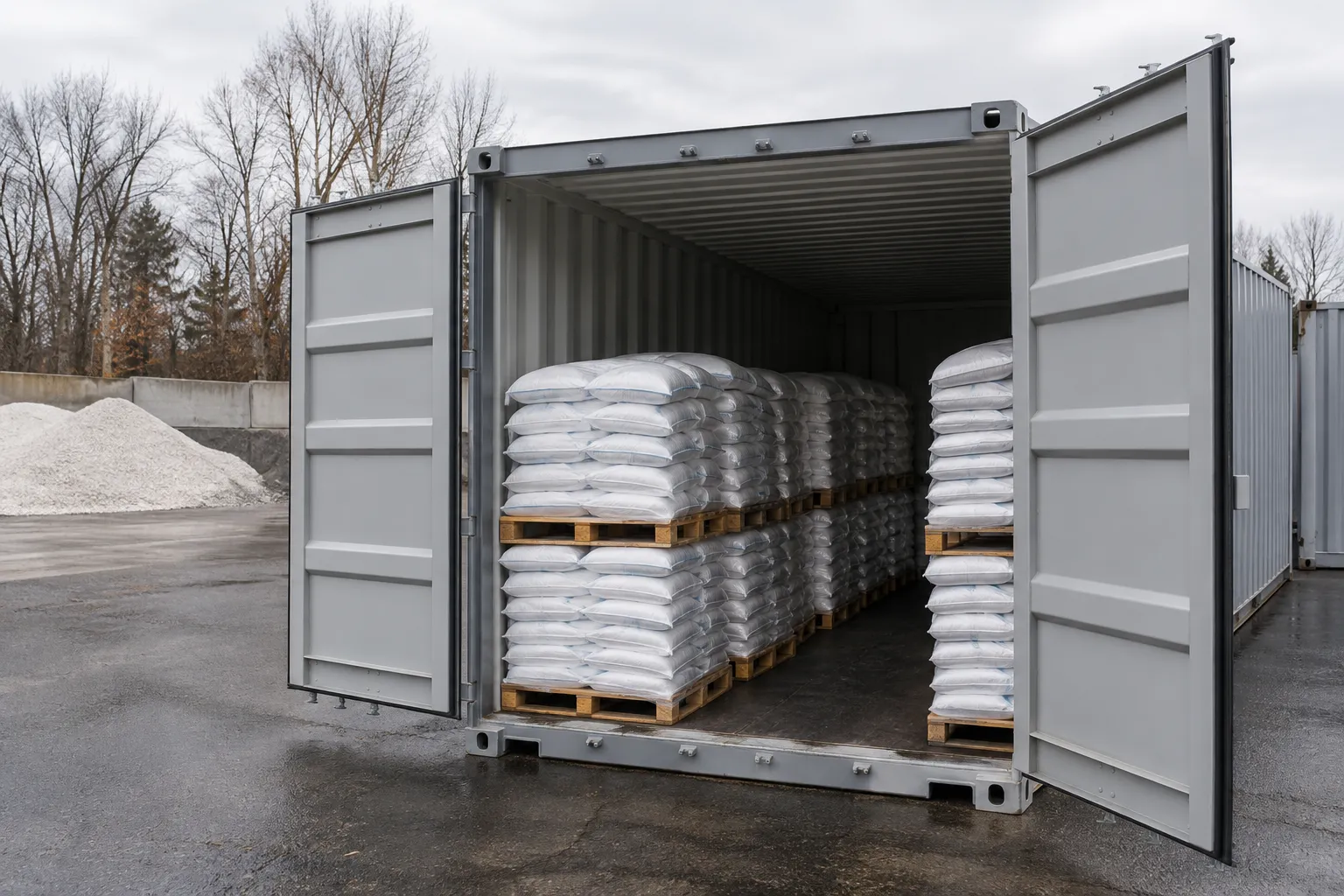
Treat shipping container auction pickup as a separate procurement task. Ask who provides lifting equipment, who attaches lifting gear and who is responsible for damage during loading. Confirm that the hauler accepts the unit’s dimensions, weight and lifting arrangements.
Give the transport provider the collection address, destination, lot description, access restrictions and removal deadline. Request a written scope separating origin loading, road transport and destination offloading. Establish whether waiting time, restricted access, permits or a failed collection attempt create extra charges.
An auction release document does not necessarily mean loading equipment is available. Likewise, a transport quote does not necessarily include placing the container where you want it.
For multiple units, calculate the complete lot cost first. Divide by the number of usable units only afterward. Shared mobilization can reduce costs, but separate collection locations or incompatible lifting arrangements can eliminate that advantage.
Site preparation required under either buying route belongs in both budgets. Include only the difference in your auction-versus-direct calculation, so you do not penalize one option twice.
What Do the Lot Terms Say About Condition and Remedies?
In a used shipping container auction, condition language determines which costs remain yours after the sale. Read “as is,” “where is,” description-dispute provisions and removal obligations together. Do not assume every auction has identical remedies—or that a photograph creates a repair obligation.
Resolve four contractual questions:
- What condition or specification is actually represented in writing?
- Is there a process for reporting a material description error, and when must you use it?
- When does risk of loss transfer, and who handles damage during loading and transport?
- If a remedy is available, does it cover transport, unloading or return costs?
Save the lot description, amendments, fee schedule and written answers. Make sure any clarification is recognized under the sale terms, rather than relying on an informal conversation.
Build a repair allowance from identifiable work: door adjustments, gasket replacement, localized steel repairs, floor work or cleaning appropriate to the intended use. A reserve is money you budget, not evidence that damage is repairable. Where structural suitability is unresolved, a larger allowance may not make the purchase acceptable.
For our direct-sale units, containers pass our manual light test before dispatch. 30-Day Structural Guarantee: if a structural defect or leak is found within 30 days of delivery, we'll provide a mobile repair, an exchange or a full refund, as set out in our Refund & Returns Policy.
Read the Refund & Returns Policy when assigning value to that difference. The return window is 30 days; defective or incorrect units cost $0 to return. Change-of-mind returns carry a 15% restocking fee, and the customer arranges return freight.
Calculate Your Maximum Bid Against a Comparable Direct Quote
The practical answer to buy shipping container at auction vs dealer is a worksheet with a stop price—not a guess about what other bidders will pay.

Use the same destination, specifications and usable condition for both options. Your direct benchmark should reflect any applicable discount actually confirmed in the quote, plus any written non-standard delivery charge.
| Worksheet entry | What to enter |
|---|---|
| D: Comparable direct total | Final quoted cost delivered and placed, with applicable adjustments |
| H: Auction bid | The variable you are solving for |
| F(H): Bid-dependent fees | Premium and other charges that change with H |
| T(H): Applicable taxes | Tax calculated on the correct taxable base |
| C: Fixed auction costs | Fixed fees, collection, transport, placement and other quoted costs, including applicable tax |
| R: Repair allowance | Budget for bringing the auction unit to the comparison condition |
| S: Required savings | Extra savings you require for uncertainty and coordination |
| Maximum-bid test | H + F(H) + T(H) + C + R must not exceed D − S |
Use the right formula for the fee structure
When the premium is a flat percentage p, and tax rate t applies to the bid plus that premium, the simplified formula is:
Maximum bid = (D − C − R − S) ÷ [(1 + p) × (1 + t)]
This works only when all remaining costs, including their applicable taxes, are already included in C. If the premium has tiers or a minimum, or other charges enter the taxable base, calculate the invoice at candidate bids instead. Do not force a complicated fee schedule into a simplified formula.
For a purely hypothetical arithmetic example, suppose the amount remaining after subtracting C, R and S from D is $2,000. With an illustrative 10% premium and 6% tax on the bid plus premium, the ceiling is $2,000 ÷ 1.166, or about $1,715. These are invented worksheet inputs, not market rates, actual auction terms or a Lease Lane Containers quote.
At that ceiling, you have preserved S; you have not spent it. If the next permitted bid increment exceeds the ceiling, stop. Round down, never up.
Stress-test the allowance before committing
Run a second calculation with a higher repair allowance and the written cost of a collection complication. If the auction only wins when every uncertain item costs nothing, it is not a strong procurement choice.
Keep repair spending and required savings separate. R covers anticipated work; S is the benefit you require for accepting additional responsibilities. An unknown should never silently become zero.
For broader size comparisons, use our 20ft versus 40ft delivered-cost guide. Here, the objective is narrower: establish the most you can bid on this particular lot.
When Is a Direct Purchase Worth the Price Difference?
Buying direct is worth considering when its additional cost is smaller than the auction’s handling burden, plausible repair exposure and value of reduced contractual uncertainty. The relevant difference is between complete totals, not the direct price and the hammer bid.
Lease Lane Containers sells new and used containers. Every unit ships from our Raleigh, NC yard and is delivered by our own trucks, trusted freight carriers or a vetted partner delivery agency, depending on your location.
Standard Delivery is free on all orders delivered within the contiguous United States (Lower 48). Containers, homes and offices are offloaded and placed by crane. Remote or non-standard sites and locations outside the Lower 48 are quoted in writing before you pay.
For in-stock products other than container homes, handling is 1–3 business days. Standard transit is 3–7 business days, 4–10 business days in total (about a week and a half). All times start once full payment has been received and count business days only (Monday – Friday, excluding U.S. federal holidays). Our driver calls you one day before delivery to confirm the exact time. Enter your ZIP code on any product page to see your estimated arrival dates, and review the shipping policy for delivery scope.
Auction buying can still be the better choice when you already have suitable collection resources, can accept the contractual condition and retain meaningful savings. The worksheet should allow either outcome.
Request a Comparable Used-Container Quote Before Bidding
Send the proposed dimensions, height, door configuration, required grade, destination ZIP code and placement constraints when requesting a quote. Ask for the comparable delivered-and-placed total, not simply the least expensive container available.
For example, compare a 20ft used cargo-worthy container with an equivalent freight-container requirement, rather than automatically substituting a storage-only option. Record your quote date and confirm availability before treating it as your fallback.
Browse 20ft containers and 40ft containers to establish the right size, then calculate your ceiling before the auction starts.
The decision to buy shipping container at auction vs dealer should turn on usable value and written responsibilities. Browse our used shipping containers or request a comparable quote, subtract every auction-specific cost, and bid only while the remaining savings justify the work and risk.
What "fully furnished" means: when one of our container homes is described as fully furnished, it means built-in amenities only: interior finishes and any built-in cabinetry, kitchen or bathroom fit-out, electrical and plumbing that are listed in this home's specifications. Loose furniture and appliances (for example beds, sofas, tables, refrigerators and microwaves) are not included unless listed in your written quote.
Frequently asked questions
Sometimes, but a lower bid does not establish a lower total cost. Add the buyer’s premium, applicable taxes, loading, collection, transport, placement and a repair allowance. Compare that total with a direct quote for equivalent specifications and condition. An auction should also leave enough savings to justify the extra coordination and contractual responsibilities.
Start with a comparable delivered-and-placed direct quote. Subtract fixed auction costs, collection, transport, placement, a repair allowance and your required savings. Then account for bid-dependent fees and taxes. If tax applies to the bid plus a percentage premium, divide the remaining budget by both multipliers. For tiered fees, calculate the actual invoice at candidate bids.
The specific lot terms determine responsibilities. Do not assume the seller supplies lifting equipment or that a transport quote includes loading and destination placement. Get a written scope from the seller and hauler before bidding, including collection restrictions, waiting charges and removal obligations. A nearby container can still be expensive to collect when lifting arrangements are unresolved.
No. GSA warns that surplus sales offer neither guaranteed bargains nor guaranteed condition. A low displayed bid is not a completed-sale price, and it excludes costs that may arise after award. Evaluate the particular asset, sale terms and complete acquisition cost rather than assuming government ownership makes the unit inexpensive or suitable for your intended use.
Only if both satisfy the same requirement and you account for their differences. A fabricated steel store, flat-pack module or refrigerated body may have different lifting provisions, transport needs and structural capabilities from an intermodal container. Match dimensions, height, access, usable condition and intended purpose before comparing totals. For overseas transport, obtain shipment-specific acceptance rather than relying on appearance.
Sources & further reading
- GSA — For Citizens Seeking Surplus Property
- GovPlanet — Government Surplus Auction, November 4, 2026
- Texas Parks & Wildlife Department — 2026–2027 Hunting Season Dates
- U.S. Consumer Product Safety Commission — Carbon Monoxide Information Center
- Oregon State Fire Marshal — Oregon Fire Code
- Oregon State Fire Marshal — 2025 Oregon Fire Code Executive Summary
Talk to our Raleigh team
Ready to find the right container?
Get a written quote, check availability or ask about delivery to your site. Lease Lane Containers LLC answers every enquiry personally.
- Call us+1 (984) 219-9882
- Emailsales@leaselanecontainers.llc
- Visit5832 Lease Ln, Ste B, Raleigh, NC 27617
- Business hoursMon - Fri: 9:00 AM - 5:00 PM · Sat - Sun: Closed (ET)