Storage for Business, Farm & Construction
Buy Shipping Container for Tire Storage: Plan for Customer Sets
Size your tire-storage container around identifiable customer sets, not piles of loose tires. Compare rack layouts, storage conditions, retrieval access, and equipped cost per set.
9 min readBy the Lease Lane Containers team
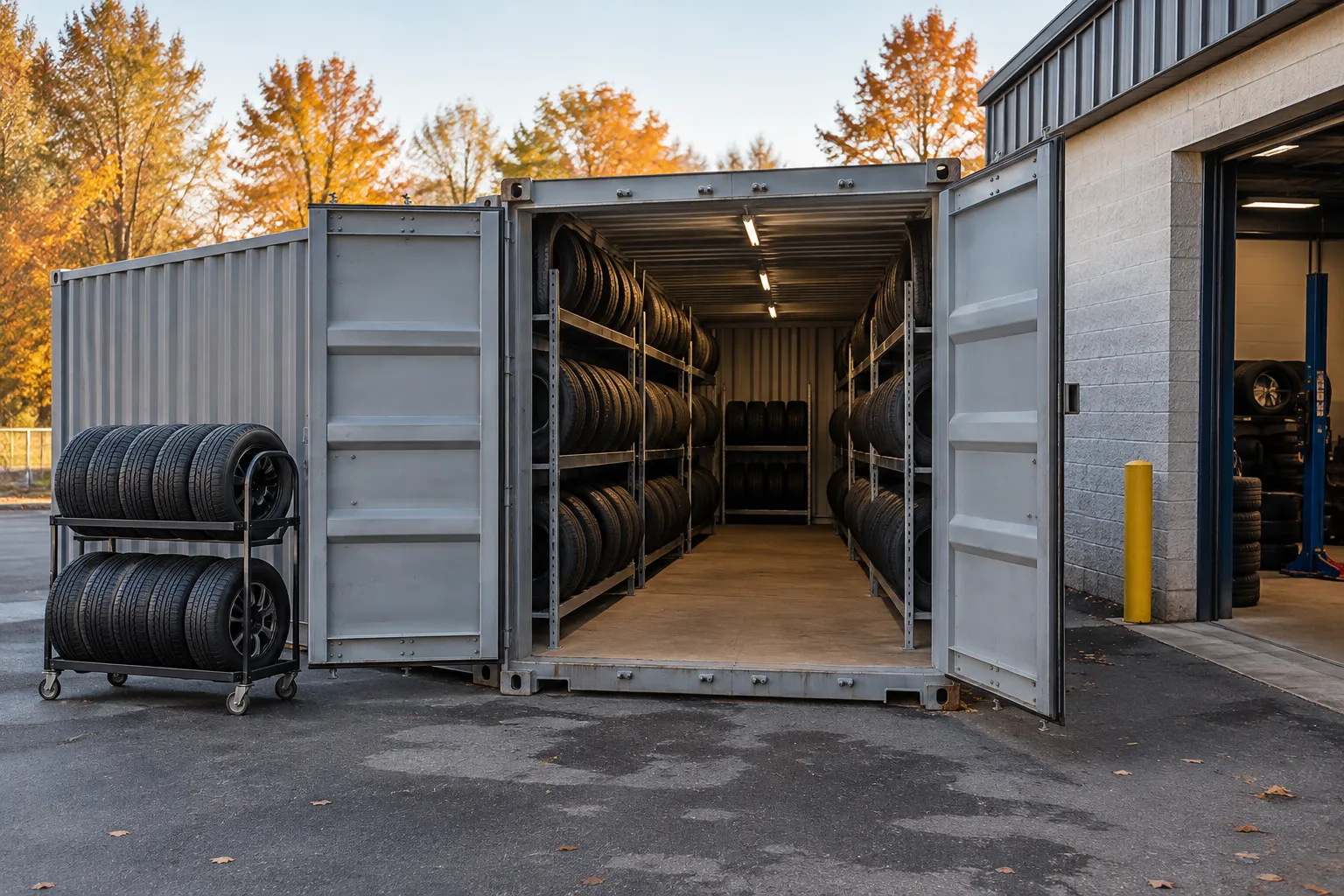
Before you buy shipping container for tire storage, count complete customer sets and prove that employees can retrieve each one without unloading its neighbors. A 20ft container can suit a smaller seasonal program; a 40ft unit offers more rack length, but only pays off when you can fill and service it efficiently. Neither is automatically suitable without checking storage conditions, rack loads, and local requirements.
For the fall changeover, the right purchase is a container with a workable storage system—not simply the biggest steel box your lot can accommodate.
How Many Customer Tire Sets Must the Container Hold?
Start with your appointment book and customer inventory. A set usually means four tires or four mounted wheel-and-tire assemblies. Track spares, staggered fitments, oversized tires, and incomplete sets separately rather than forcing everything into a four-item assumption.
Record:
- Peak customer sets stored simultaneously, including overlap during seasonal swaps.
- Mounted versus unmounted inventory.
- Largest outside diameter, overall width, and assembly weight.
- Expected growth supported by bookings or customer commitments.
- Space needed for inspection, intake, and exception handling.
For example, 30 booked sets plus six anticipated additions require 36 set locations. A planning allowance of four extra locations makes the target 40. Those are illustrative business assumptions, not a standard reserve percentage.
Keep incoming wet or dirty assemblies out of finished storage until prepared. If preparation happens in the shop, you still need a designated transfer area. Do not count the aisle as overflow capacity.
20ft or 40ft: Calculate Usable Rack Bays and Retrieval Space
A shipping container tire rack layout begins with confirmed internal dimensions, not nominal exterior length. Door openings, rack uprights, wall clearances, insulation, and equipment all reduce usable space.
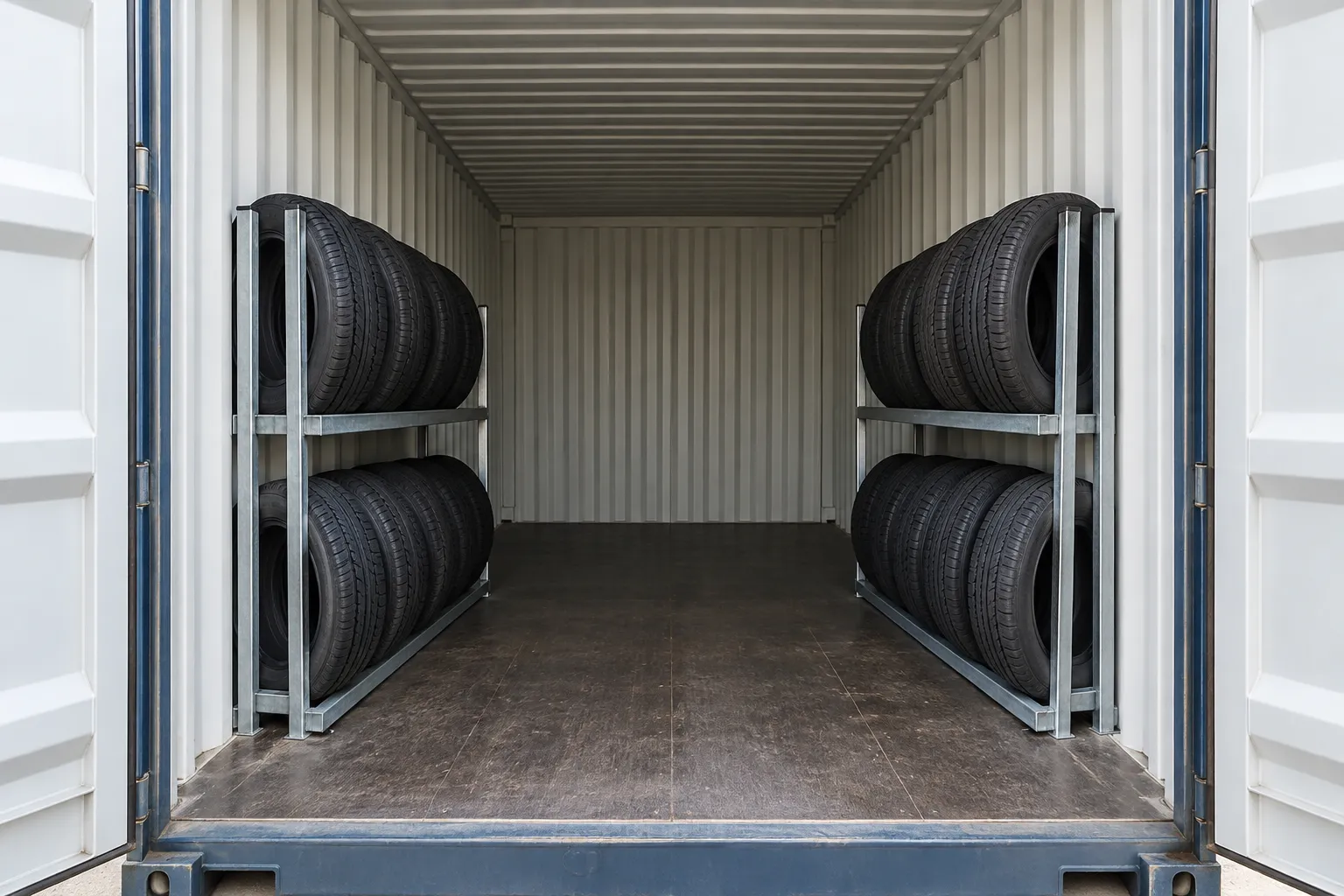
Compare 20ft storage containers with 40ft storage containers using the same tire mix and handling method. The following example demonstrates the calculation; it is not a promised capacity for any product.
A worked rack-bay example
Assume two side racks, each with two usable storage levels. Each level in a bay holds one complete four-tire set, with every item accessible from the aisle. Assume a 48-inch bay pitch, including uprights, and enough clear width for four tires measuring 10 inches wide plus handling clearance.
| Layout input | Illustrative 20ft layout | Illustrative 40ft layout |
|---|---|---|
| Rack run after end allowances | 16 feet per side | 36 feet per side |
| Bay pitch | 4 feet | 4 feet |
| Bays per side | 4 | 9 |
| Accessible levels per bay | 2 | 2 |
| Sets per level per bay | 1 | 1 |
| Calculated set locations | 16 | 36 |
The formula is bays per side × rack sides × usable levels × sets per level. Here, that gives 16 and 36 sets, or 64 and 144 individual tires. Larger tires, different orientations, and wider uprights can reduce these totals substantially.
For width, a hypothetical 92-inch clear interior with two 28-inch loaded rack envelopes leaves 36 inches between them. That is geometry, not a recommended or code-approved aisle. Measure actual tire overhang and test employee movement with the loaded cart you intend to use. Confirm required clearance with the applicable authority.
Your 20ft container tire storage capacity must also survive a height check: tire diameter, beam thickness, lifting clearance, and safe access to the upper level. A high cube adds headroom, not an automatic extra rack tier.
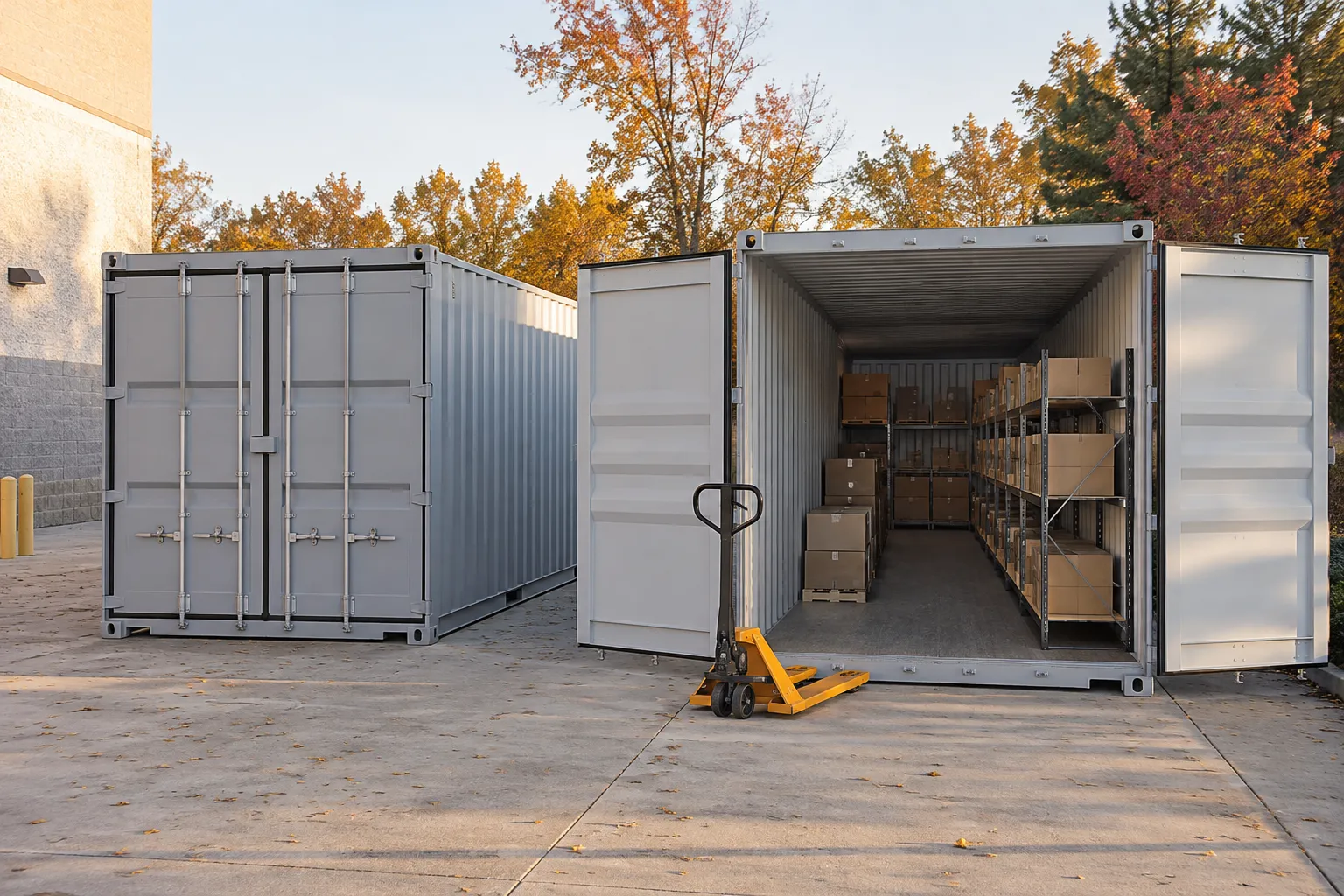
For shorter retrieval routes, consider the 20ft tunnel container with double-end doors or 40ft tunnel container with dual-end access. Both ends need usable exterior access; a second door against a fence adds little operational value.
Mounted Wheels vs Unmounted Tires: Plan the Storage System
Mounted assemblies and unmounted tires need separate storage decisions. Wheel weight changes beam loading, lifting demands, and the consequences of dropping an item. Tire orientation must follow the applicable tire manufacturer's instructions rather than whichever arrangement packs most densely.
Nokian Tyres’ tire-storage guidance distinguishes storage practices for tires with and without wheels. Confirm the instructions for your inventory before specifying upright racks, horizontal stacks, or wheel-support systems. Do not assume a method suitable for mounted wheels is suitable for an unsupported tire bead.
Specify rack performance in writing:
- Usable dimensions for the largest planned assembly.
- Rated load per level and per complete bay.
- Suitable supports that avoid damaging tires or wheel finishes.
- Restraints, anchoring, and floor-load distribution.
- Safe access and lifting arrangements for every level.
A rack holding eight hypothetical 65-pound assemblies carries 520 pounds before adding the rack itself. Check the supplier's actual load ratings and obtain approval for concentrated loads and attachment points. Do not attach loaded racks to thin wall panels without an appropriate design.
The 20ft high cube storage container with lighting and shelving is an equipped option to evaluate, but included shelving is not automatically tire-rated. Ask for dimensions, load ratings, and support details before counting any set locations.
Can the Proposed Container Meet Tire-Manufacturer Storage Conditions?
A steel enclosure provides a starting point, not proof of a suitable storage environment. USTMA’s Tire Facts guidance cautions against harmful storage exposures including extreme temperatures, moisture, and ozone sources. Manufacturer instructions should determine your operating limits.
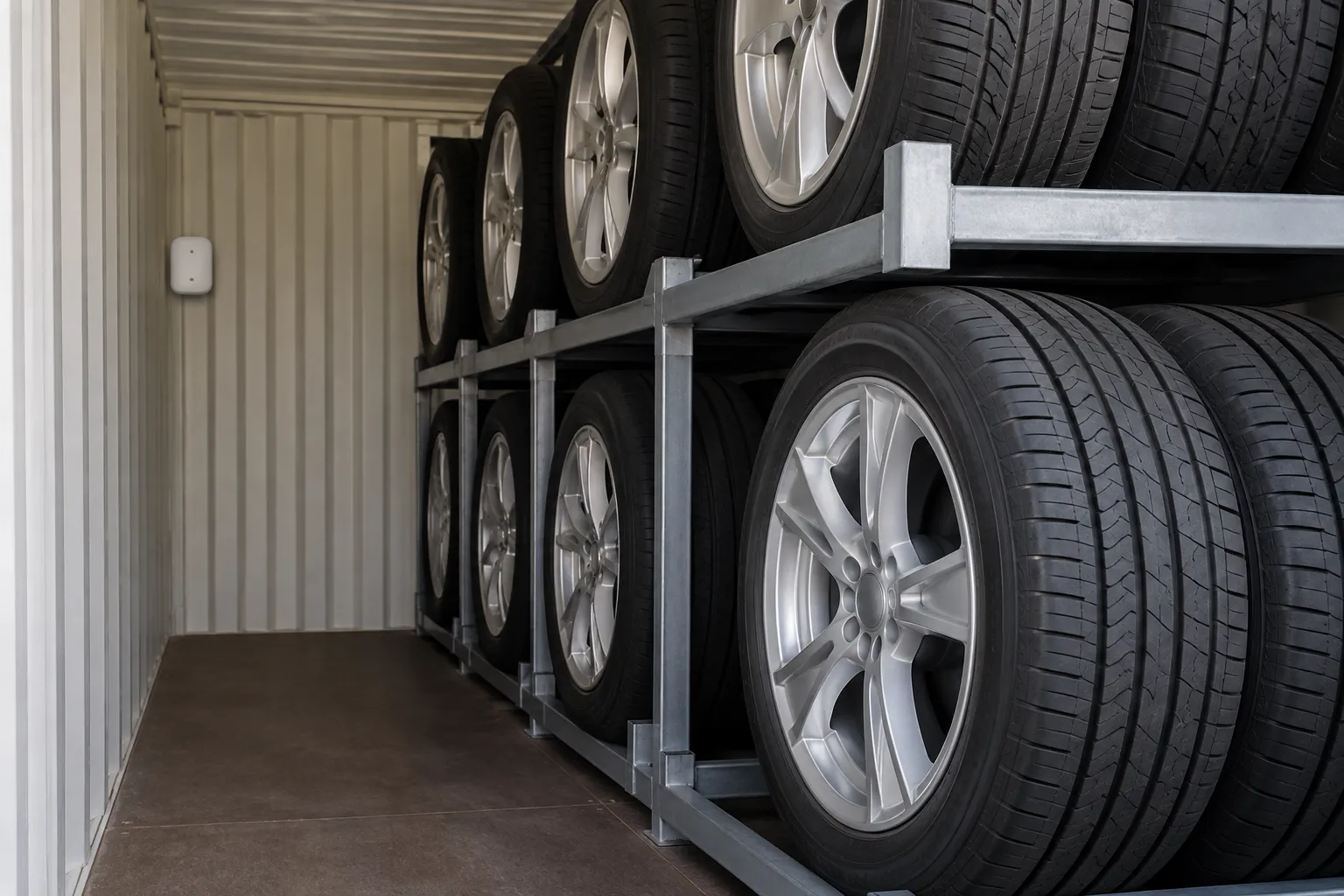
Translate that guidance into a site-specific checklist:
- Keep tires away from direct sunlight and unsuitable heat sources.
- Prevent contact with oils, fuels, solvents, and incompatible chemicals.
- Identify ozone-producing equipment and keep it outside tire storage.
- Clean and thoroughly dry tires and wheels before storage or bagging.
- Monitor temperature and humidity where inventory actually sits.
A sun-exposed container can experience conditions very different from the adjacent shop. Specify ventilation, insulation, or active environmental control based on local conditions and manufacturer requirements. Ventilation alone may not control moisture when incoming air is humid; insulation alone does not regulate temperature.
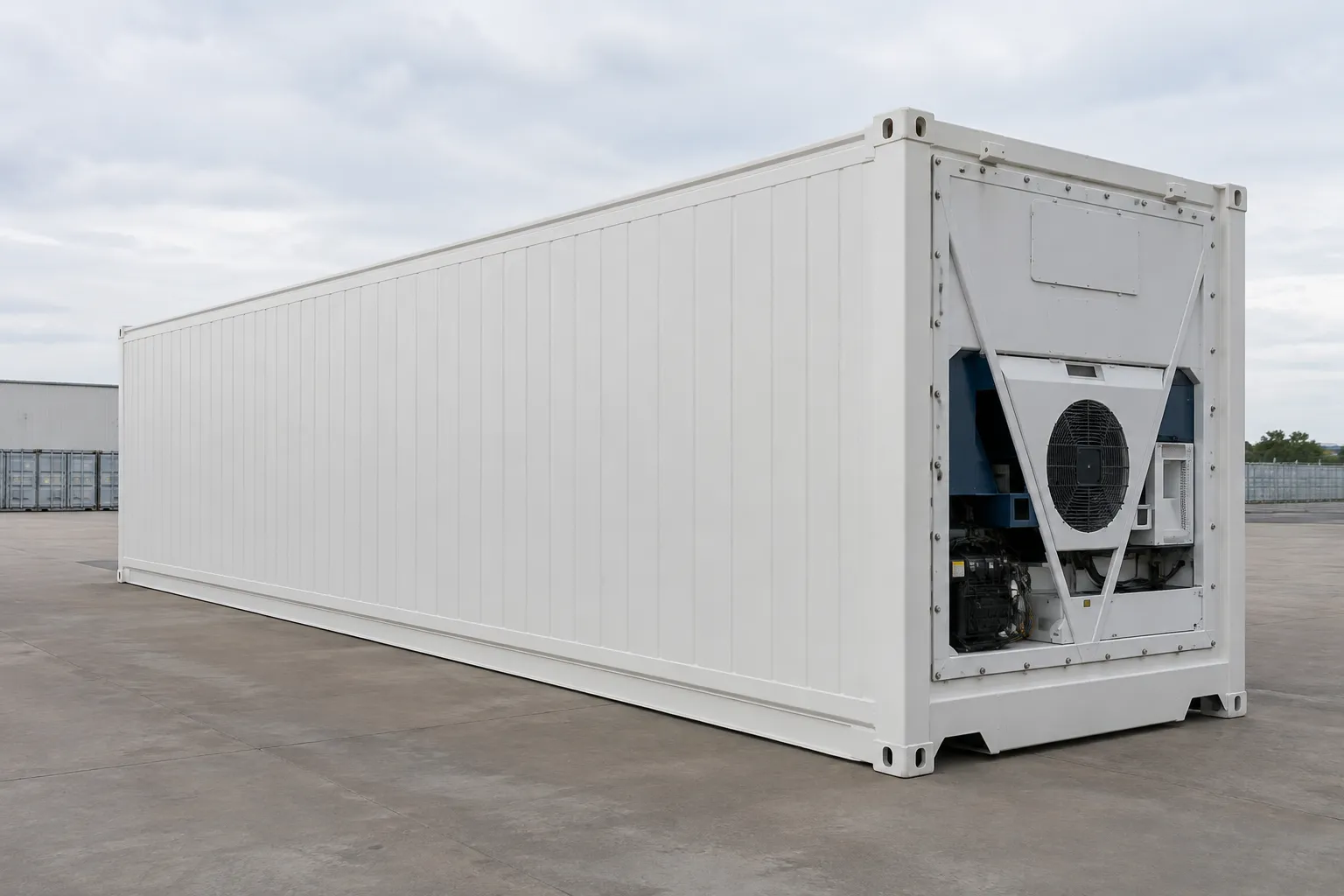
The 20ft insulated storage container with lockable double doors may be worth comparing with a standard shell. Confirm its insulation specification, interior dimensions, and any additional equipment needed. It is not automatically a climate-controlled tire room.
Before accepting customer inventory, verify that the proposed system can maintain the required conditions. Keep monitoring records and an action plan for readings outside your limits.
Lease Lane Containers units pass our manual light test before dispatch. 30-Day Structural Guarantee: if a structural defect or leak is found within 30 days of delivery, we'll provide a mobile repair, an exchange or a full refund, as set out in our Refund & Returns Policy. See the Refund & Returns Policy. This protection does not replace environmental design or ongoing inspection.
Organize Customer Sets Without Blocking Access
A tire hotel storage container needs a location system that stays accurate during the busiest changeover days. Give every rack location a permanent address and link every tire or wheel to its customer set.
Use a simple workflow:
- Assign a unique set identifier at intake and record all item sizes.
- Photograph existing wheel damage and note tire condition and tread measurements.
- Record each item's vehicle position where applicable, including staggered fitments.
- Prepare the set according to manufacturer instructions and assign its location.
- Record every move, then verify all items against the work order at retrieval.
Keep personal customer information in the shop system rather than exposed on exterior labels. Store complete sets together where practical; if a set spans locations, record every location explicitly.
Place heavy assemblies where your handling equipment can serve them safely. Keep the floor, doors, and access routes clear. Stage scheduled pickups in a designated shop area rather than building a temporary wall of tires inside the container.
For physical security, review our container lock box and padlock fit guide. Security hardware supports inventory control but does not replace employee access procedures or insurance.
Check Fire-Code and Insurance Requirements Before Ordering
Stored rubber creates a combustible inventory. A steel shell does not make that inventory exempt from fire-code review. Ask the local fire authority and building or zoning department to evaluate your proposed use before you commit to a location or rack arrangement.
Provide the number of tires, mounted/unmounted mix, storage height, layout, container position, and distances to nearby buildings and property lines. Ask about:
- Permits and any applicable tire-storage or high-piled-storage provisions.
- Required access, separation distances, and maximum storage arrangement.
- Fire protection, detection, electrical work, and emergency access.
- Whether employee entry requires additional door or egress provisions.
Avoid selecting a generic extinguisher or alarm and assuming the design is approved. The requirements depend on the site and adopted rules. Our permanent container storage permit guide can help organize the broader permitting questions.
Ask your insurer specifically about customer property in your care, custody, or control. Confirm coverage for off-building container storage, theft, water damage, fire, and the maximum value present during seasonal overlap. Do not assume ordinary business-property coverage includes customer wheels.
Buy Shipping Container for Tire Storage: Compare Cost per Set
Compare delivered and equipped cost divided by verified serviceable set locations, then repeat the calculation using expected occupied locations. Empty capacity does not serve paying customers.
Two starting points are the 20ft used shipping container at $2,395 and the 40ft used storage-grade container at $2,945. Use our container grades guide to understand the shell options before comparing fit-out costs.
Using the illustrative layouts above:
- 20ft equipped cost per location: ($2,395 + quoted racks, preparation, controls, and installation) ÷ 16.
- 40ft equipped cost per location: ($2,945 + quoted racks, preparation, controls, and installation) ÷ 36.
Use actual quotes for ground preparation, permits, electrical work, lighting, environmental controls, handling equipment, security, and any delivery surcharge. Do not treat an illustrative rack count as a supplier-approved design.
If the larger layout serves only 20 occupied locations, divide its equipped total by 20 as well. Compare recurring energy, insurance, inspection, and handling costs separately. A 40ft container for tire shop storage can have a lower cost per location while still being the wrong purchase for a small customer base.
Delivery inputs for the comparison
Standard Delivery is free on all orders delivered within the contiguous United States (Lower 48). Remote or non-standard sites and locations outside the Lower 48 are quoted in writing before you pay. Containers, homes and offices are offloaded and placed by crane.
Every unit ships from our Raleigh, NC yard and is delivered by our own trucks, trusted freight carriers or a vetted partner delivery agency, depending on your location.
For in-stock products other than container homes, handling is 1–3 business days. Standard transit is 3–7 business days, 4–10 business days in total (about a week and a half). All times start once full payment has been received and count business days only (Monday – Friday, excluding U.S. federal holidays). Enter your ZIP code on any product page to see your estimated arrival dates. Our driver calls you one day before delivery to confirm the exact time.
Review the shipping policy and confirm truck access, crane placement, overhead obstructions, and prepared supports before ordering. Sales tax is included and paid by Lease Lane Containers, so nothing is added at checkout.
What to Include in a Tire-Storage Container Quote Request
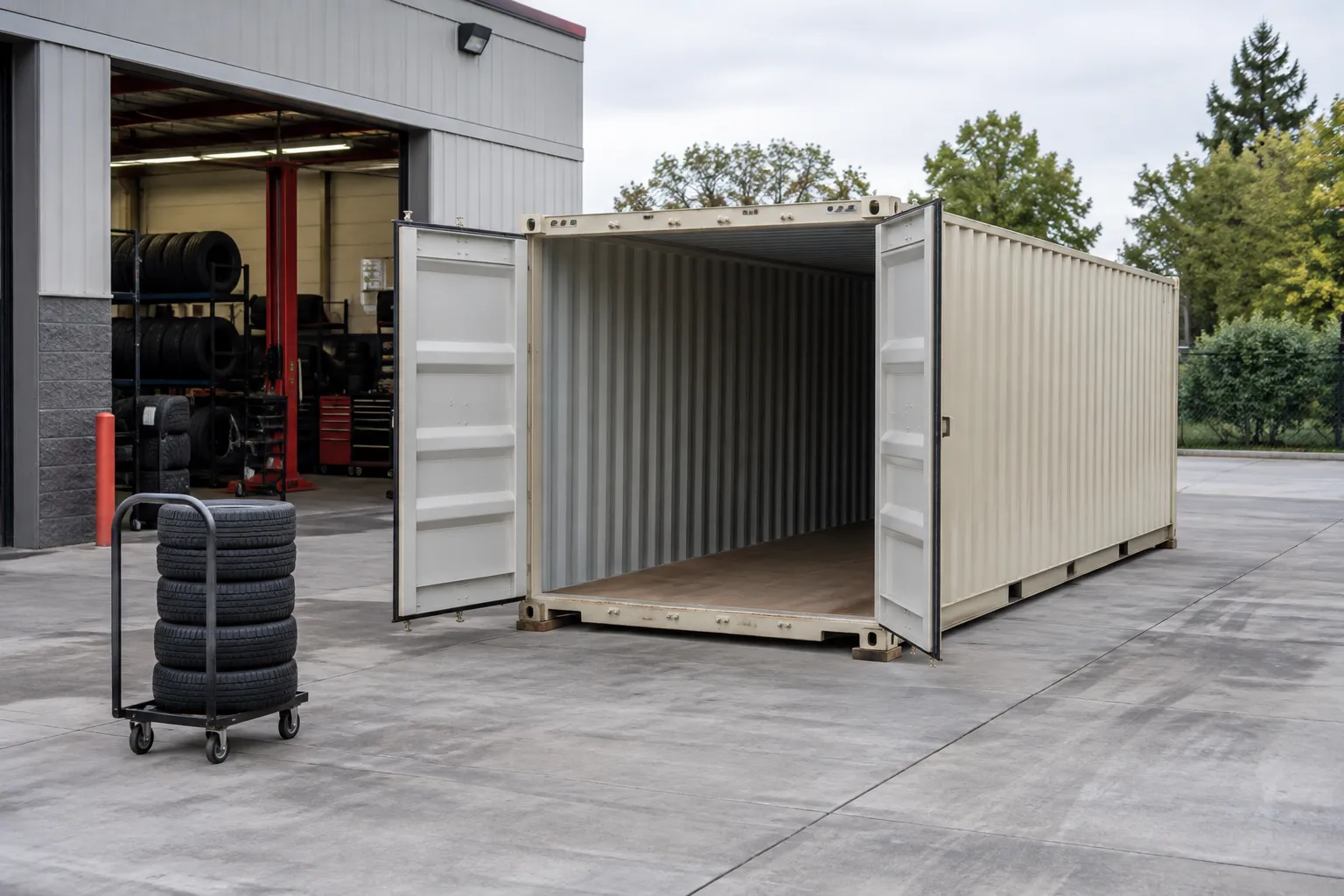
When evaluating a tire storage container for sale, send a specification rather than just requesting a length:
- Target customer sets, expected occupancy, and seasonal overlap.
- Tire dimensions, assembly weights, and manufacturer storage requirements.
- Proposed rack layout, loads, aisle, and handling method.
- Door configuration and exterior access at each opening.
- Environmental controls, lighting, and electrical requirements.
- Delivery ZIP code, site photos, placement drawing, and access restrictions.
- Permit and insurer requirements, plus separately itemized fit-out costs.
Ask the quote to distinguish included equipment from proposed additions. Use our container buyer's guide to check the purchase details.
Buy for retrievable customer sets, not theoretical tire volume. Browse double-door containers alongside the 20ft and 40ft options, or request a quote built around your verified rack layout and storage conditions.
What "fully furnished" means: when one of our container homes is described as fully furnished, it means built-in amenities only: interior finishes and any built-in cabinetry, kitchen or bathroom fit-out, electrical and plumbing that are listed in this home's specifications. Loose furniture and appliances (for example beds, sofas, tables, refrigerators and microwaves) are not included unless listed in your written quote.
Frequently asked questions
There is no universal capacity. In this article's illustrative layout, four bays per side, two sides, and two usable levels produce 16 four-tire set locations. Actual capacity depends on tire size, rack dimensions, storage orientation, loading limits, and retrieval clearance. Verify internal dimensions and test the layout with representative inventory before ordering.
A 40ft container offers more rack length, but it is not automatically more economical. Compare equipped cost per usable location and per expected occupied location. Include retrieval labor, site access, and environmental controls. A smaller container can be the better first purchase when it matches committed customer demand and leaves room for an efficient handling area.
Possibly, but only if the actual storage environment meets the applicable tire manufacturer's requirements. An uninsulated steel container can experience heat buildup and condensation. Evaluate local exposure, monitor temperature and humidity, and specify controls where needed. Insulation alone does not create climate control, and a structurally sound shell does not establish suitable tire-storage conditions.
Not necessarily. Mounted assemblies add weight and may call for different supports or storage orientation. Unmounted tires need storage that avoids distortion or bead damage. Follow the applicable manufacturer's instructions and obtain rack ratings for the actual inventory. Confirm beam capacity, anchoring, concentrated floor loads, lifting access, and clearance before approving the arrangement.
Check with your local zoning, building, and fire authorities before ordering. Requirements can depend on location, tire quantity, storage height, separation distances, and employee access. Also tell your insurer that the inventory belongs to customers and will be stored outside the main building. Obtain confirmation of applicable coverage and any required security or fire-protection measures.
Sources & further reading
- U.S. Tire Manufacturers Association — Tire Facts
- Nokian Tyres — How to Store Tires Safely
- Fannie Mae — Improvements Section of the Appraisal Report: Unique Housing Types
- HomeLight — Lender Insights & Predictions Q2 2026
- NFPA — Fire Prevention Week, October 4–10, 2026
- FDNY — E-Micromobility Battery Charging Cabinet Equipment and Installation Approval Guide
Talk to our Raleigh team
Ready to find the right container?
Get a written quote, check availability or ask about delivery to your site. Lease Lane Containers LLC answers every enquiry personally.
- Call us+1 (984) 219-9882
- Emailsales@leaselanecontainers.llc
- Visit5832 Lease Ln, Ste B, Raleigh, NC 27617
- Business hoursMon - Fri: 9:00 AM - 5:00 PM · Sat - Sun: Closed (ET)