Refrigerated & Specialty Containers
Refrigerated Shipping Container for Sale for Food Storage: Checklist
Holiday cold storage needs more than a working thermostat. Verify product temperatures, usable capacity, electrical service and refrigeration performance before ordering.
9 min readBy the Lease Lane Containers team
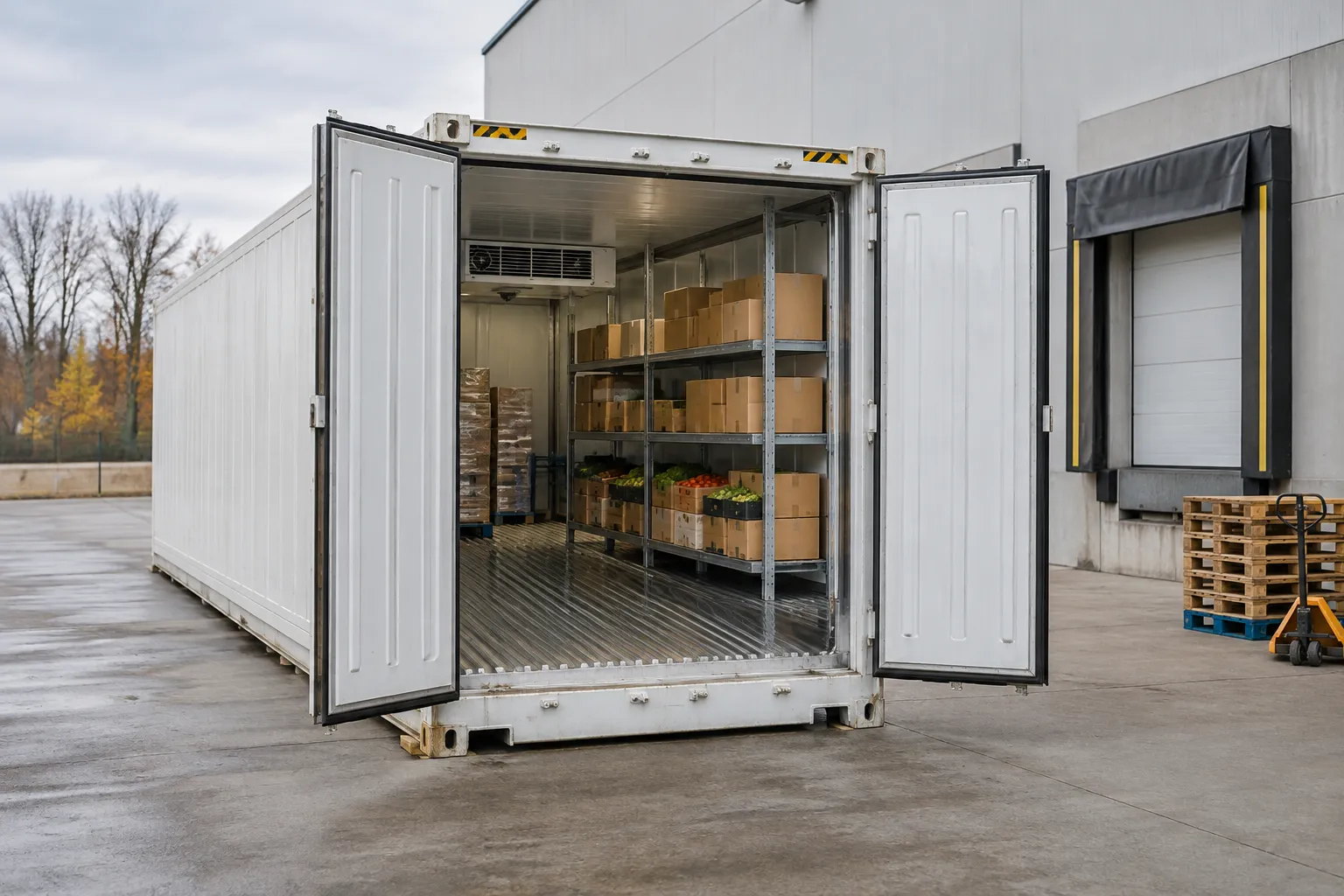
Holiday inventory can overwhelm a walk-in cooler before the busiest receiving day arrives. If you are comparing a refrigerated shipping container for sale for food storage, verify four things before ordering: the temperatures your products need, documented refrigeration condition, compatible site power and a commissioning plan.
The right unit must hold your inventory safely under actual operating conditions—not simply reach a low temperature while empty. For grocers, food distributors and caterers, that means accounting for door openings, incoming product temperatures, sanitation and who responds to an overnight alarm.
Use this checklist to turn a seasonal capacity problem into a purchase specification.
Refrigerated Shipping Container for Sale for Food Storage: Start With Products
Write a product schedule before choosing container length. Include each food category, peak quantity, receiving temperature, required holding conditions and expected storage duration. Separate chilled products from frozen goods, and identify raw foods that need segregation from ready-to-eat inventory.
The FDA Food Code 2022 generally calls for cold holding of time/temperature control for safety foods at 41°F or below, with specified exceptions. It also requires stored frozen foods to remain frozen. These provisions do not mean every product belongs at the same thermostat setting.
| Inventory | Requirement to establish | Purchase implication |
|---|---|---|
| Chilled meat, dairy and prepared foods | Applicable cold-holding limit and supplier specifications | Verify holding performance throughout the intended load |
| Frozen meat, desserts and prepared meals | Supplier’s frozen-storage target | Request performance evidence at that target |
| Fresh produce | Commodity-specific temperature and humidity needs | Avoid a universal setting that damages sensitive products |
| Mixed holiday inventory | Compatible temperatures and contamination controls | Consider separate units or storage zones where necessary |
Holding cold food is not the same as cooling hot food. Do not assume a storage reefer can rapidly chill catering pans or freeze warm deliveries. Ask for an engineering assessment if your process requires product pull-down rather than maintenance of an existing temperature.
For a holiday cold storage container, also specify your busiest picking pattern. Frequent access introduces heat and moisture. A unit that performs well with closed doors may not support continuous order assembly without operational changes.
20ft or 40ft: Calculate Usable Capacity With Airflow and Access Allowances
Start with peak simultaneous inventory, not total seasonal sales. Record pallet footprints, carton dimensions, stacking limits and the space needed to retrieve older stock without unloading everything else.
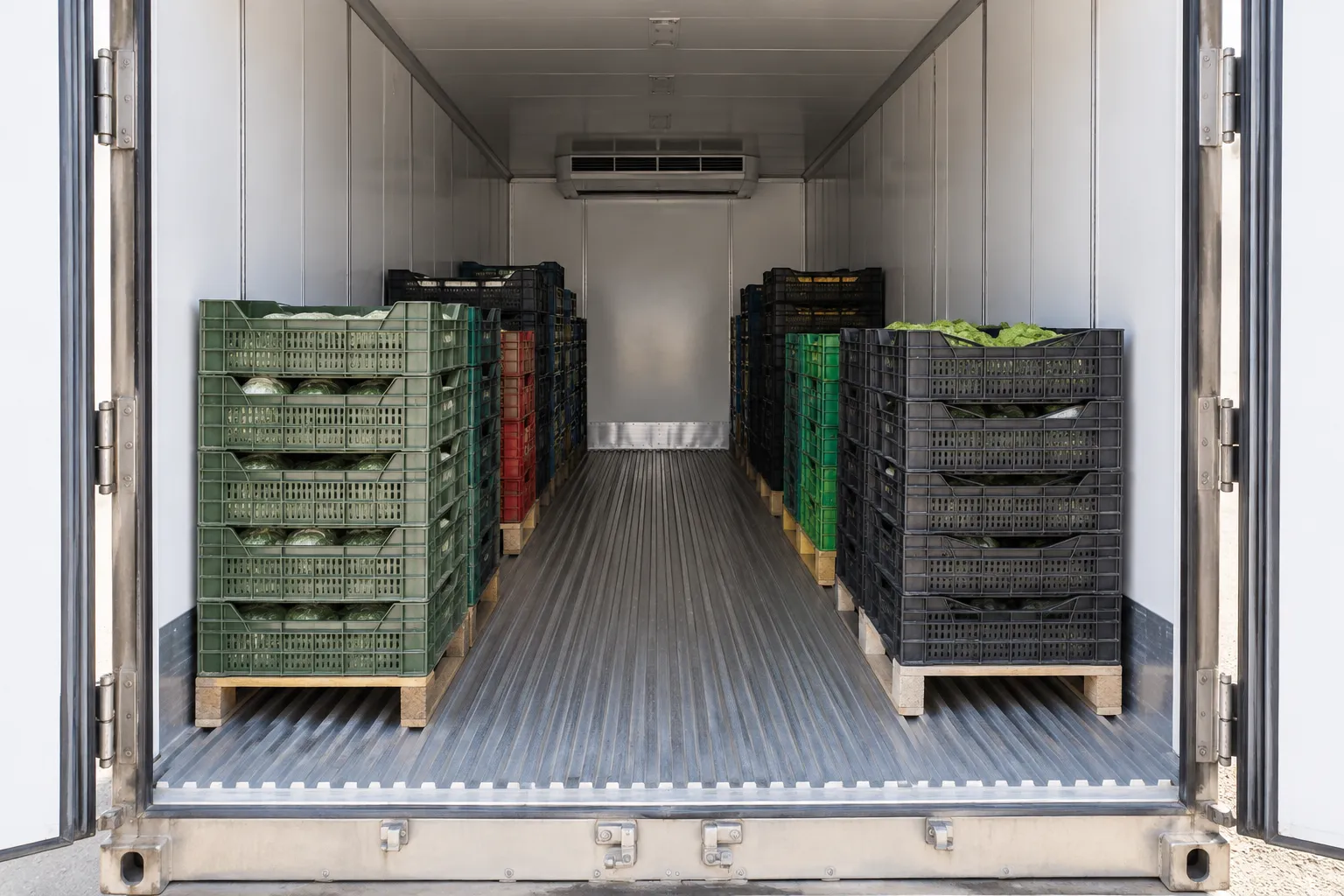
Ask for the actual unit’s internal dimensions and door opening. Insulation, refrigeration machinery and modifications reduce usable space; exterior length alone does not establish pallet capacity.
Use this sequence:
- Draw the proposed pallet or shelving arrangement to scale.
- Reserve the manufacturer’s required supply-air and return-air paths.
- Keep stock below marked load limits and away from restricted areas.
- Allow access for rotation, inspection and cleaning.
- Check floor loading, handling-equipment compatibility and safe entry arrangements.
If you are seeking a 20ft refrigerated container for sale, compare the 20ft high cube adjustable cold-storage container with the 20ft refurbished freezer/cooler. Request the same dimensional and performance information for both; their names alone do not establish equivalent capabilities.
For larger frozen loads, a 40ft freezer container for sale such as the 40ft high cube deep-freeze cold-storage container belongs on the shortlist, subject to confirmation of its operating range and condition.
Browse the refrigerated container category for alternatives. A larger box is useful only if your site, electrical supply and workflow can support it.
Check Voltage, Phase and Electrical Installation Before Paying
Have a qualified electrician review the exact refrigeration nameplate before committing to a unit. Reefer container power requirements vary by model and configuration. A familiar-looking connector or a description mentioning electrical service is not proof of compatibility.
For example, Carrier’s OptimaLINE T-383 documentation specifies nominal 380/460-volt, three-phase power for its base unit. That illustrates why you must check the installed machine rather than assume every reefer accepts an ordinary building outlet. It does not establish the requirements of another Carrier model or a modified container.
Request a legible nameplate photograph and installation documentation showing:
- Required voltage, phase and frequency.
- Rated electrical load and applicable starting requirements.
- Manufacturer-specified circuit protection and connection details.
- Cable, plug, grounding and disconnect requirements.
- Any transformer or conversion equipment included with the unit.
The 40ft used high cube reefer with a new 5HP single-phase motor offers a different configuration to investigate. However, “single-phase” does not mean plug-and-play. Confirm the complete system’s requirements, not just the motor description.
Your electrician should assess panel capacity, routing, outdoor equipment protection, permits and installation cost. Do not schedule food receiving around an electrical upgrade that has not been approved and arranged.
New vs. Used Reefers: Service Records and Inspection Evidence to Request
Compare evidence, not paint. A clean exterior is helpful, but it does not establish compressor health, insulation integrity or temperature stability.
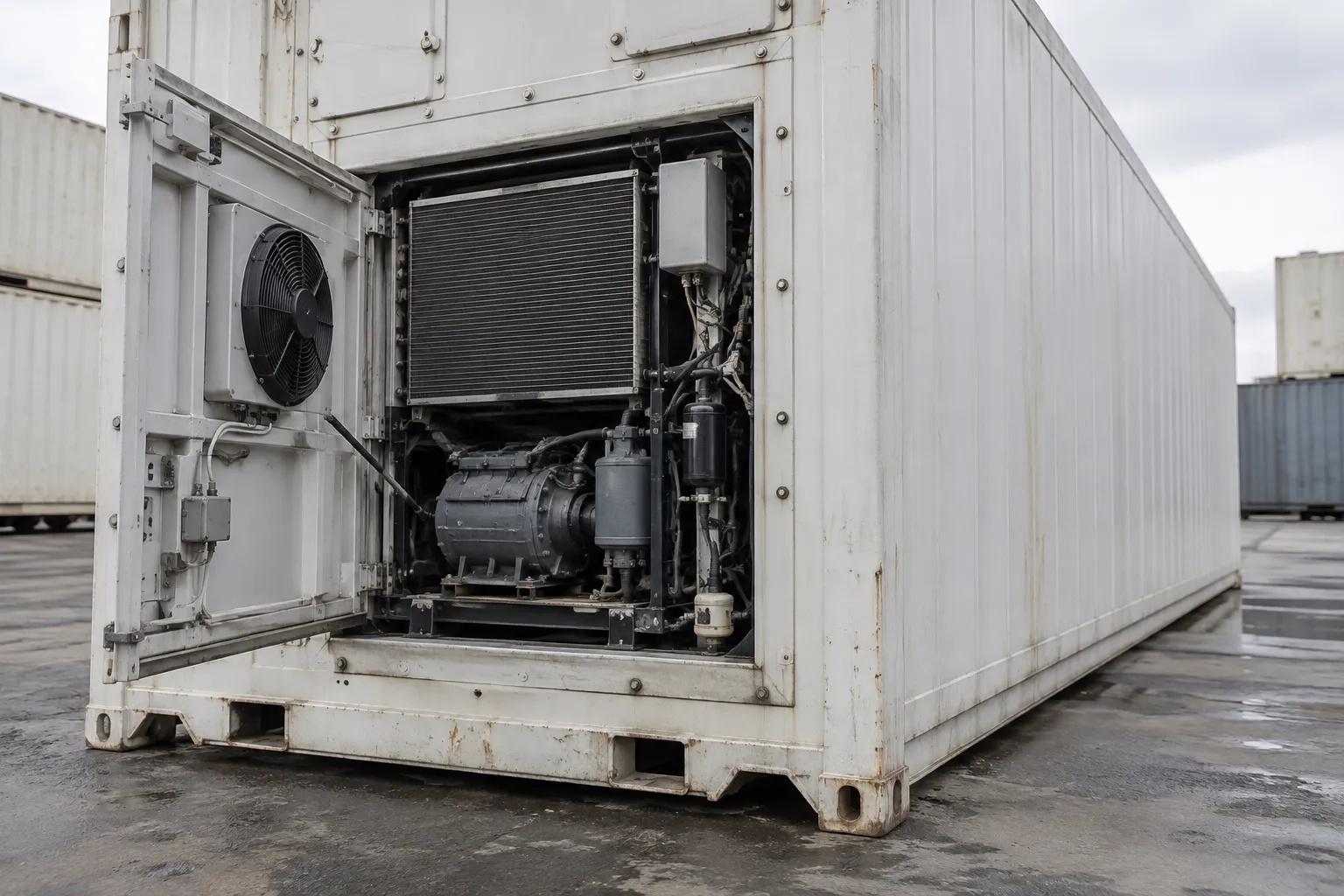
A useful used refrigerated container inspection includes the container structure and the refrigeration system. Ask for records tied to the actual unit being quoted, including its equipment model and identifying details.
Request:
- Recent pre-trip inspection or refrigeration service results, with dates and test conditions.
- Available maintenance records, repairs and replaced components.
- Recorded operating temperatures, ambient conditions and alarm history.
- Inspection of door gaskets, hinges, latches, interior panels and floor channels.
- Checks for refrigerant leaks, damaged wiring, corrosion and blocked coils.
- Confirmation of refrigerant type, service support and replacement-parts availability.
- Written identification of included accessories and known defects.
A photograph of the controller at its setpoint is not a complete performance test. Ask how long operation was observed, where temperatures were measured and whether defrost and door-opening recovery were checked.
Read our container grades guide to understand structural terminology. “Wind and watertight” or “cargo worthy” does not certify refrigeration performance.
Distinguish working refrigeration from insulated storage. The 40ft non-working reefer for insulated storage is explicitly non-working; it is not ready-to-use cold storage for perishable inventory. Likewise, for a new or refurbished unit, confirm whether the description applies to the shell, refrigeration equipment or both.
Verify Sanitation, Monitoring and Local Health-Department Requirements
The FDA Food Code is a model code, not a nationwide approval for any container marketed for food use. State and local jurisdictions adopt different editions and amendments. Food distributors may also fall under regulatory requirements beyond retail food-service rules.
Before buying, describe your intended use to the relevant health department or regulatory authority. Ask whether plan review, inspection or equipment documentation is required for outdoor refrigerated storage. Separately verify zoning, placement, electrical and fire-access requirements with the appropriate local offices.
Confirm practical sanitation provisions:
- Interior surfaces must be suitable for the intended food-storage use and cleanable.
- Floor channels, drains and door seals must be accessible for cleaning.
- Packaging and storage arrangements must prevent contamination.
- Raw products must be segregated appropriately from ready-to-eat foods.
- Condensate management must avoid pooled water and unsafe walking surfaces.
- Entry arrangements must address slip risks and safe exit from inside.
Do not assume products in the food and beverage container category all provide refrigeration or meet your jurisdiction’s requirements without review.
For monitoring, specify calibrated measurement devices, sensor placement, logging intervals, alarm thresholds and record retention. The 40ft high cube reefer with integrated temperature logging is an option to evaluate, but verify exactly what its logging system records and whether remote alerts are included.
Controller air readings and product temperatures answer different questions. Assign responsibility for checking both as appropriate, acknowledging alarms and deciding what happens to affected food.
Calculate the Installed Cost, Including Power, Monitoring and Backup
A refrigerated shipping container for sale for food storage should be compared on installed, operational cost, not just its listed purchase price.
Obtain separate written figures for site preparation, electrical installation, any required conversion equipment, monitoring, shelving, safe access and commissioning. Budget for electricity, maintenance and backup arrangements. Ask for energy information relevant to your setpoint, ambient conditions and access pattern rather than assuming a constant load.
Lease Lane Containers offers free standard delivery to the contiguous United States (Lower 48). Remote or non-standard delivery sites are quoted in writing before you pay. Crane offloading is included. Review the shipping policy and have site access, ground conditions, overhead obstructions and placement reviewed before ordering.
Sales tax is paid by Lease Lane Containers and is never added at checkout. First-order code WELCOME500 provides $500 off a first order over $2,500.
Include a failure-response budget. Backup power needs professional sizing and a safe, code-compliant connection. A generator that handles the running load may still be unsuitable for startup demands. Where backup generation is impractical, establish an alternate cold-storage location and a documented transfer procedure.
Also understand the purchase terms. The return window is 30 days; defective or incorrect units cost $0 to return. Change-of-mind returns carry a 15% restocking fee, and the customer arranges return freight. Review the refund and returns policy before committing.
Commission and Temperature-Test the Unit Before Loading Inventory
Delivery is not the same as operational acceptance. Arrange commissioning with qualified refrigeration and electrical personnel, using the manufacturer’s procedures and your food-safety requirements.
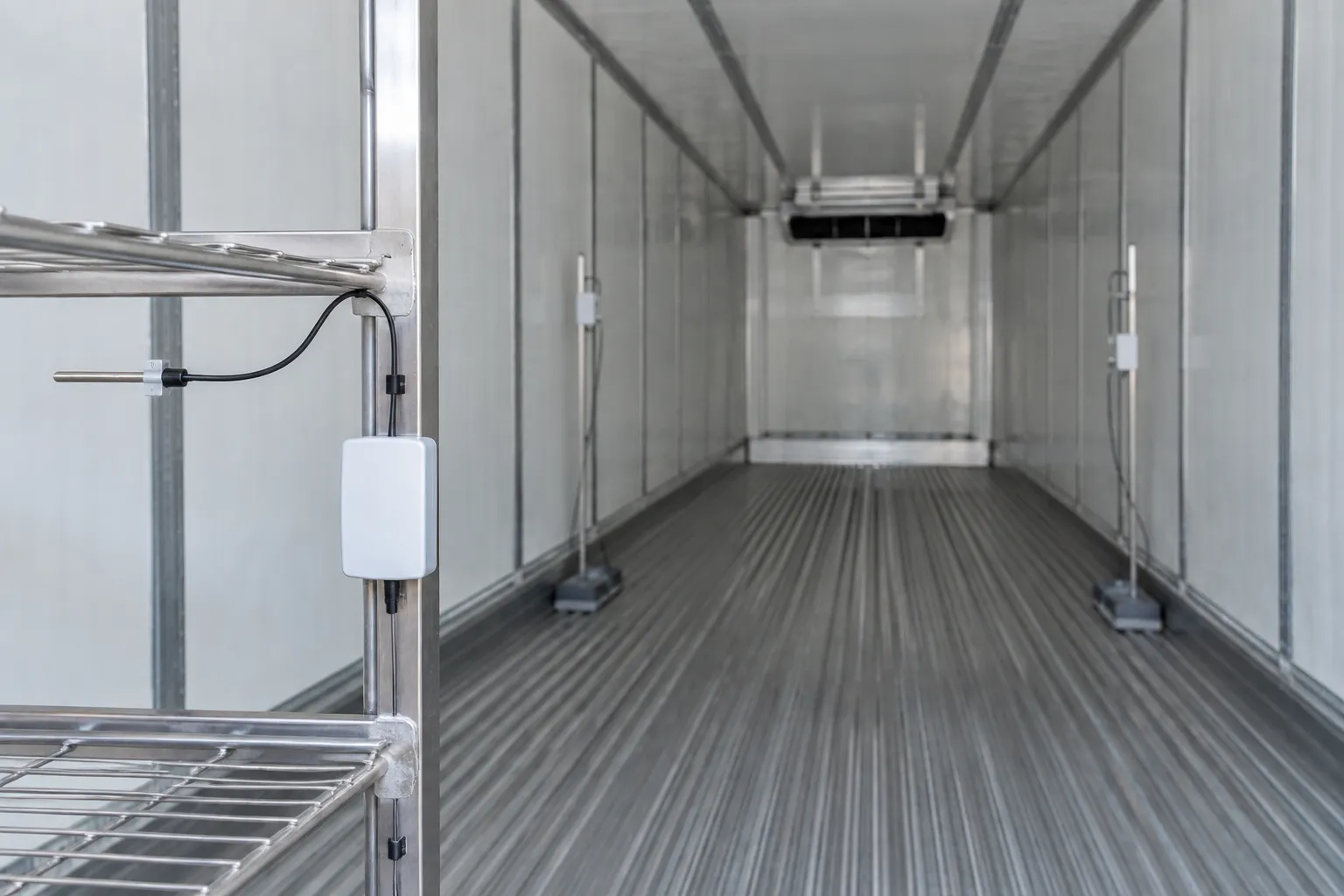
- Inspect placement and condition. Check support, access, machinery clearances, door operation and visible damage.
- Verify the electrical installation. Have the electrician confirm the supply and protective devices before energizing the unit.
- Clean and prepare the interior. Use suitable procedures and products; inspect floor channels, seals and drainage.
- Run an empty-unit check. Confirm controller operation, setpoint response, fans, alarms and defrost behavior.
- Map temperatures. Place independent calibrated sensors in representative locations, including areas likely to warm during access.
- Validate the loading arrangement. Use an appropriate test load or controlled staged loading without risking saleable food. Confirm airflow and recovery after representative door openings.
- Test the response plan. Verify alerts reach the assigned person and that backup or transfer arrangements are usable.
Agree on acceptance criteria before testing: required temperature limits, sensor locations, test conditions and who signs off. Let qualified personnel set the test duration for the equipment and intended use rather than relying on a universal runtime.
Keep the commissioning report with the operating procedures. Train staff not to block air channels, override alarms or place warm products inside a unit validated only for cold holding. If testing fails, resolve the cause before loading perishable inventory.
Request a Quote With Your Product List, Site Details and Required Operating Date
A useful quote request makes it easy to match the container to your operation. Send:
- Product categories, required temperatures and incoming product temperatures.
- Peak pallet or carton count, dimensions and maximum loaded weight.
- Expected door openings and picking workflow.
- Site address, placement photographs and access constraints.
- Available voltage and phase, with electrician-confirmed capacity.
- Monitoring, backup and sanitation requirements.
- Required operating date and any pending approvals.
Delivery is about a week and a half after full payment. The driver calls 1 day before arrival. Work backward from the date inventory must enter storage, allowing separately for approvals, site preparation, electrical work and commissioning; the delivery interval is not a promise that the site will be operational on arrival.
Use our container buyers guide to organize purchasing questions. If comparing footprints, the 20ft container category includes other container types too—verify that any candidate has the required working refrigeration.
Buy for Verified Performance, Not Just Extra Space
The best holiday cold-storage purchase matches your products, power supply and daily workflow, with documented refrigeration condition and a successful on-site test. Browse the refrigerated containers linked above or request a written quote using your product schedule and site details. Resolve the operating requirements before inventory arrives.
Frequently asked questions
Sources & further reading
- National Retail Federation — NRF Forecasts 2026 Holiday Sales Growth as Consumers Remain Resilient, October 15, 2026
- FDA — Food Code 2022: Full Document
- Carrier Transicold — T-383 OptimaLINE, Section 2: Introduction and Electrical Requirements
- NOAA — El Nino Looms Large Over U.S. Winter Outlook, October 15, 2026
- IMO/ILO/UNECE — CTU Code, Annex 3: Prevention of Condensation Damages
- City of New Orleans — Comprehensive Zoning Ordinance, Article 21, Section 21.8: Temporary Uses
Talk to our Raleigh team
Ready to find the right container?
Get a written quote, check availability or ask about delivery to your site. Lease Lane Containers LLC answers every enquiry personally.
- Call us
- +1 (984) 219-9882
- Visit
- 5832 Lease Ln, Ste B, Raleigh, NC 27617
- Business hours
- Mon - Fri: 9:00 AM - 5:00 PM · Sat - Sun: Closed (EST)