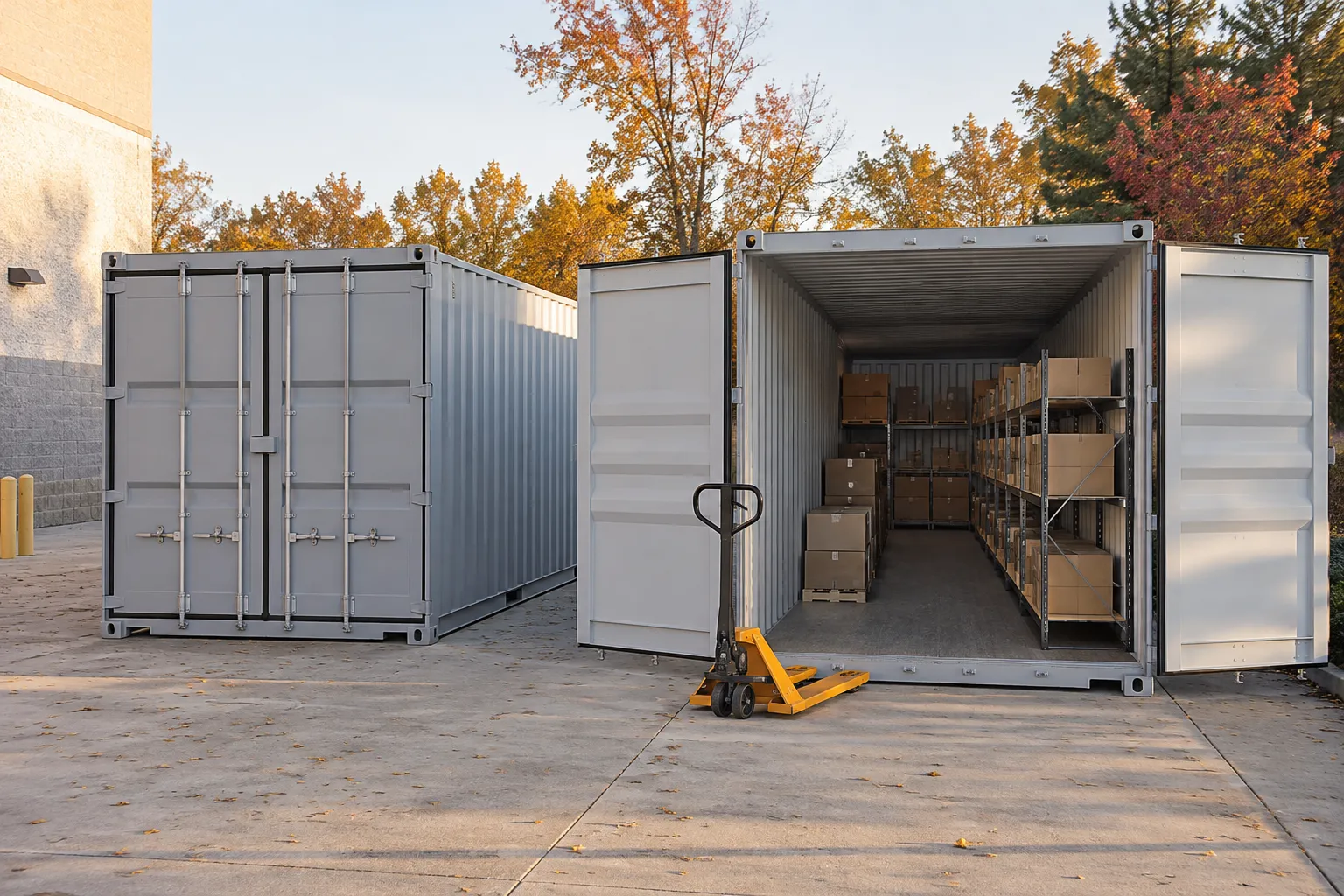
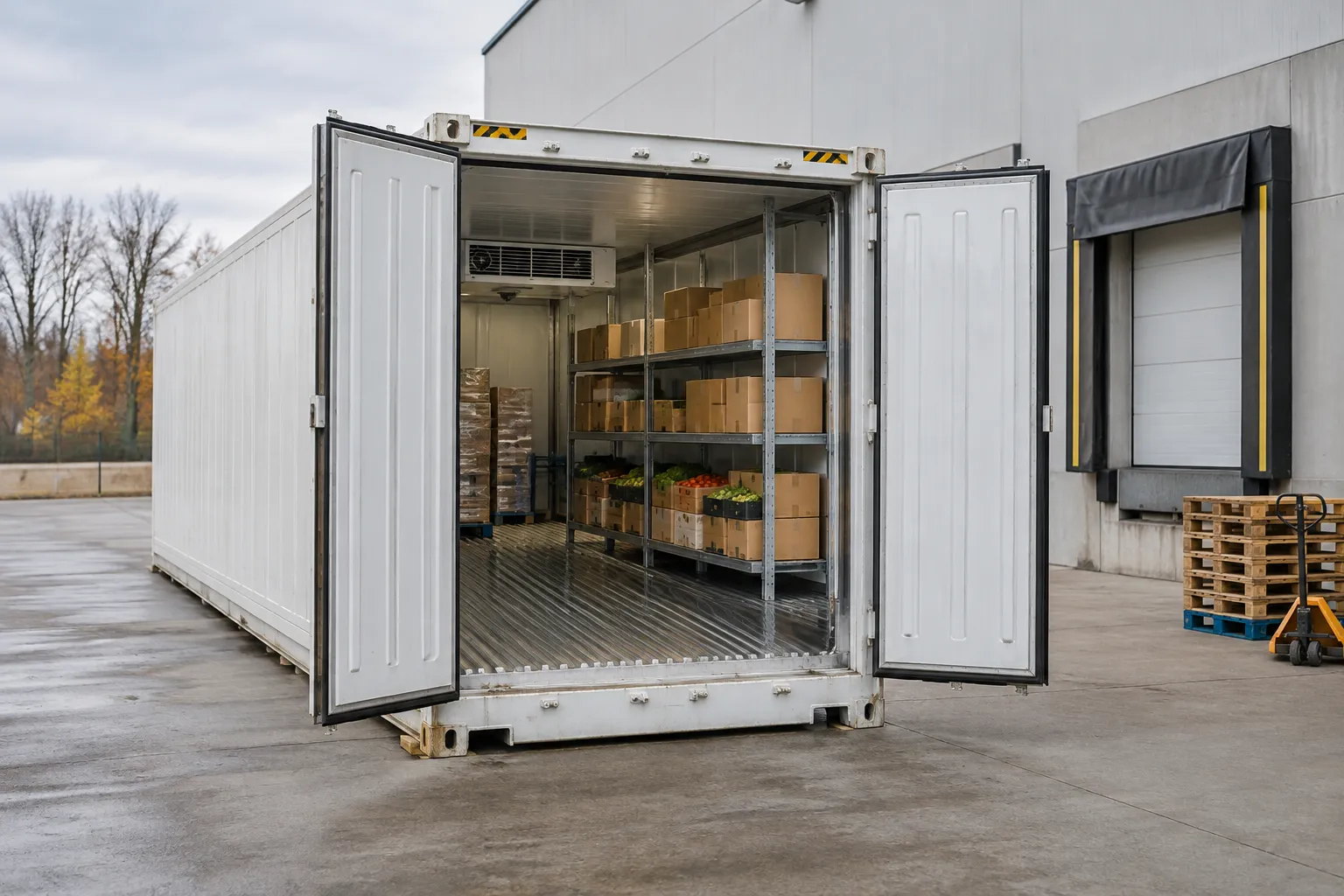
Modifications & Custom Builds
Insulated Shipping Container for Sale for Winter Storage: Specs
Insulation alone does not prevent freezing or condensation. Learn what to specify in a factory-modified container, from sealed insulation assemblies to moisture control and finished clearances.
8 min readBy the Lease Lane Containers team
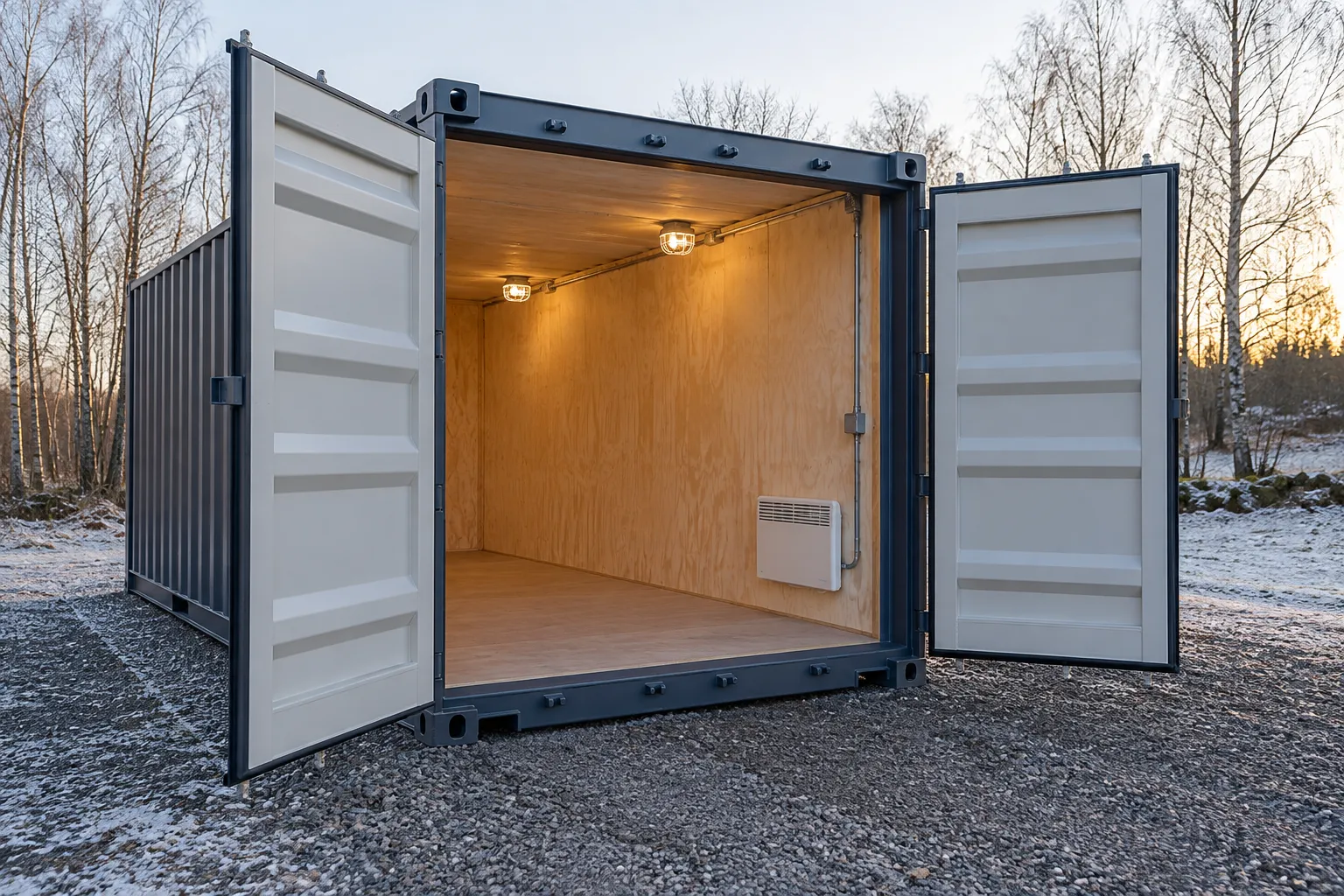
If you’re looking for an insulated shipping container for sale for winter storage, buy to a written specification—not simply an “insulated” label. Request the insulation material and thickness, coverage at doors and floors, moisture-control approach, finished interior dimensions, and any electrical or heating equipment. Insulation slows heat transfer; it does not generate heat or remove moisture.
A factory-modified unit lets you resolve these details before delivery instead of adding equipment around stored contents later. Start with what your contents can tolerate, then select the enclosure and controls that meet those requirements.
Choosing an insulated shipping container for sale for winter storage
First, determine whether your contents need protection from temperature swings, freezing, humidity, or all three. Those are different requirements, and they do not always call for the same modifications.
Use manufacturers’ storage instructions to establish minimum and maximum temperatures and acceptable relative humidity. Avoid a vague requirement such as “keep everything dry.” Specify the conditions you actually need inside the container.
- Temperature-tolerant, moisture-sensitive contents: Prioritize a dry enclosure, moisture management, and monitoring. Heating may not be necessary.
- Freeze-sensitive contents: Specify active heating and a dependable power supply. Insulation alone cannot maintain an above-freezing temperature through prolonged cold.
- Contents with strict humidity limits: Request humidity control sized for expected temperatures, moisture loads, and door openings.
For a starting point, compare the 20ft insulated storage container with lockable double doors and the 20ft insulated storage container with steel lock boxes. Their product names are not substitutes for written insulation and performance details.
Browse modified containers for other configurations, but confirm which requested modifications are available for the selected unit. Our container buying guide covers the broader purchasing process.
Why a watertight container can still develop condensation
Watertight describes resistance to incoming liquid water. It does not mean the interior air, packaging, floor, or contents contain no moisture.
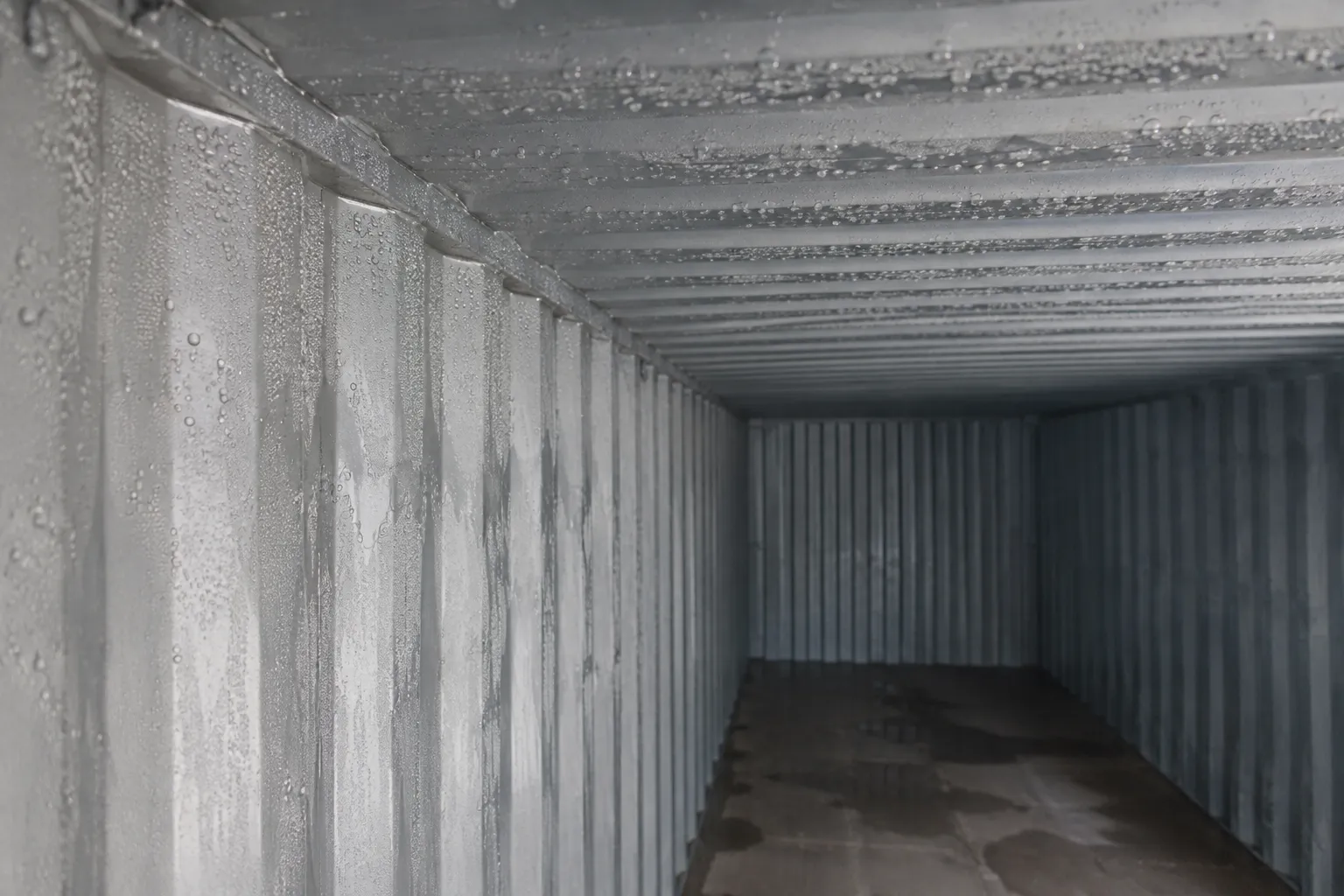
When moist air encounters steel below its dew point, water can condense on that surface. A cold roof can collect droplets that later fall onto stored materials. Concealed condensation can also occur behind poorly detailed insulation when interior air reaches cold steel.
The IMO/ILO/UNECE CTU Code, Annex 3 explains how temperature changes and moisture in cargo, packaging, and container materials contribute to condensation damage. Although written for transport units, its explanation of moisture movement also helps buyers understand stationary storage risks.
Effective shipping container condensation prevention therefore requires more than roof insulation:
- Repair leaks and deteriorated seals before lining the shell.
- Load dry contents and packaging rather than trapping existing moisture inside.
- Detail insulation joints and penetrations to limit moist air reaching cold steel.
- Provide a deliberate way to manage remaining moisture.
Inspect the starting shell before its surfaces are concealed. Our container grades guide helps distinguish condition descriptions, but no grade alone establishes winter thermal performance.
Spray foam, rigid panels and lined systems: compare the assembly
Shipping container insulation options should be compared as complete assemblies. Material, thickness, installation quality, air sealing, framing, and coverage all affect the result.
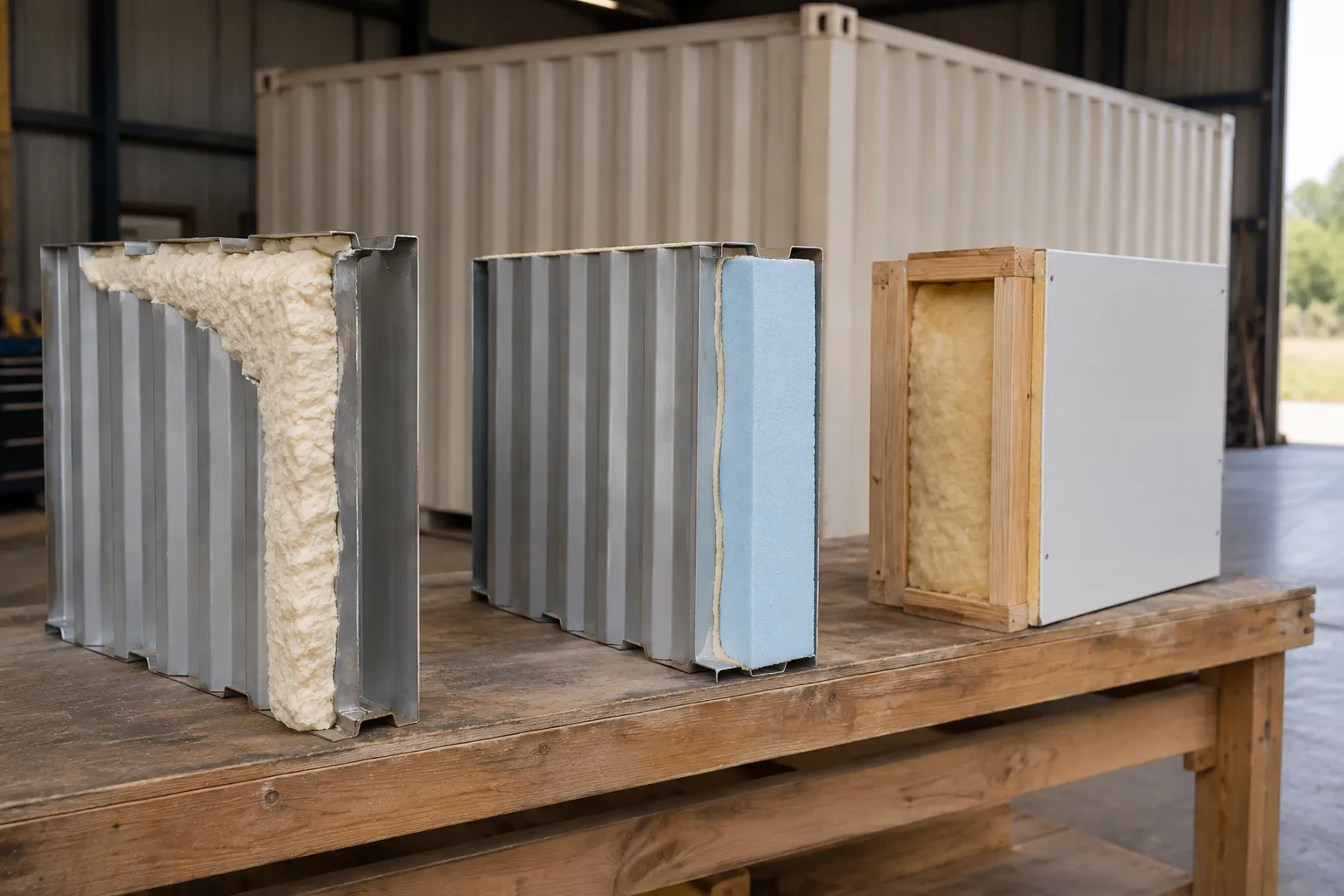
The U.S. Department of Energy’s insulation guide explains R-value as resistance to heat flow and discusses how insulation type and installation affect performance. A material’s nominal R-value does not automatically describe a container with exposed steel framing, uninsulated doors, or gaps.
| Package | Potential advantage | Details to request in the quote |
|---|---|---|
| Closed-cell spray foam | Can conform closely to corrugated steel and reduce gaps when properly installed | Product identification, minimum installed thickness, surface preparation, coverage, and required protective covering |
| Rigid foam panels | Defined board thickness and an orderly installation layout | Board type, R-value, sealed seams, corrugation void treatment, edges, and fastener details |
| Framed, insulated and lined system | Durable interior finish with planned mounting locations | Insulation behind the liner, framing depth, thermal breaks, moisture detailing, and liner specification |
Spray foam vs panel container insulation
For spray foam, ask how the installer will prepare steel, address corrosion, and verify minimum thickness over corrugations. Specify whether doors, corners, and structural members are covered. Do not assume all foam products provide the same vapor resistance or fire performance.
For panels, ask how installers will handle the spaces behind boards and seal joints around the entire perimeter. Panels that look neat can still leave paths for air to reach cold steel.
A “lined” container describes the finished surface, not necessarily the insulation underneath it. The 40ft high cube insulated, plywood-lined storage container is relevant when a protective interior finish matters. Request its insulation build-up, liner thickness, and attachment details before comparing it with an exposed-foam package.
For every system, request separate wall, ceiling, door, and floor specifications. A well-insulated ceiling cannot compensate for every other untreated surface.
Specify moisture control for your climate and use
Shipping container moisture control should reflect outdoor conditions, loading practices, and how often doors open. A cold, relatively dry location presents different challenges from a humid location with frequent warm-to-cold weather changes.
Cold climates and heated interiors
When the container is heated, indoor moisture can reach colder steel through assembly gaps. Ask the modifier to explain the air-control layer, vapor-control approach, and treatment at doors, wiring penetrations, and floor edges.
Do not prescribe a generic plastic vapor barrier without reviewing the complete assembly. Poorly positioned impermeable layers can limit drying and conceal moisture problems.
Humid climates and changing seasons
More ventilation is not always better. Outdoor air can introduce moisture when its dew point is higher than the temperature of interior surfaces. Ask whether ventilation will be passive, mechanically controlled, or coordinated with dehumidification—and why that approach suits your site.
Damp contents and frequent access
Wet equipment, damp cardboard, and frequent door openings can overwhelm a lightly specified system. Include these conditions in your quote request. Ask for accessible temperature and humidity sensors and a practical inspection routine.
The 15ft container with anti-condensation coating offers another feature to evaluate, but anti-condensation coating is not equivalent to thermal insulation or active humidity control. Request its moisture-handling capacity, drying requirements, and maintenance instructions. An absorbent coating needs an opportunity to release the moisture it holds.
Unpowered storage versus heated or dehumidified storage
An unpowered container can moderate short-term temperature changes, but its interior will tend toward outdoor conditions during extended cold. Desiccants can help with limited moisture loads in a reasonably sealed space, but they require monitoring and replacement or regeneration. They are not an unlimited drying system.
If freezing would damage the contents, specify powered protection rather than relying on insulation thickness alone.
For heated storage, request:
- A heat-loss calculation based on local winter conditions and your minimum interior temperature.
- A suitable heater, thermostat location, clearances, and protective controls.
- Electrical service requirements and a clear division between factory wiring and site connection work.
- A plan for temperature monitoring and power-loss response.
Avoid unvented fuel-burning heaters: they introduce combustion hazards and add moisture. Heating alone also does not remove water from the container.
For dehumidified storage, request equipment capacity at the actual expected interior temperature, not only its warmer test conditions. Confirm operating limits, defrost behavior, drainage, and how the drain will be protected from freezing.
The 40ft high cube insulated container with lighting and electrical is a useful powered starting point. However, lighting and electrical fittings do not establish heater capacity, dehumidifier inclusion, or compatibility with your site supply. Put those items in the written scope.
If your requirement is controlled cooling rather than winter protection, use the separate refrigerated-container purchasing checklist. It addresses a different equipment selection process.
How insulation and lining affect usable interior space
Compare finished clearances, not exterior container size. Wall assemblies reduce width; floor insulation and ceiling finishes reduce height. Door insulation, protective liners, electrical enclosures, and equipment can further reduce usable space.
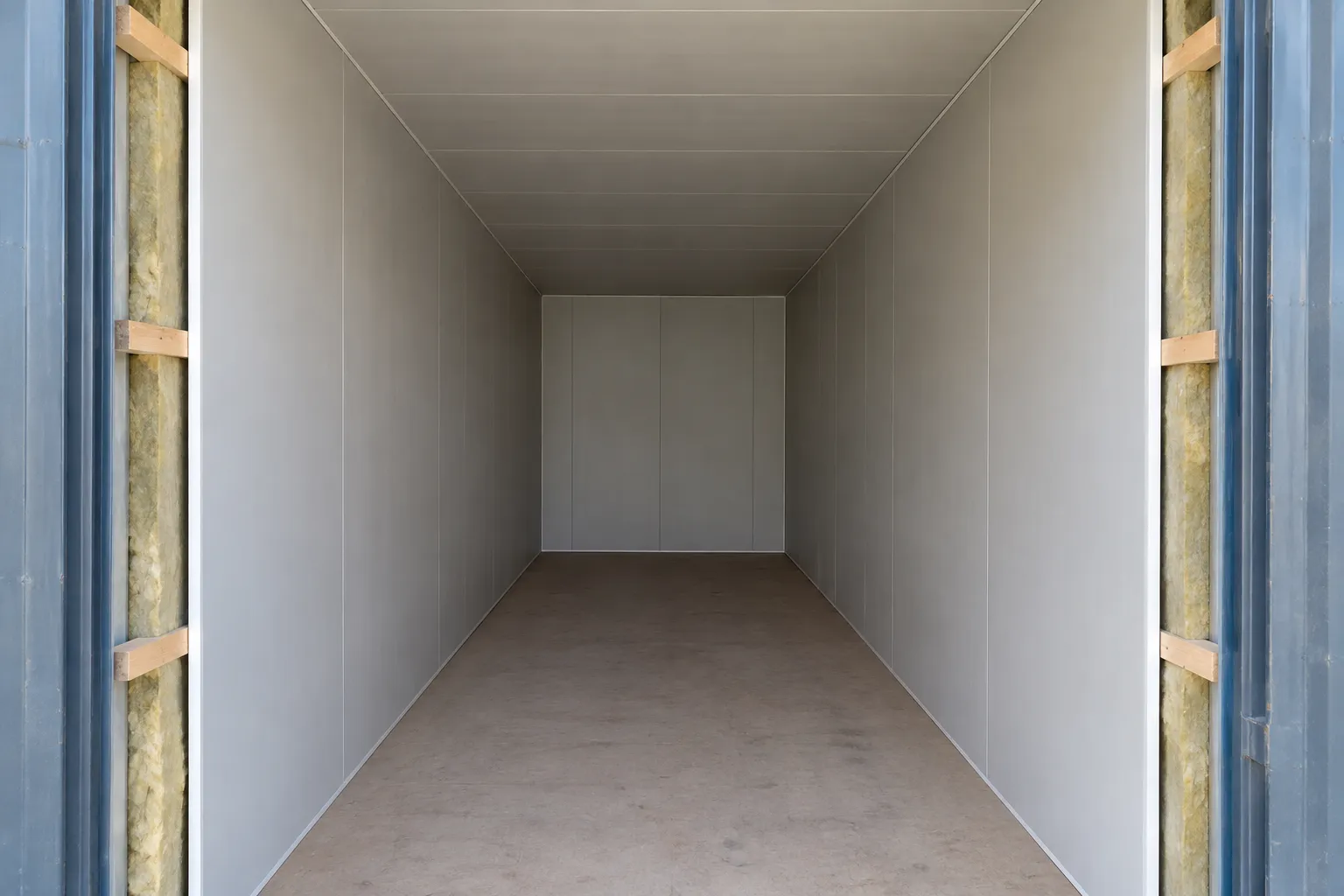
For example, a hypothetical assembly extending 3 inches inward from each sidewall removes 6 inches of clear width. This is an illustration, not a dimension promised for any listed product.
Request a dimensioned drawing showing:
- Finished interior length, width, and height at the narrowest points.
- Clear door opening after seals, insulation, and hardware are installed.
- Equipment footprints, service access, and required safety clearances.
- Shelf depth, aisle width, and floor loading requirements.
Compare 20ft containers with high cube containers when lining thickness affects capacity. Extra exterior height is useful only if the final clear height meets your needs.
Specify shelf and equipment mounting points before lining installation. Do not assume thin interior panels can support loaded shelving. Allow space for inspection and air movement rather than packing contents tightly against every wall. For access planning during busy inventory periods, our seasonal retail storage guide provides related context.
Workmanship, material and warranty details to request
When comparing an insulated shipping container for sale for winter storage, require enough documentation to understand both the enclosure and the modification work.
Ask for material data sheets, assembly drawings, and photographs taken before the lining conceals insulation and wiring. Request details for corrosion preparation, weather sealing around new openings, insulation continuity, and door operation after modification.
Foam protection and interior finishes should suit the intended use and applicable requirements. The International Code Council’s Off-Site Construction Safety Toolkit provides context for factory-built construction oversight. Factory modification does not remove the need to check local placement, permitting, structural, electrical, and fire-safety requirements.
Warranty questions should distinguish the container shell, modification workmanship, insulation materials, and installed equipment. Request written coverage periods, exclusions, maintenance obligations, and the process for reporting a defect. Do not infer a condensation or temperature guarantee from the word “insulated.”
Lease Lane Containers sells new, used, and modified units with nationwide US delivery. Free standard delivery applies to the contiguous United States (Lower 48). Remote or non-standard delivery sites are quoted in writing before you pay. Delivery is about a week and a half after full payment; the driver calls 1 day before arrival, and crane offloading is included. Review the shipping policy and describe site access in your request.
The specification checklist for your modified-container quote
Send this checklist with your insulated storage container quote request so proposals address the same requirements:
- Climate and location: Delivery ZIP code, winter conditions, humidity concerns, exposure, and site access restrictions.
- Contents: Materials being stored, manufacturers’ storage limits, sensitivity to freezing or corrosion, and whether anything enters damp.
- Performance target: Required temperature and humidity ranges, acceptable excursions, and monitoring expectations.
- Power availability: Whether power exists at the site, verified supply characteristics, available capacity, and outage concerns.
- Container size and condition: Preferred size, new or used shell, inspection documentation, and minimum finished clearances.
- Insulation package: Material, minimum thickness, stated R-values, and coverage for walls, ceiling, doors, floor, and steel members.
- Moisture-control modifications: Air sealing, vapor-control details, ventilation strategy, dehumidification, drainage, and sensor locations.
- Interior finish and access: Liner material, protective coverings, shelf supports, door opening, weather seals, and inspection access.
- Powered equipment: Heater sizing, thermostat, dehumidifier operating range, circuits, lighting, and responsibility for site connections.
- Documentation and scope: Drawings, material sheets, concealed-work photographs, applicable approvals, warranty terms, maintenance requirements, and itemized inclusions and exclusions.
The right winter-storage purchase is a coordinated enclosure, not just a steel box with insulation added. Browse the relevant insulated containers above or request a quote using this checklist to establish the required modifications before buying.
Frequently asked questions
Sources & further reading
- IMO/ILO/UNECE CTU Code — Annex 3: Prevention of Condensation Damages
- U.S. Department of Energy — Insulation: A Guide for Contractors to Share with Homeowners
- BBB Scam Alert: In the Market for a Shipping Container? Watch Out for This Con
- BBB Scam Tracker — Consumer-Submitted Shipping Container Report, July 21, 2026
- South Carolina Building Codes Council — 2024 Building Codes Modifications Index
- International Code Council — Off-Site Construction Safety Toolkit
Talk to our Raleigh team
Ready to find the right container?
Get a written quote, check availability or ask about delivery to your site. Lease Lane Containers LLC answers every enquiry personally.
- Call us
- +1 (984) 219-9882
- Visit
- 5832 Lease Ln, Ste B, Raleigh, NC 27617
- Business hours
- Mon - Fri: 9:00 AM - 5:00 PM · Sat - Sun: Closed (EST)