Storage for Business, Farm & Construction
Buy or Rent Shipping Container for Retail Storage This Holiday?
Recurring holiday overflow can favor ownership—but only when the full costs work. Use written quotes, realistic storage periods and a conservative resale estimate to compare.
9 min readBy the Lease Lane Containers team
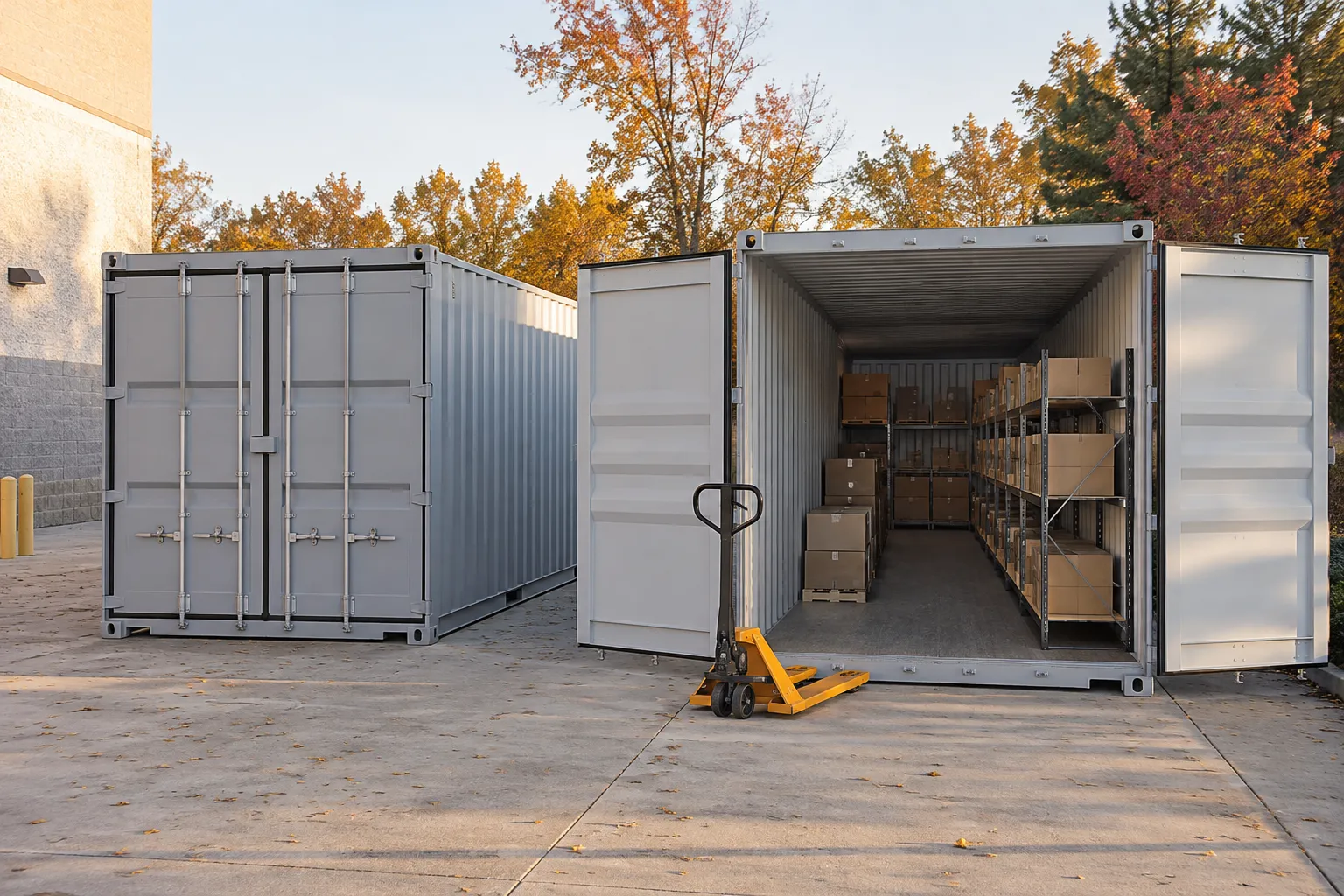
For retailers deciding whether to buy or rent shipping container for retail storage, buying often makes more sense when inventory peaks recur, the container can stay on-site, and ownership costs remain below repeated rental and transport charges. Renting may be better for one uncertain season, a temporary store, or a site that requires prompt removal.
The deciding number is not the purchase price divided by a monthly rental rate. It is the total cost of each option over the same period, for the same usable storage capacity. Build that comparison before ordering holiday inventory storage containers.
Should You Buy or Rent Shipping Container for Retail Storage for Several Seasons?
Start with your planning horizon: one holiday season, several recurring peaks, or continuous overflow storage. Then ask whether you can legally and practically keep the unit between peaks.
Buying becomes more attractive when you avoid repeated collection and redelivery, need a consistent picking layout, and have useful work for the container after December. Renting preserves flexibility when demand, store occupancy, or site approval is uncertain.
Neither option wins automatically after a fixed number of months. A low rental rate can be outweighed by repeat transport. A low purchase price can be outweighed by site work, relocation, maintenance, or lost parking space.
Lease Lane Containers sells containers; obtain rental terms separately in writing. Compare equivalent sizes, condition, access, and environmental protection rather than matching an inexpensive dry-storage purchase against a more specialized rental unit.
Estimate Your Peak Overflow Inventory and Storage Duration
Measure the stock that must leave the existing stockroom—not all merchandise expected to pass through the store. Use receiving records and your buying plan to identify the largest simultaneous overflow.
Record:
- Carton dimensions, quantities, weights, and safe stacking limits.
- Pallet footprints and loaded heights, where applicable.
- Shelf depth, picking aisles, and space to turn handling equipment.
- Separate areas for returns, damaged goods, and unreconciled deliveries.
- Temperature or humidity limits specified for the merchandise.
For seasonal inventory storage, build a weekly occupancy calendar from first overflow receipt through the last return or clearance shipment. December sales may empty shelves while January returns fill them again. Your storage end date should follow that inventory movement, not the promotional calendar.
Compare 20ft storage containers and 40ft storage containers using confirmed internal dimensions and door openings. Nominal exterior length does not tell you how many cartons remain accessible once shelves and aisles are installed.
Create a simple floor plan before requesting quotes. If employees must move several pallets to reach one fast-selling SKU, the apparent capacity saving may produce avoidable labor every shift.
Build a Buy-versus-Rent Worksheet From Written Quotes
Use the worksheet below for each candidate unit. Enter actual written quote amounts, retain the quote dates, and mark estimates clearly. Do not fill unknown rental charges with assumed market rates.

| Worksheet input | Purchase calculation | Rental calculation |
|---|---|---|
| Comparison horizon | Same number of seasons or years | Same number of seasons or years |
| Container charge | Quoted purchase price less eligible discount | Rate × billable periods for each deployment |
| Initial transport | Quoted delivery and placement charges | Delivery, placement, and collection charges |
| Site and setup | Preparation, permits, shelving, locks, electrical work | Required preparation, permits, approved fittings |
| Recurring costs | Maintenance, insurance, utilities, site occupancy | Insurance, utilities, recurring fees, site occupancy |
| Later movements | Relocation, off-site holding, final removal | Repeat delivery and collection for every deployment |
| Schedule changes | Additional ownership operating costs | Extensions, minimum terms, notice-period charges |
| Exit value or cost | Subtract net resale proceeds, if assumed | Add quoted cleaning, damage, and final collection costs |
Use these totals:
Purchase total = purchase price − eligible discount + setup + delivery/site extras + ongoing ownership costs + later movements − net resale proceeds.
Rental total = all billed rental periods + all transport cycles + setup + recurring fees and operating costs + applicable end-of-rental charges.
Include each cost only once. If resale proceeds are already net of collection expenses, do not also subtract those expenses elsewhere. Refundable rental deposits are a cash requirement, not an expense unless some portion is retained; show them separately.
For an initial purchase input, the 20ft used container with double cargo doors is listed at $1,650. The 40ft used cargo-worthy high cube is listed at $1,400. These are different products, not like-for-like capacity comparisons; confirm condition, dimensions, and suitability in your written quote.
Lease Lane Containers pays the sales tax, and it is never added at checkout. First-order code WELCOME500 provides $500 off a first order over $2,500. Apply that discount only when the order qualifies—not automatically to every worksheet.
Find the break-even season
Calculate cumulative rental and purchase totals after each season. The first season when purchase cost is no greater than rental cost is your modeled break-even point.
If annual costs remain constant, a shortcut is:
Break-even seasons = (initial purchase/setup cost − rental setup cost − assumed net resale proceeds) ÷ (rental cost per season − ownership cost per season).
Round up to a whole season. This shortcut requires a positive denominator and a resale assumption appropriate to the resulting horizon. If costs or resale values change, use the season-by-season worksheet instead. Run a zero-resale case alongside any resale estimate.
That is the useful way to answer “buy or rent shipping container for retail storage”—with your occupancy pattern, not a universal rule.
Include Repeat Transport, Rental Extensions and Ownership Costs
For rentals, ask whether billing uses calendar months or another fixed period, whether partial periods are charged in full, and when billing stops. Record minimum terms, collection notice requirements, extension rates, and any damage-waiver or cleaning charges.
Compare two rental scenarios: returning the unit after each peak and retaining it between seasons. Keeping it may avoid transport, but introduces idle-period rent and continued site occupancy. Ownership also needs a removal allowance if your landlord requires the space back.
For a Lease Lane Containers purchase, standard delivery is free to the contiguous United States, the Lower 48. Remote or non-standard delivery sites are quoted in writing before you pay. Delivery is about a week and a half after full payment; the driver calls 1 day before arrival; crane offloading is included. Review the container shipping policy and submit site details before relying on the standard-delivery assumption.
Crane offloading does not eliminate site preparation. Include any necessary grading, suitable supports, drainage work, or access improvements in your project budget. Ask for placement requirements before commissioning that work.
Ownership allowances should cover door seals, hinges, locking hardware, corrosion treatment, roof inspections, and any installed electrical or environmental equipment. Also consider the value of parking or receiving space occupied throughout the year. Keep this business opportunity cost separate from cash expenses so the comparison remains understandable.
Choose a Container Layout for Frequent Stock Picking
Retail overflow storage containers should support replenishment, not merely hold the maximum possible volume. Put fast-moving cartons near the access point, separate returns from saleable goods, and preserve a clear aisle.
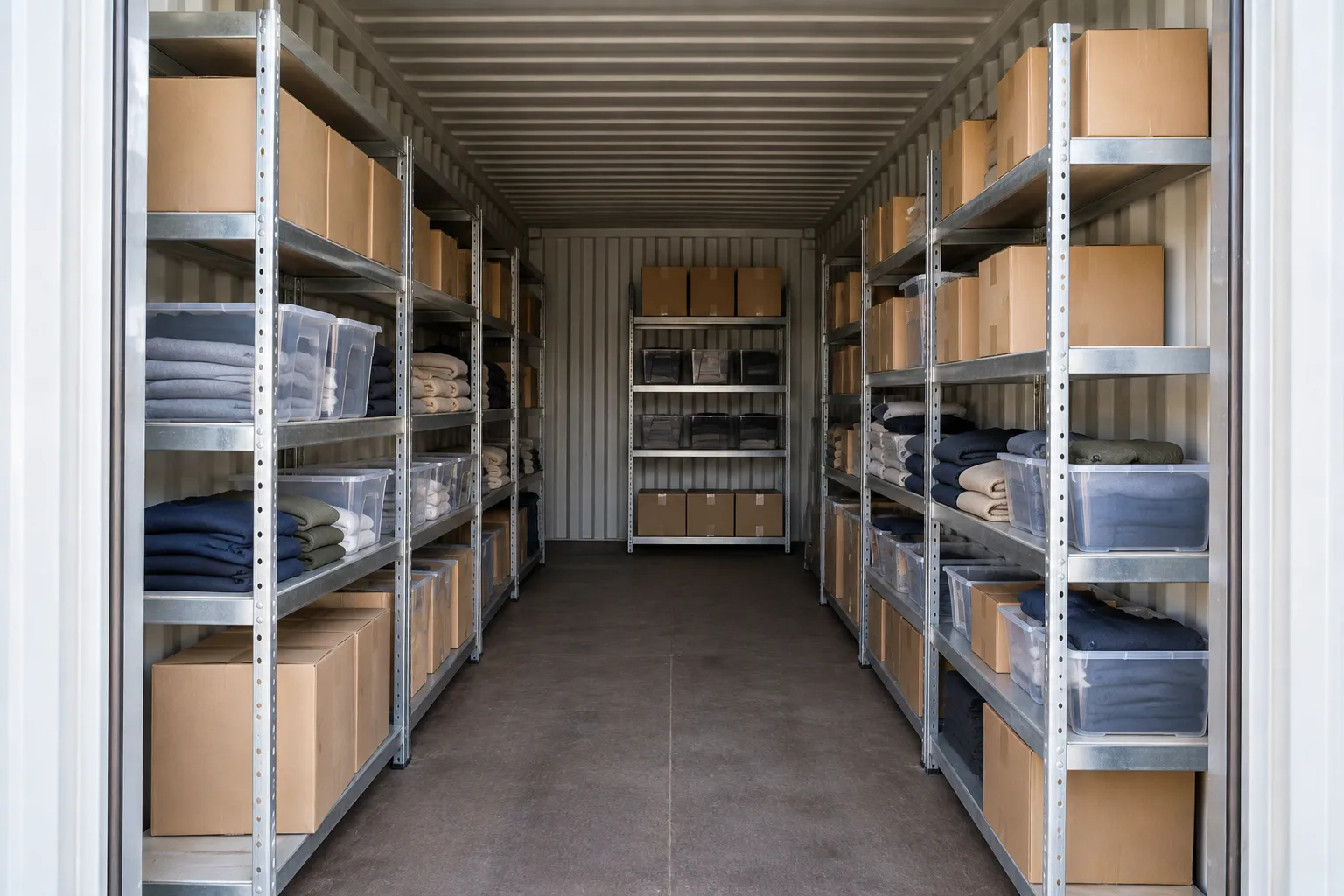
Match the access arrangement to the work:
- Occasional bulk access: Standard end doors may suit slow-moving reserve cartons or stock loaded in retrieval order.
- Frequent picking from both ends: The 20ft tunnel container with double-end doors can reduce deep retrieval, provided both ends remain accessible.
- Access along the side: The 20ft one-trip container with full-length side access may suit separated product groups, but requires exterior door-opening clearance.
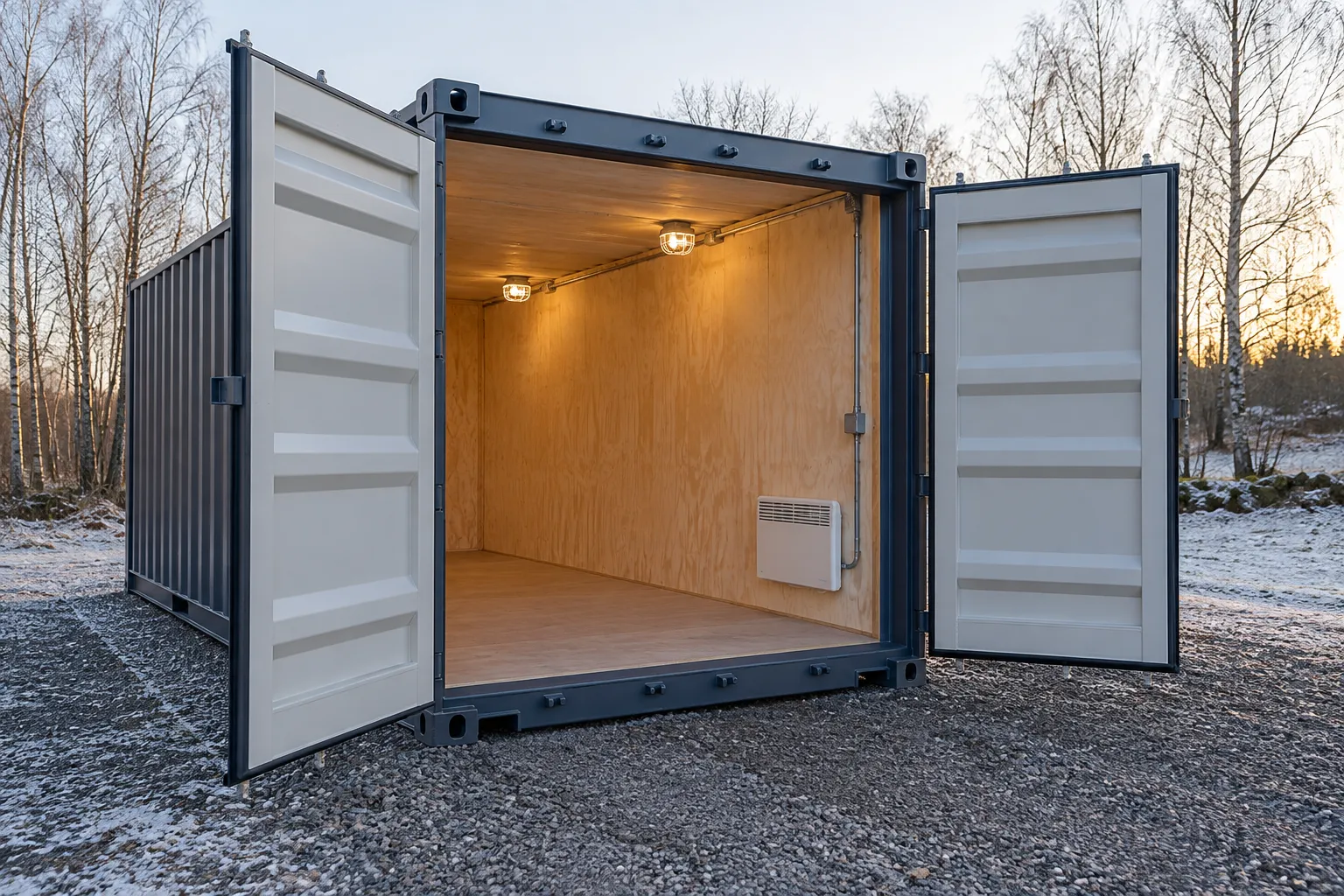
- A fitted picking space: The 20ft high cube storage container with lighting and shelving is made to order; confirm shelf configuration, load limits, electrical requirements, and all included work.
Browse double-door container layouts when two-ended access solves a genuine handling problem. Double cargo doors at one end are not the same as doors at both ends.
For an on-site stockroom container for sale, request condition details covering doors, seals, floor, roof, odors, and prior repairs. The container grades guide helps frame those questions, while the container buyer’s guide helps organize specifications.
Check Store-Site Approval, Security and Inventory Insurance
Get property-owner approval and confirm requirements with local planning, building, and fire authorities before committing. Ask about placement duration, setbacks, parking requirements, emergency access, and whether foundations or modifications require approval.
Local rules differ. Portland’s cargo-container building code guide addresses cargo containers under its local framework. Medford publishes a temporary portable storage container permit application and regulations. Neither establishes permission for your store elsewhere; they illustrate why local review matters.
Keep the unit clear of fire lanes, pedestrian routes, receiving operations, and required accessible spaces. Give the delivery team photographs and measurements of the entrance, route, overhead obstructions, and proposed placement area.
Ask your insurer to confirm coverage for inventory in a detached outdoor container, including theft, water damage, applicable exclusions, and peak seasonal stock values. Container coverage and merchandise coverage are separate questions. Locks, lighting, camera coverage, and controlled key access should support—not substitute for—insurance review.
A dry container is not climate-controlled. The EPA’s moisture-control guidance explains the relationship between moisture, condensation, and mold. Although written for schools, that underlying principle matters for moisture-sensitive cartons and merchandise too.
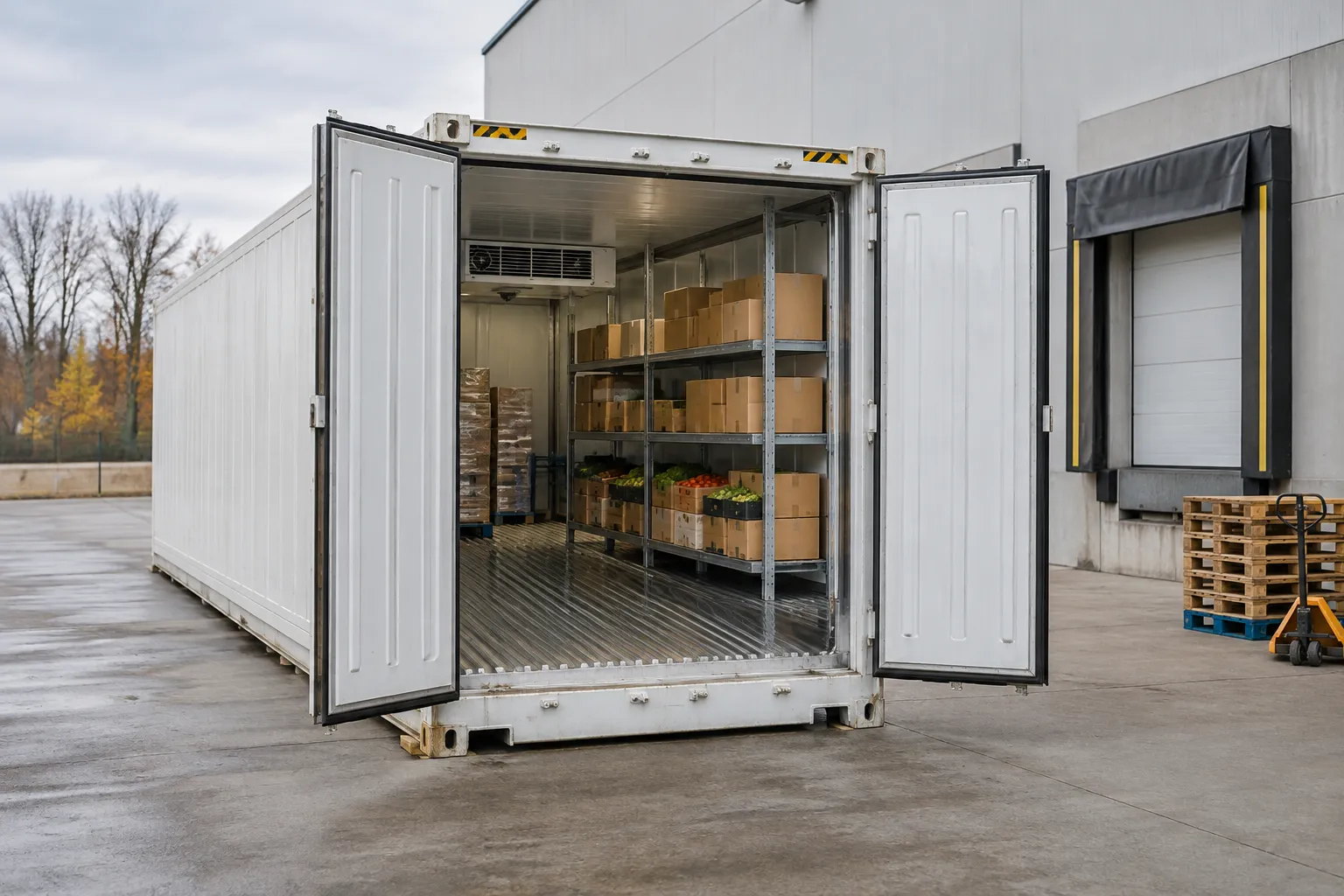
Check product storage requirements and plan drainage, moisture monitoring, and any necessary environmental control. For temperature-sensitive food, use the refrigerated-container food-storage checklist rather than assuming a standard steel box is suitable.
Plan for January Returns, Year-Round Use or Resale
Before choosing shipping container rental vs purchase, write down the January plan. Specify where returns will be inspected, how damaged stock will be isolated, and when the unit can genuinely be emptied.

If ownership supports additional stock between holidays, count only documented avoided expenses. Do not assign speculative savings to hypothetical future uses or count the same avoided storage bill twice.
Treat resale as uncertain. Obtain a realistic estimate for the expected condition and location, then deduct selling, preparation, and removal expenses that you would bear. Keep the zero-resale scenario visible. If buying works only with an optimistic resale figure, the decision is fragile.
Resale is not a product return. Lease Lane Containers has a 30-day return window: defective or incorrect units cost $0 to return; change-of-mind returns carry a 15% restocking fee, and the customer arranges return freight. Review the return policy before purchasing, not as an assumed end-of-season exit strategy.
Request a Purchase Quote With Your Inventory and Site Requirements
Send the same requirements with each quote request so the worksheet compares equivalent solutions. Your retail-storage purchase quote checklist should include:
- Inventory: Peak carton or pallet count, dimensions, weights, stacking limits, and storage conditions.
- Duration: First stock-in date, January returns allowance, and expected number of recurring seasons.
- Container: Preferred size, grade, confirmed internal dimensions, and door arrangement.
- Picking layout: Shelving, aisles, lighting, locks, and handling-equipment requirements.
- Site: Delivery ZIP code, photographs, access measurements, overhead obstacles, surface conditions, and placement orientation.
- Approvals: Property-owner permission and applicable local requirements.
- Itemized total: Purchase price, eligible discount, included features, and any written non-standard site charges.
- Ownership assumptions: Maintenance budget, insurance confirmation, future movements, and conservative resale assumptions.
Buy when recurring use and the full-cost worksheet support ownership; rent when short duration or uncertainty makes flexibility more valuable. Browse suitable containers in the container shop or request a purchase quote with this checklist to turn your holiday storage plan into a defensible decision.
Frequently asked questions
Sources & further reading
- FreightWaves — Retailers say extended peak shipping season winding down
- AP News — US retail trade group forecasts healthy holiday sales, in part due to inflation
- US EPA — Moisture Control, Part of Indoor Air Quality Design Tools for Schools
- City of Portland — Building Code Guide 96-11: Cargo Containers
- City of Medford — Temporary Portable Storage Container Permit Application and Applicable Regulations
Talk to our Raleigh team
Ready to find the right container?
Get a written quote, check availability or ask about delivery to your site. Lease Lane Containers LLC answers every enquiry personally.
- Call us
- +1 (984) 219-9882
- Visit
- 5832 Lease Ln, Ste B, Raleigh, NC 27617
- Business hours
- Mon - Fri: 9:00 AM - 5:00 PM · Sat - Sun: Closed (EST)