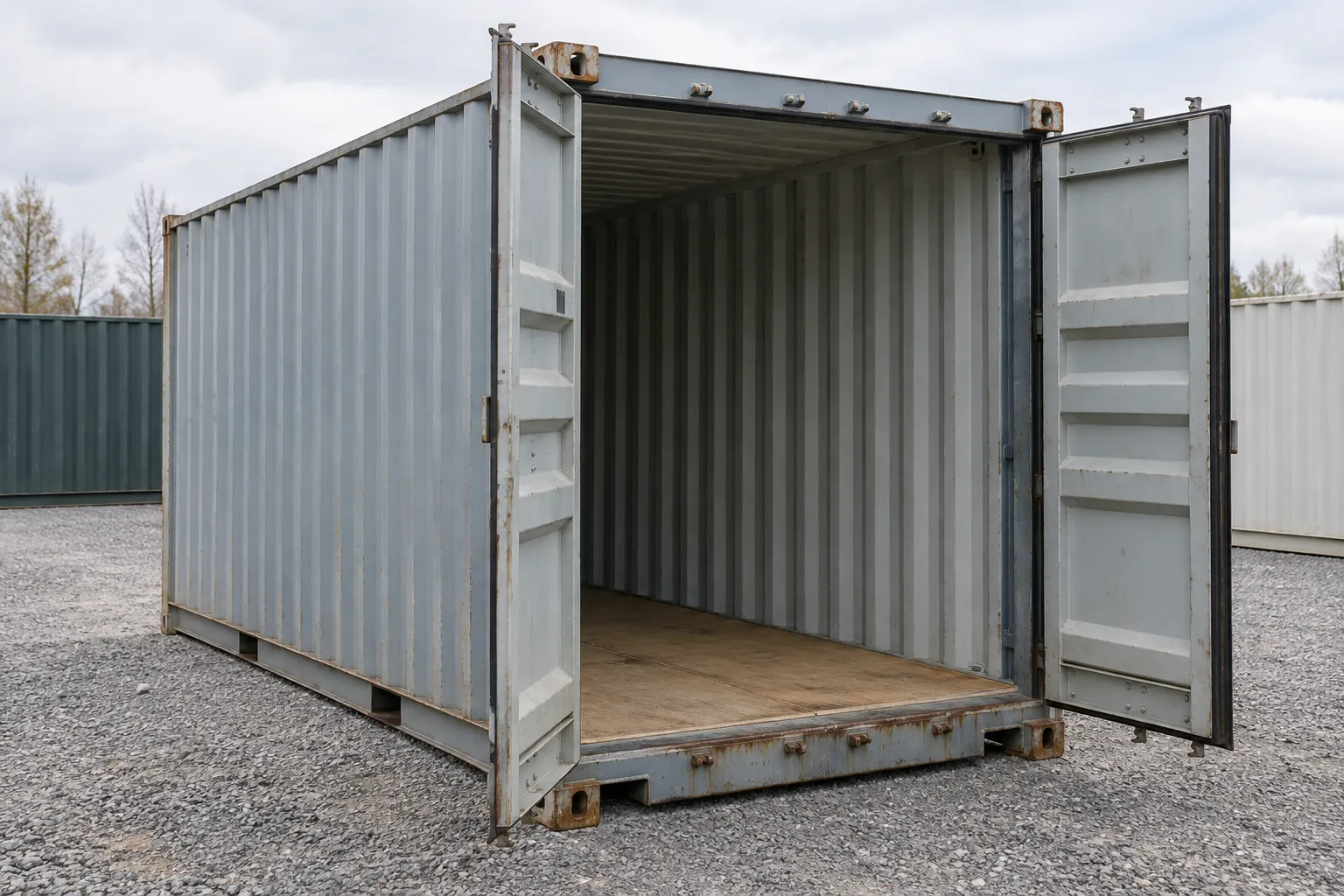
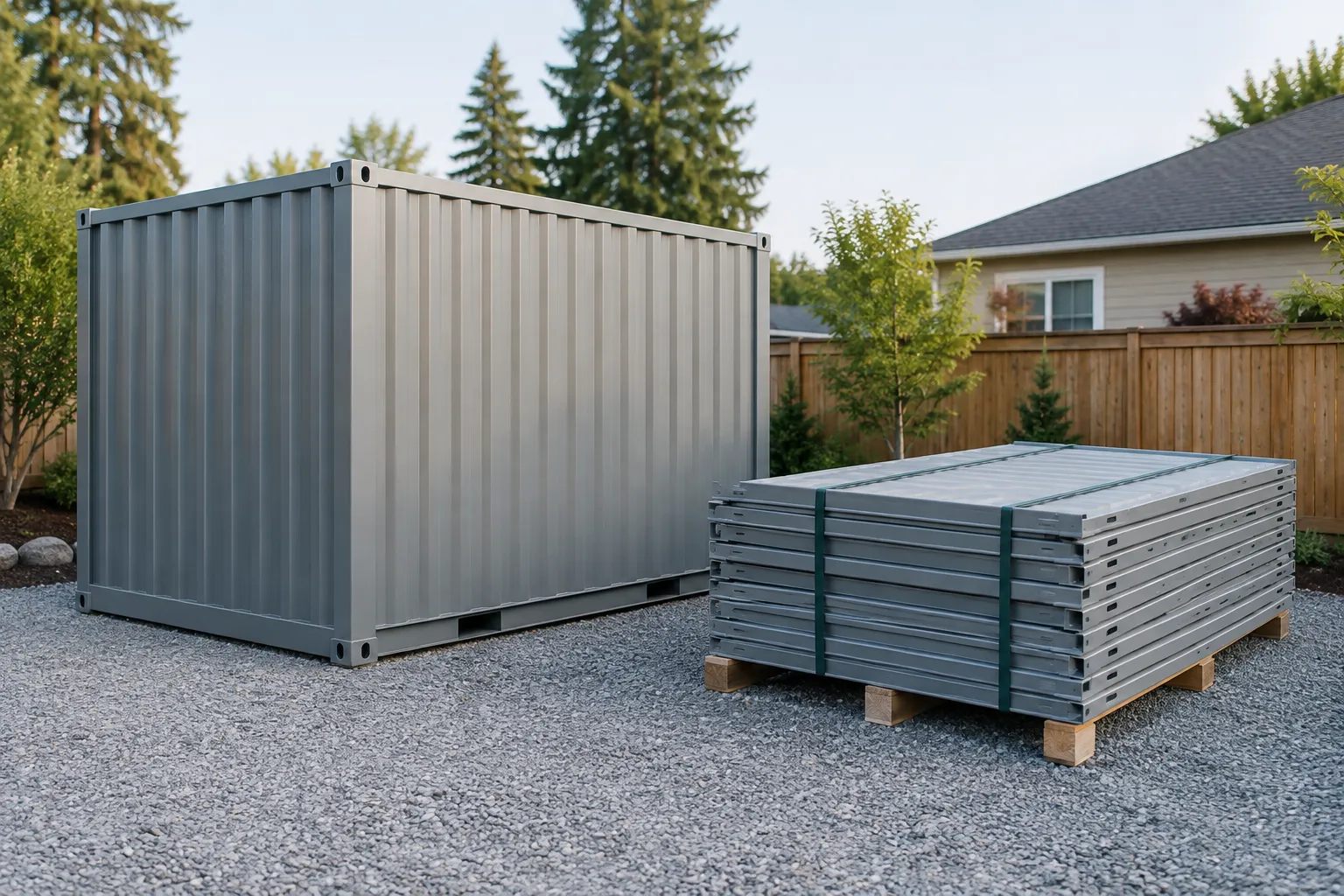
Grades, Condition & Maintenance
Buy Shipping Container for Overseas Shipping: Get Approval First
A cargo-worthy label is not carrier acceptance. Build a unit-specific SOC approval packet before buying, then coordinate the container purchase with your ocean booking.
9 min readBy the Lease Lane Containers team
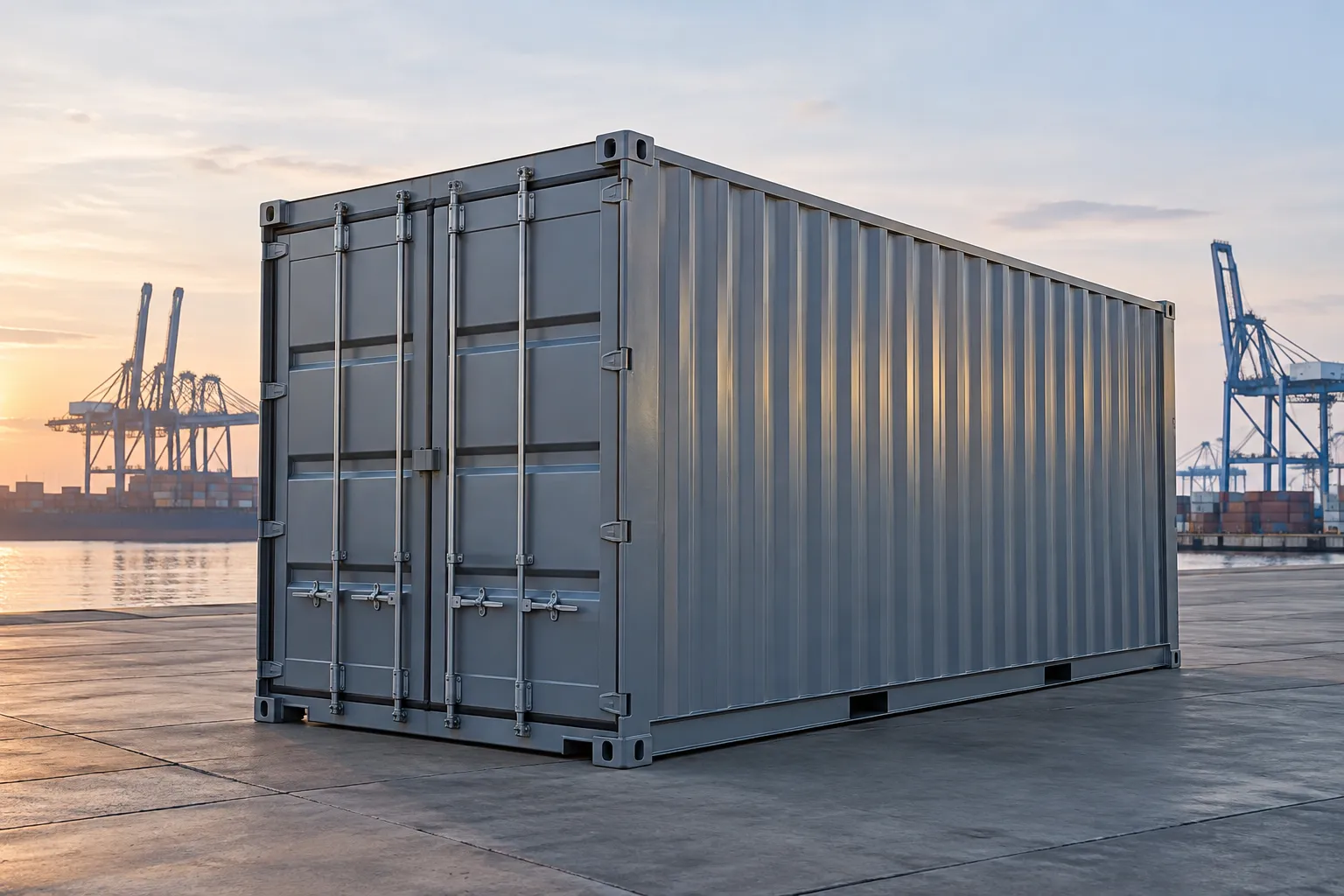
If you plan to buy shipping container for overseas shipping, get written acceptance from the ocean carrier for the proposed unit before paying for it. A container advertised as one-trip or cargo-worthy is a candidate—not automatic permission to load it onto a vessel.
The practical next step is a pre-purchase approval packet. Maersk’s shipper-owned container guidance requests an SOC application, container photos and CSC plate photos before validating the booking request. Other carriers may require different evidence. Start with your carrier’s requirements, then match the container and documentation to the shipment.
Should You Buy a Shipper-Owned Container or Use the Carrier’s Equipment?
A shipper-owned container, or SOC, is equipment you supply rather than equipment supplied by the ocean carrier. You arrange its purchase, maintenance and supporting records, while the carrier decides whether to accept it for the proposed movement.
Buying can make sense when you intend to retain the container at the destination, reuse it for later shipments or control its availability during packing. Carrier-supplied equipment may be simpler for a single shipment when you do not want responsibility for the box afterward.
Compare both options with your forwarder before shopping:
- Will the recipient keep the container, and can it legally remain at the destination?
- Who handles container import formalities, duties and any ownership records?
- Does the carrier accept SOC equipment on every leg of the proposed route?
- What destination handling, storage and onward transport costs apply?
SOC ownership does not eliminate all port storage, handling or delay charges. Ask which charges change and which remain. Lease Lane Containers sells containers; ocean carriage and destination arrangements require separate confirmation with your shipping providers.
Buy Shipping Container for Overseas Shipping: Get Written Acceptance First
Do not settle for “we accept SOCs.” Ask for acceptance tied to the proposed container identification, size, type, route and booking request. A general carrier policy is only the starting point.
Use this purchase sequence:
- Ask your carrier or forwarder for its current SOC application and document requirements.
- Request a proposed container identification and the available records from the seller.
- Submit the packet through the carrier’s required channel.
- Resolve requests for an examination, survey, repair or additional evidence.
- Obtain written acceptance and clarify any remaining conditions before completing the purchase.
If the seller cannot identify a candidate before payment, or the carrier will not review it before a booking exists, resolve that sequencing problem in writing. Do not assume a later rejection makes the container automatically returnable without expense.
Keep equipment acceptance separate from vessel space confirmation and cargo acceptance. Approval of the container does not establish that your commodity, weight or sailing has been accepted. Ask whether a route change or replacement unit requires another submission.
What to Include in Your SOC Approval Packet
Treat the packet as a set of matching records, not a folder of unrelated pictures. The container identification on the application, supporting documents and carrier response should be consistent. Product-page photographs are not a substitute for unit-specific evidence requested by the carrier.
| Packet item | What it should establish | Who should confirm it |
|---|---|---|
| SOC application | Applicant, equipment details and proposed movement | Carrier or forwarder |
| Container identification and specifications | Identity, size, type, tare and permitted mass information | Seller and carrier |
| Requested container photographs | Condition evidence in the carrier’s required views | Seller or surveyor |
| Legible CSC plate photographs | Safety approval information and relevant markings | Carrier or qualified examiner |
| Examination-status evidence | Current examination basis and applicable records | Qualified examiner and carrier |
| Survey report, if required | Findings, inspection date and any outstanding repairs | Carrier-accepted surveyor |
| Written acceptance | Accepted equipment, route and remaining conditions | Ocean carrier |
Maersk’s stated application-and-photo process is a useful model, but it is not a universal checklist. Ask your chosen carrier which exterior, interior, roof, underside or repair photographs it needs, and how recent supporting evidence must be. Do not climb onto a container or enter an unsafe position to obtain pictures; arrange safe inspection access.
Keep a separate cargo-document folder. Shipping instructions, packing lists, commercial invoices, customs filings, dangerous-goods declarations where applicable and verified gross mass submissions serve different purposes. Your forwarder should identify the shipping container export documents required for your cargo and destination.
CSC Plate, Examination Status and Survey Documents: What to Verify
The Convention for Safe Containers, commonly called CSC, provides the international safety framework for containers. A plate is important evidence, but the presence of a plate alone does not prove that the equipment is currently acceptable for your shipment.
Check identity and examination status together
Ask a qualified examiner to interpret the approval information and examination markings. Confirm how the records identify the proposed unit and whether it is maintained under periodic examination or an Approved Continuous Examination Programme, commonly called ACEP.
For periodic examination, establish the applicable next examination date. For ACEP, ask who is responsible for the program and whether coverage remains valid after the ownership transfer. Do not assume an old operator’s marking automatically covers a new owner.
A search for a CSC certified shipping container should lead to these questions—not simply a photograph showing a metal plate. If information is missing, illegible or inconsistent, pause the purchase until the carrier or examiner explains what is needed.
Establish the survey requirement before ordering one
Ask whether the carrier requires a separate condition or cargo-worthiness survey, who may issue it, its acceptable age and whether repairs require reinspection. A survey does not replace carrier acceptance, and a condition report does not by itself resolve missing examination records.
Our container grades guide explains the shopping terminology. The used-container inspection checklist helps assess physical condition, but neither replaces the carrier’s documentation review.
Questions to Ask About One-Trip and Used Export Candidates
Start with conventional equipment matching the carrier’s accepted dimensions and type. Browse new one-trip containers and used shipping containers, then narrow the selection using the carrier’s requirements.
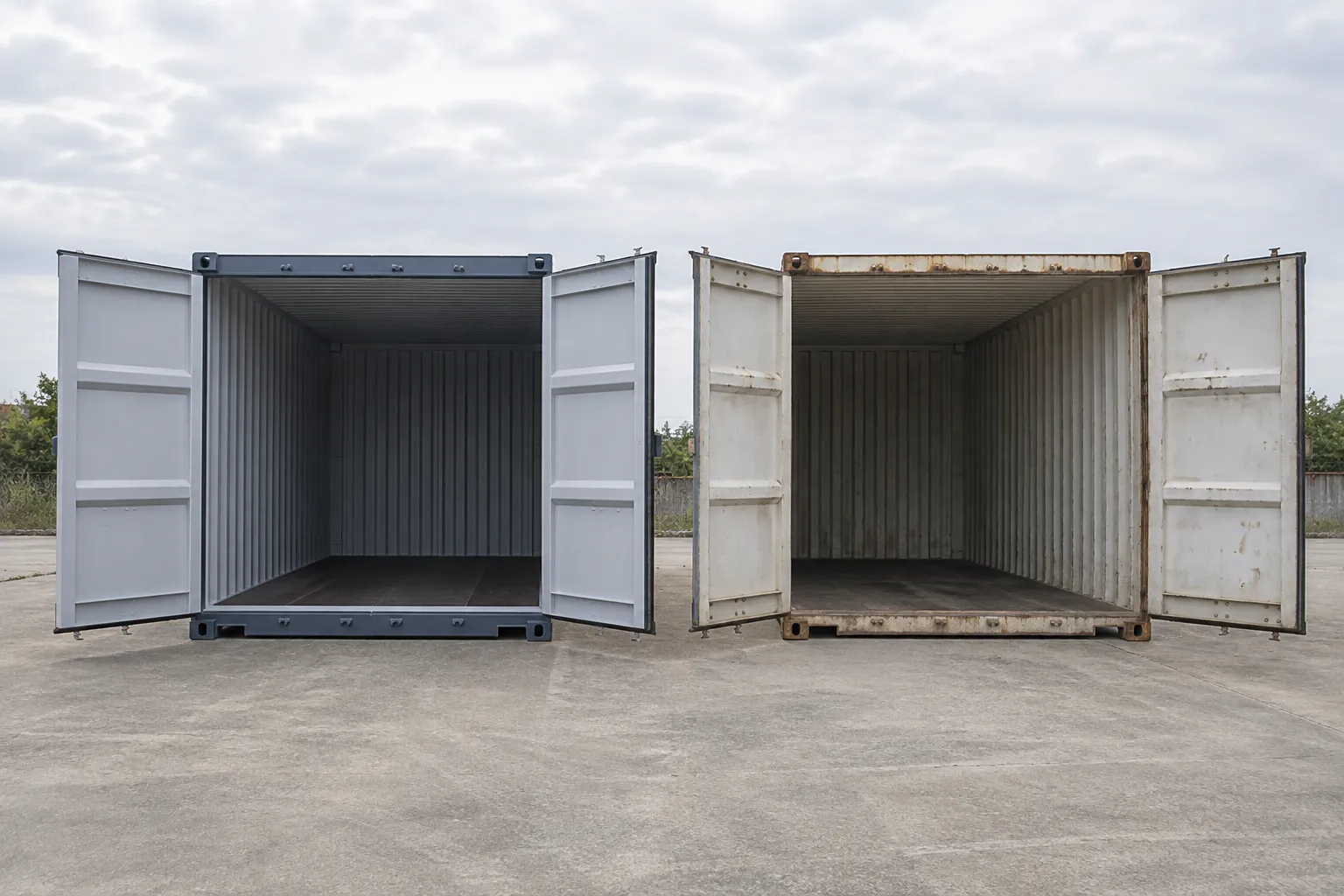
A one trip container for export may offer less service wear, but “one-trip” does not establish current examination status, required documents or route acceptance. Used cargo-worthy equipment can also be suitable when the supporting evidence satisfies the carrier.
These are useful products to discuss as candidates, not preapproved export units:
- The 20ft new one-trip container with double doors is a conventional-size option to evaluate for smaller loads.
- The 20ft used cargo-worthy container provides a used alternative for the same size comparison.
- The 40ft used cargo-worthy container is a standard-height candidate when cargo volume requires more floor length.
- The 40ft high-cube one-trip container offers extra height, subject to route, chassis and carrier compatibility.
For each candidate, ask which records are available, whether structural repairs or modifications need disclosure, and whether a survey can be arranged if required. Confirm cargo weight and packing requirements before choosing by volume alone. Road limits can constrain a load even when the container’s rated capacity is higher.
Lease Lane Containers units pass our manual light test before dispatch. That check is not an export survey or carrier approval.
30-Day Structural Guarantee: if a structural defect or leak is found within 30 days of delivery, we'll provide a mobile repair, an exchange or a full refund, as set out in our Refund & Returns Policy.
Review the Refund & Returns Policy separately from your carrier’s conditions. Carrier rejection alone should not be treated as proof of a structural defect.
Compare the Complete Quote: Container, Survey, Trucking and Shipping Charges
When evaluating a shipper owned container for sale, compare the complete journey rather than the box price alone. Ask each provider to identify what is included, excluded and payable if the shipment changes.
Your cost worksheet should separate:
- Container purchase and any agreed preparation or repairs.
- Examination, survey, documentation and reinspection charges.
- Domestic delivery to the agreed receiving location.
- Loading, lifting, chassis use and loaded transport to the terminal.
- Ocean freight, SOC-related charges and origin terminal services.
- Destination clearance, handling, storage and onward transport.
For reference, our 20ft used cargo-worthy container is $2,650, while our 20ft new one-trip container is $3,250. Neither product price establishes an ocean freight rate or includes an export survey unless expressly stated in your written quote.
Standard Delivery is free on all orders delivered within the contiguous United States (Lower 48). Remote or non-standard sites and locations outside the Lower 48 are quoted in writing before you pay. Containers, homes and offices are offloaded and placed by crane. Domestic delivery does not mean ocean carriage or loaded port drayage is included.
Sales tax is included and paid by Lease Lane Containers, so nothing is added at checkout.
Market headlines are not substitutes for a route quote. The Port of Los Angeles announcement of an all-time monthly cargo record, dated October 9, 2026, concerns port throughput. It does not establish retail container availability, container prices or SOC demand. Use written equipment and freight quotes for your purchase decision.
Coordinate Container Release, Loading and Terminal Deadlines
After approval, align the domestic delivery with your loading plan and the carrier’s receiving window. Every unit ships from our Raleigh, NC yard and is delivered by our own trucks, trusted freight carriers or a vetted partner delivery agency, depending on your location.

For in-stock products other than container homes, handling is 1–3 business days. Standard transit is 3–7 business days, making 4–10 business days in total, about a week and a half. All times start once full payment has been received and count business days only, Monday–Friday, excluding U.S. federal holidays. Enter your ZIP code on any product page to see your estimated arrival dates. Our driver calls you one day before delivery to confirm the exact time.
Review our shipping policy and agree on a receiving site with safe crane access. If the container will be placed on the ground for packing, determine who will lift the loaded container onto suitable transport afterward. Do not assume the original delivery includes that later operation.
Ask your forwarder to confirm:
- The terminal’s earliest receiving date and cargo cutoff.
- Shipping-instruction and verified-gross-mass submission deadlines.
- Who records the seal number and submits the final container details.
- Who handles missed cutoffs, booking changes and temporary storage.
Recheck the accepted container identification before loading. If the proposed unit changes, seek updated SOC container carrier approval rather than relying on the first unit’s paperwork. Our delivered container cost guide can help separate the domestic purchase from additional shipment costs.
Request an Export-Ready Quote With Your Route and Carrier Requirements
Before you buy shipping container for overseas shipping, send Lease Lane Containers a brief that identifies what your carrier needs. Request an export-ready candidate and documentation scope—not an unsupported promise of universal acceptance.
Include:
- Origin loading ZIP code, departure port, destination port and final destination.
- Ocean carrier, forwarder and any transshipment points already known.
- Container quantity, size, height and preferred condition.
- Cargo description, estimated weight and any special loading requirements.
- Carrier SOC application, required photographs and survey requirements.
- Target sailing, terminal deadlines and requested domestic delivery location.
- A request to identify available documents, missing evidence and separately quoted services before payment.
Browse our 20ft containers and the one-trip or used candidates above, then request a quote with your route and carrier requirements attached. Buy the container that your shipment can use—not just the container whose listing looks right.
What "fully furnished" means: when one of our container homes is described as fully furnished, it means built-in amenities only: interior finishes and any built-in cabinetry, kitchen or bathroom fit-out, electrical and plumbing that are listed in this home's specifications. Loose furniture and appliances (for example beds, sofas, tables, refrigerators and microwaves) are not included unless listed in your written quote.
Frequently asked questions
Yes, provided the ocean carrier accepts shipper-owned equipment for your route and approves the proposed container. Before purchasing, obtain the carrier’s SOC requirements and submit the requested application, photographs and supporting records. Container acceptance, cargo acceptance and vessel space confirmation are separate matters, so have your forwarder verify all three.
No. A CSC plate provides safety approval information, but its presence alone does not establish current examination status or carrier acceptance. Have a qualified examiner check the applicable examination records and markings. Then ask the carrier whether it requires a survey or other evidence for the proposed container and route.
A one-trip container typically has less service wear, but that does not make carrier approval automatic. A used cargo-worthy container may also qualify when its condition, examination status and documentation meet the carrier’s requirements. Compare the complete approved cost, including any required survey, repairs and transport, rather than choosing by condition label alone.
Maersk’s published SOC guidance requests an SOC application, container photographs and CSC plate photographs before validating the booking request. Confirm the current submission process and any additional route-specific requirements directly with the carrier or your forwarder. Keep the container’s identity consistent across the application, supporting records and written acceptance.
No. Standard Delivery is free on all orders delivered within the contiguous United States (Lower 48). Remote or non-standard sites and locations outside the Lower 48 are quoted in writing before you pay. Ocean freight, export surveys, loaded terminal transport and destination services are separate arrangements unless expressly included in a written quote.
Sources & further reading
- Maersk — Do you accept Shippers own containers?
- Port of Los Angeles Sets All-Time Monthly Cargo Record — October 9, 2026
- NOAA — El Nino looms large over U.S. Winter Outlook — October 15, 2026
- International Code Council — Products & Services Resources: Intermodal Shipping Container Structural Requirements
- Verisk CargoNet Reports Persistent Labor Day Cargo Theft Exposure Across U.S. Freight Networks — September 4, 2026
Talk to our Raleigh team
Ready to find the right container?
Get a written quote, check availability or ask about delivery to your site. Lease Lane Containers LLC answers every enquiry personally.
- Call us+1 (984) 219-9882
- Emailsales@leaselanecontainers.llc
- Visit5832 Lease Ln, Ste B, Raleigh, NC 27617
- Business hoursMon - Fri: 9:00 AM - 5:00 PM · Sat - Sun: Closed (ET)