Buying Guides & Pricing
Shipping Container Prices Delivered 20ft vs 40ft: Total Cost
A 40ft container can cost less than a 20ft—but size alone does not decide value. Compare actual listings, usable storage space, and written delivery terms for your address.
9 min readBy the Lease Lane Containers team
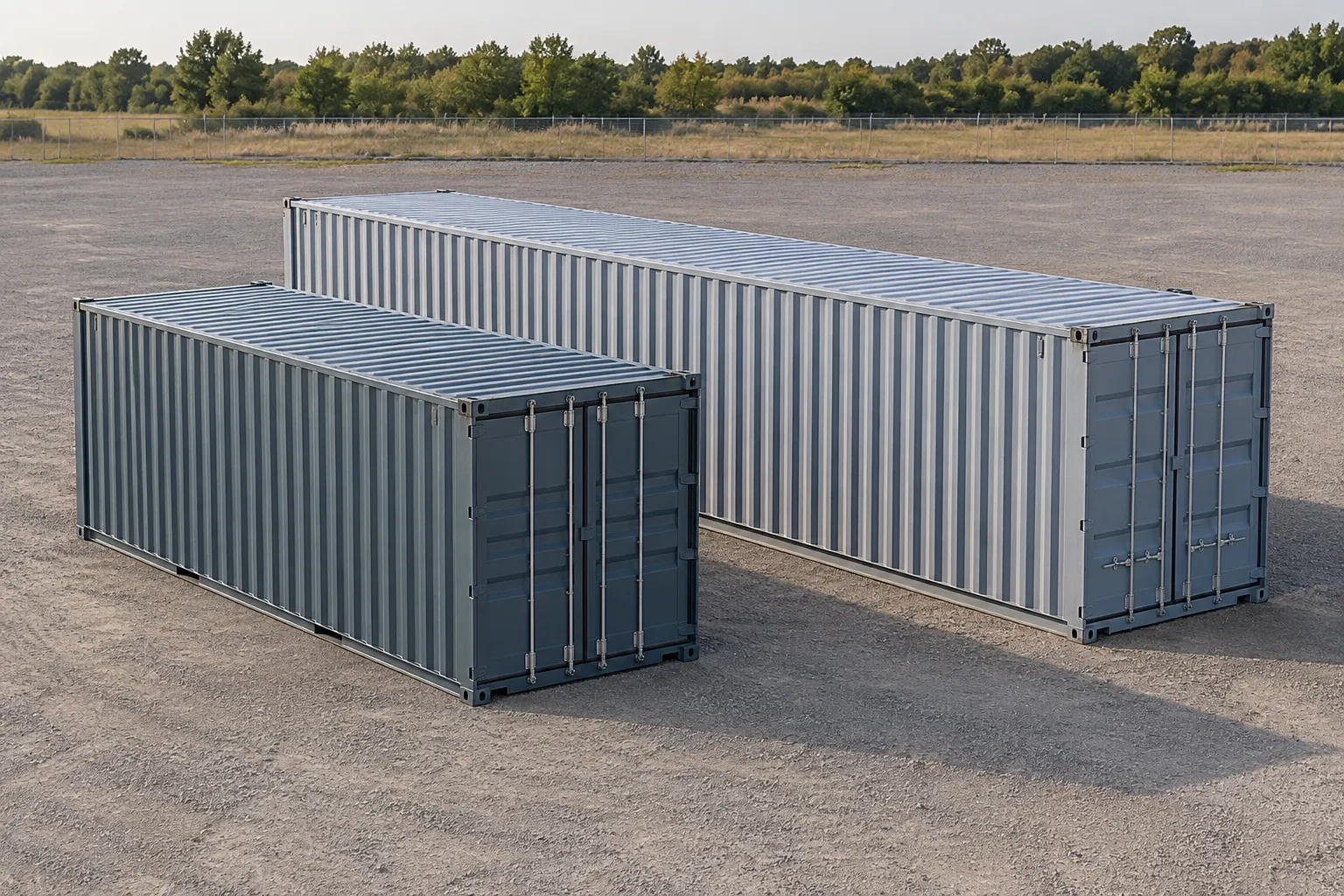
When comparing shipping container prices delivered 20ft vs 40ft, the better deal is the lowest confirmed total for a container that meets your storage needs and fits your site. A 40ft unit can offer more space for less money, but not every listing has equivalent specifications.
For example, Lease Lane Containers lists a 20ft used storage-class container at $1,600 and a 40ft used storage-grade container at $1,350. Those are useful starting points—not substitutes for matched, dated quotes for your address. Below, we separate product price, included services, site exceptions, and usable-space calculations.
Shipping Container Prices Delivered 20ft vs 40ft: Compare Dated Quotes
Comparison context: October 2026 market reporting. The prices below come from the product inventory supplied for this guide, not a live ZIP-code quotation or a verified October price history. Each listed product is marked in stock in that inventory; confirm availability and pricing in a dated written quote before purchasing.
Lease Lane Containers sells new and used containers with nationwide US delivery. Free standard delivery applies to the contiguous United States (Lower 48). Remote or non-standard delivery sites are quoted in writing before you pay. Crane offloading is included. Sales tax is paid by Lease Lane Containers and is never added at checkout.
| Comparison pair | 20ft listed product and price | 40ft listed product and price | What to confirm before comparing totals |
|---|---|---|---|
| Used storage units | 20ft storage-class, standard-height container — $1,600 | 40ft storage-grade, standard-height container — $1,350 | Equivalent condition commitments and door configuration |
| One-trip dry storage | 20ft new one-trip container with double doors — $1,999 | 40ft one-trip, standard-height dry-storage container — $2,950 | Matching height, door layout, and included features |
| One-trip high cubes | 20ft high-cube one-trip container — $2,950 | 40ft high-cube one-trip container with double cargo doors — $3,450 | Internal dimensions, door opening, and specification differences |
The used-storage pair makes the key point: a longer container does not automatically carry a higher purchase price. Here, the 40ft listing is $250 lower. In the high-cube pair, the listed difference is $500 for the longer unit.
Request both sizes on the same quote date, for the same address and placement requirements. Record the quote expiration date beside each total. Comparing an old 20ft quote with a fresh 40ft quote mixes size differences with possible inventory changes.
Container Price, Transport, Unloading and Tax: Separate Every Line Item
A useful 20ft shipping container delivered price should show exactly what you are buying. The same applies to a 40ft shipping container delivered price: an unexplained total makes it harder to identify differences.
Ask for these lines, even when a service is included:
- Container: Exact product, size, height, condition description, and quantity.
- Standard transportation: Free standard delivery within the Lower 48.
- Offloading: Crane offloading included.
- Site exceptions: Any remote or non-standard delivery requirement, quoted in writing before you pay.
- Sales tax: Paid by Lease Lane Containers; never added at checkout.
- Options: Only the accessories or modifications you select.
- Discount: Any qualifying first-order discount shown separately.
- Final purchase total: The amount for the complete agreed scope.
This structure prevents double-counting shipping container delivery fees. Do not add a generic freight estimate or a separate crane allowance to a Lease Lane Containers standard-delivery comparison when those services are already included.
For a first order over $2,500, WELCOME500 takes $500 off. Apply the same eligibility rules to both alternatives rather than comparing one discounted total with another undiscounted total without explanation. An order of exactly $2,500 does not meet the “over $2,500” threshold.
Keep your property-preparation budget separate. Grading, a prepared base, permits, and access improvements may affect your overall project cost, but they should not be silently treated as included container services.
Delivery is about a week and a half after full payment. The driver calls 1 day before arrival. Review the shipping and delivery policy alongside the written quote so your site is ready for the agreed placement.
Compare Used and One-Trip Quotes Without Mixing Specifications
Use separate comparison groups for used shipping containers and new one-trip containers. A low used-container price is not evidence that a one-trip quote is overpriced; they represent different purchase specifications.
Within each group, match standard height against standard height or high cube against high cube. Match ordinary end access against ordinary end access. Side doors, doors at both ends, insulation, and modifications can change the purchase cost independently of length.
For used units, ask that the quote spell out the promised condition rather than relying on “used” alone. Storage-grade and cargo-worthy descriptions should not be assumed interchangeable. Consult the container grade guide to decide what description belongs on your quote.
For one trip shipping container cost, compare more than the label. Confirm door arrangement, floor specification, included security features, and whether the images represent the assigned unit or a general product example.
This guide focuses on price comparability. For the separate physical-condition review, use the used-container inspection checklist. If temperature-sensitive storage is driving your decision, read the insulated-container storage specifications guide before comparing an insulated unit with an unmodified steel box.
Calculate Cost per Usable Square Foot for Your Storage Requirements
The most useful calculation is:
Delivered purchase total ÷ usable floor area = purchase cost per usable square foot.
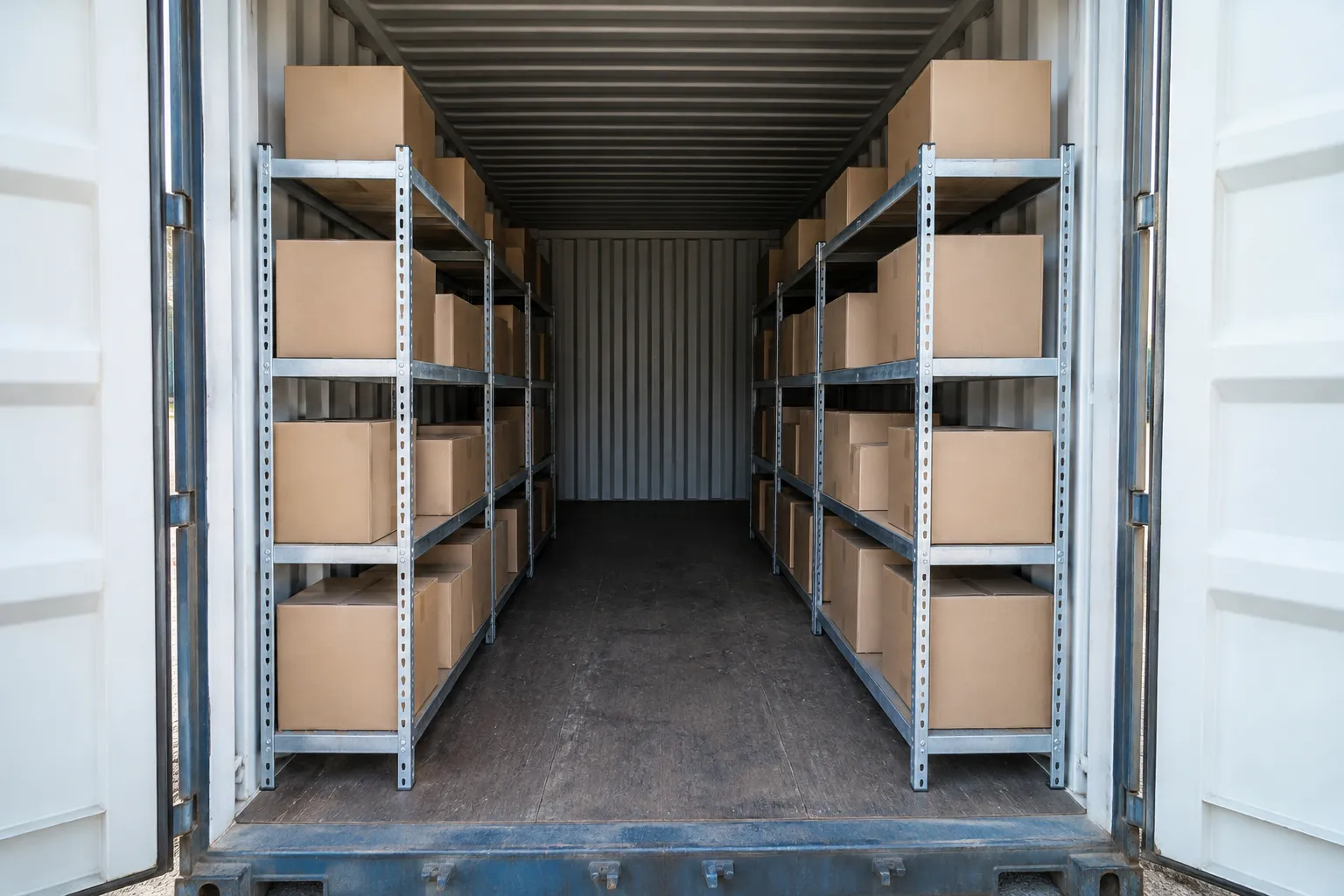
Do not treat nominal exterior dimensions as interior storage dimensions. A nominal 20ft-by-8ft footprint is 160 square feet, and a nominal 40ft-by-8ft footprint is 320 square feet. Those are exterior planning figures, not verified usable floor areas for a quoted unit.
Ask for internal length and width, then subtract floor space you cannot use for storage. A walking aisle, door-access zone, shelving clearances, or a partition can materially change the result.
For an illustrative calculation only, suppose your layouts leave 120 usable square feet in the quoted 20ft storage-class unit and 250 in the quoted 40ft storage-grade unit. Using their listed prices, with standard delivery included and no selected extras or site exceptions:
- 20ft: $1,600 ÷ 120 = approximately $13.33 per usable square foot.
- 40ft: $1,350 ÷ 250 = $5.40 per usable square foot.
These areas are planning assumptions, not product specifications. Replace both the areas and totals with your confirmed measurements and quotes.
A lower cost per square foot only helps if the space is useful. A 20ft container may still be the better project choice when it avoids substantial site work, fits an approved placement area, or accommodates everything you need to store.
Likewise, high-cube height improves storage value only when you can use the vertical clearance safely. Extra height does not create extra floor area. Sketch shelves, large equipment, and access aisles before deciding which size delivers meaningful capacity.
Compare Local-Depot and More Distant Inventory Quotes
Depot proximity can affect logistics, but it is not a reliable substitute for a delivered quote. A nearby unit may have a higher product price or different specifications; a more distant unit may still be the better total purchase.
With Lease Lane Containers, free standard delivery within the Lower 48 means you should not assume an extra mileage charge simply because inventory originates farther away. Ask which available unit the quote covers and whether your site qualifies for standard delivery.
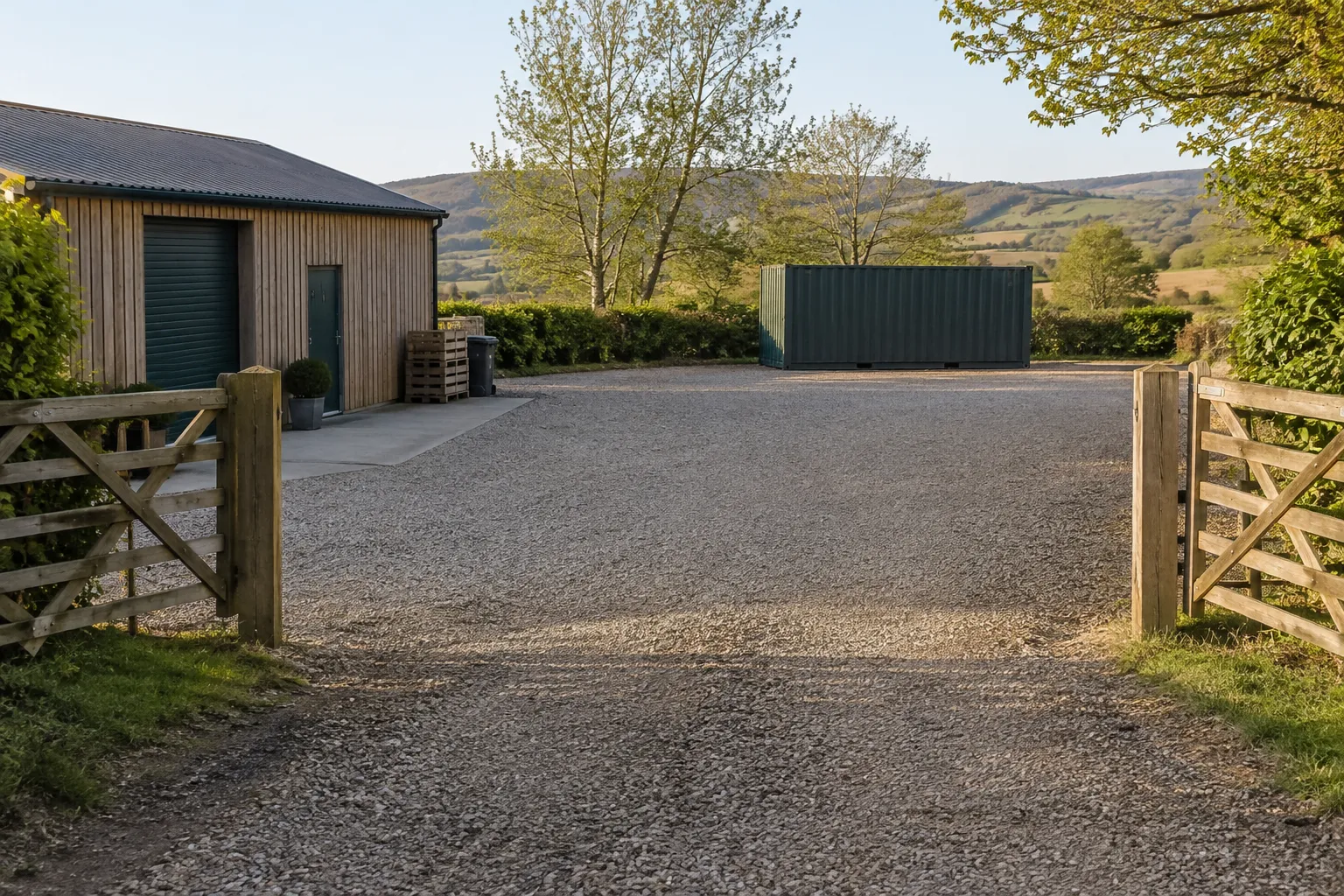
A ZIP code begins that review; it does not finish it. Supply the full delivery address, approach photos, and the proposed placement location. Describe gates, narrow turns, slopes, overhead obstructions, soft ground, and restrictions on vehicle access.
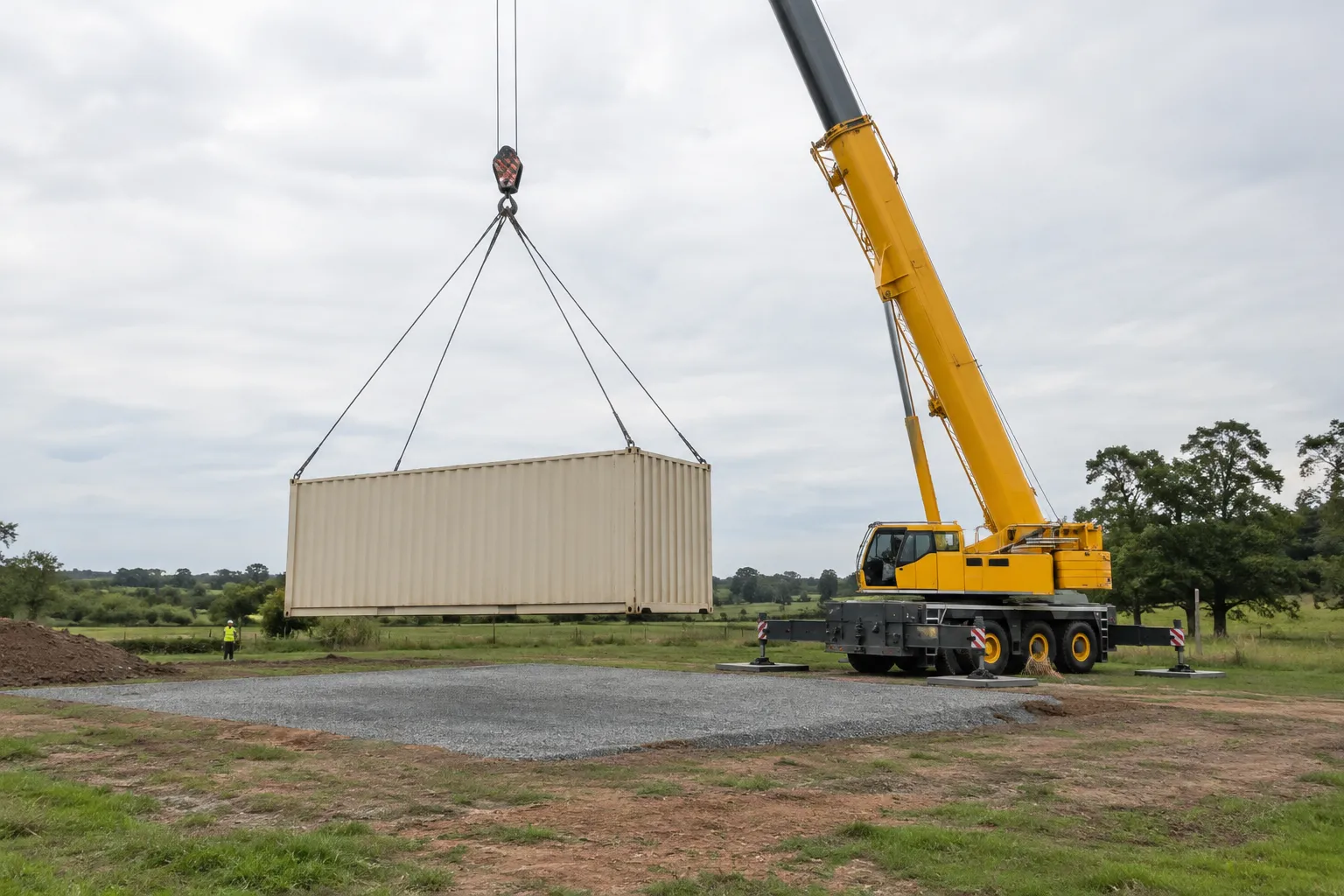
Crane offloading being included does not mean every location is suitable for a lift. [OSHA’s ground-conditions standard for construction cranes]https://www.osha.gov/laws-regs/regulations/standardnumber/1926/1926.1402) addresses firm, drained, and sufficiently graded ground, along with supporting materials where necessary. Its construction-specific requirements are not a universal residential checklist, but they underscore why ground information matters.
Have the delivery team review access and placement rather than guessing at safe clearances yourself. If the 40ft option requires a different placement area, compare that project's preparation costs as well as its purchase quote. A small product-price saving can disappear if your property needs substantially more work.
What Import and Manufacturing Headlines Can—and Cannot—Tell Buyers
Market headlines can explain why you should refresh a quote. They cannot establish what a particular container will cost at your address.
The Descartes October 8, 2026 shipping report reported the highest September US container import volume on record. Import movements are not the same thing as containers released for retail sale. Equipment may remain in shipping service rather than become available to a storage buyer.
That distinction matters: higher imports do not prove that local retail inventory is increasing, that a particular size is easier to obtain, or that purchase prices are falling.
Separately, the Department of Justice’s May 19, 2026 announcement described allegations of historical container-manufacturing price fixing. An indictment contains allegations, not a finding of guilt. It also does not establish current retail overcharging or explain the price of any specific used unit.
Treat both stories as background. For a buying decision, the stronger evidence is an available product, a matched specification, and a current written total. When comparing shipping container prices delivered 20ft vs 40ft, a dated address-specific quote is more useful than an old national price benchmark.
Check Quote Expiry, Stock Reservation and Additional-Charge Terms
An in-stock product listing is a starting point, not proof that a particular unit has been reserved for you. Before approving either option, get the commercial details in writing:
- Validity: When does the quote expire, and what must happen before that deadline?
- Availability: Is the quote for an assigned unit or a product specification subject to allocation?
- Reservation: What action reserves inventory, and when is that confirmed?
- Substitutions: What happens if the quoted unit is unavailable?
- Delivery scope: Which access and placement details were used to approve the site?
- Exceptions: Are any remote or non-standard site charges included in the written total before payment?
- Changes: How will a different address, placement location, or requested modification affect the quote?
Do not assume a universal stock-hold period or quote-validity period. Ask for the terms attached to your specific offer.
Also understand the return policy: there is a 30-day window. Defective or incorrect units cost $0 to return. Change-of-mind returns carry a 15% restocking fee, and the customer arranges return freight. Confirming size and site suitability before ordering is therefore an important part of controlling total cost.
Request an Itemized Quote for Your ZIP Code and Preferred Size
To request a shipping container quote by ZIP code that supports a real decision, send one consistent brief for both sizes. Include:
- Delivery ZIP code and full address.
- Preferred 20ft and 40ft product links.
- Used or one-trip preference, height, and door requirements.
- What you plan to store and the largest item dimensions.
- Placement photos, access restrictions, and known ground concerns.
- Required accessories or modifications, listed separately.
- A request for dated, itemized totals and written reservation terms.
Ask for the standard-delivery total and any applicable non-standard site adjustment to be clearly distinguished. Use the container buyer’s guide to organize the remaining purchase questions, then compare the same scope on both quotes.
The better deal is the container that meets your needs at the lowest confirmed total—not automatically the shorter or longer unit. Browse 20ft containers and 40ft containers, shortlist comparable specifications, and request an itemized quote for your address before choosing.
Frequently asked questions
Sources & further reading
- Descartes Releases October Global Shipping Report: U.S. Container Imports Reach Highest September Volume on Record
- U.S. Department of Justice: Four of the World’s Largest Container Manufacturing Companies and Seven of Their Executives Indicted for a Global Conspiracy Affecting Billions of Dollars of Commerce
- City of Portland: Building Code Guide 96-11—Cargo Containers
- NOAA: El Nino Looms Large Over U.S. Winter Outlook
- OSHA: 29 CFR 1926.1402—Ground Conditions
Talk to our Raleigh team
Ready to find the right container?
Get a written quote, check availability or ask about delivery to your site. Lease Lane Containers LLC answers every enquiry personally.
- Call us
- +1 (984) 219-9882
- Visit
- 5832 Lease Ln, Ste B, Raleigh, NC 27617
- Business hours
- Mon - Fri: 9:00 AM - 5:00 PM · Sat - Sun: Closed (EST)