Grades, Condition & Maintenance
Used Shipping Container Inspection Checklist Before Buying
Should you accept this specific used container? Use photo evidence, practical condition checks and a copy-ready inspection request to decide whether to pass, require repairs or reject it.
9 min readBy the Lease Lane Containers team
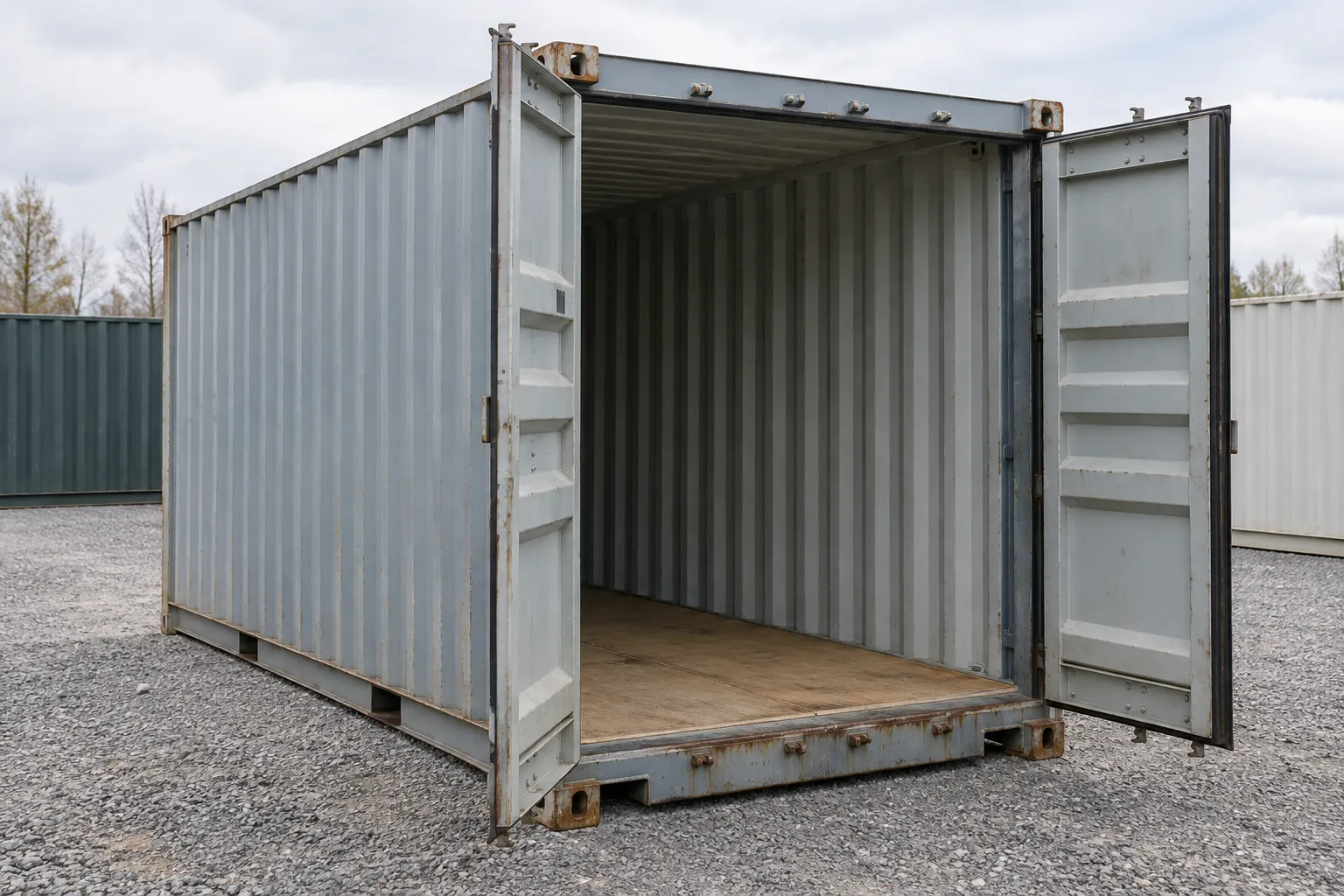
A used container does not need perfect paint to be a sound purchase. It does need documented condition that matches your intended use. This used shipping container inspection checklist before buying helps you decide whether to accept the actual unit, require repairs or reject it—not simply trust a listing photo or grade label.
Pass when inspection evidence supports your written requirements. Require repairs when a defined defect can be corrected and verified before acceptance. Reject or pause when identity, structural condition, contamination or repair quality remains unresolved. Missing evidence is not a pass.
This checklist focuses on enclosed dry-storage containers. Refrigerated equipment, modified structures and transport certification need additional specialist checks.
Start With the Actual Container: Photos, Identification and Inspection Access
Ask whether the photos show the specific container allocated to your order or a representative example. Record its container number or another unique identifier on the quote, inspection report and photo set. If allocation happens later, agree on an inspection and approval step before paying.
Request dated images plus a continuous walkaround video connecting the identifier to the inspected surfaces. Useful used container inspection photos include:
- All four exterior sides, with corners visible.
- The full roof, photographed using safe access or suitable camera equipment.
- Doors closed, open and viewed along their edges.
- Interior views from the doorway and toward the doors.
- Floor panels, seams, thresholds and every visible repair.
- Accessible underframe members and all corner fittings.
- Close-ups of defects, paired with wider shots showing their locations.
Ask for an in-person inspection or an independent inspector if photos leave important questions unanswered. The BBB’s shipping-container scam alert provides another reason to verify the seller and actual inventory rather than relying on an attractive advertisement. Photos alone do not establish ownership or availability.
Compare candidates within our used shipping containers category, but evaluate each allocated unit individually. A listing such as the 20ft used container with double cargo doors identifies a product configuration, not the condition of every unit offered under it.
Inspect Roofs, Walls and Seams for Holes and Questionable Repairs
Start your shipping container rust inspection with the roof perimeter, bottom wall edges, door frame and welded seams. Distinguish surface discoloration from deep pitting, flaking layers, perforation and metal loss. Fresh paint can improve appearance without resolving deterioration underneath.
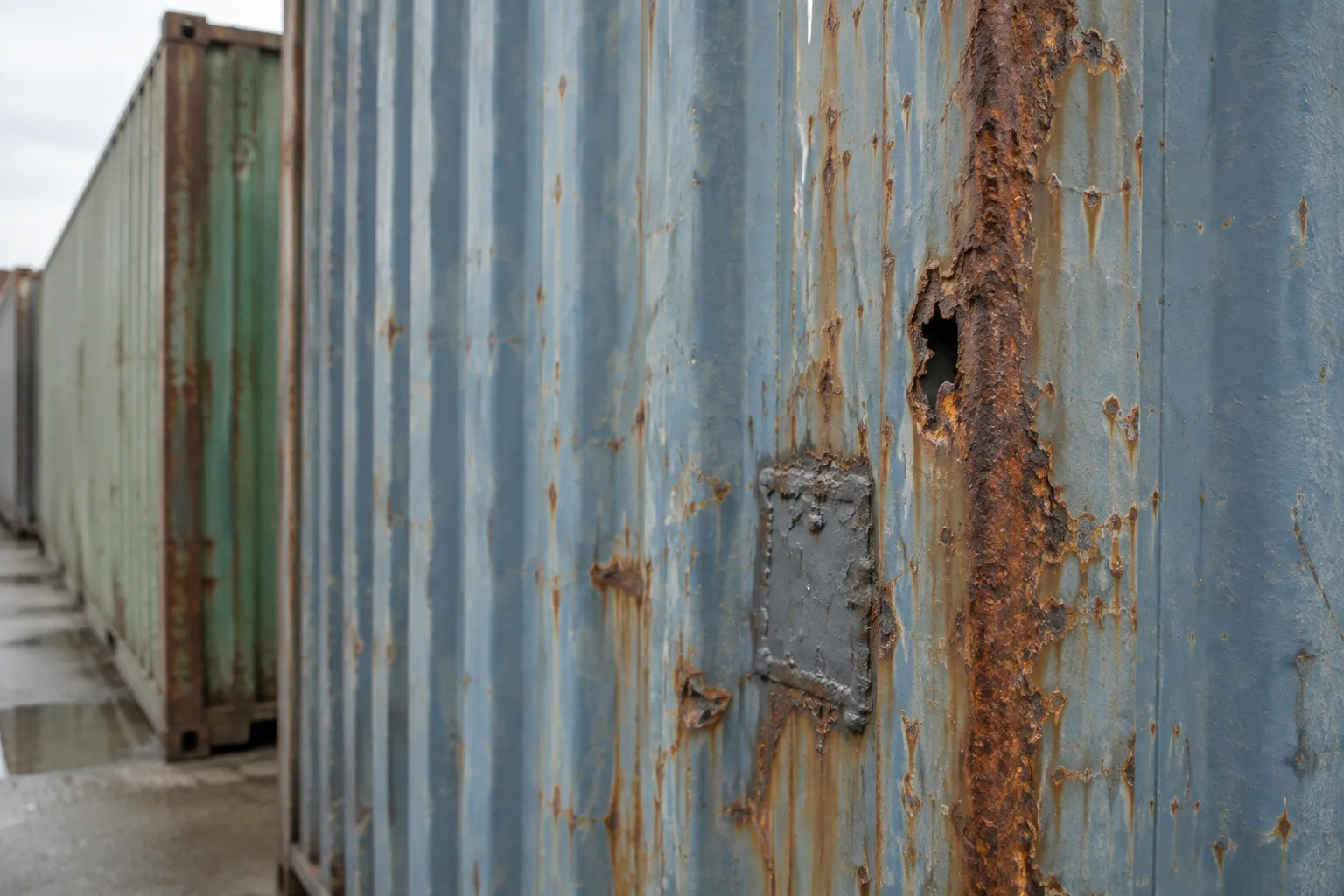
Look for roof dents that retain water, split seams, punctures and patches with visible gaps. Photograph each suspect area inside and outside where accessible. Ask what was repaired, why, by whom and whether the underlying damaged metal was addressed.
A patch is not automatically a failure. Its suitability depends on location, workmanship and the intended service. Structural repairs require more than an assurance that the patch does not leak.
Request a documented leak check
For a shipping container leak inspection, ask qualified staff to check for daylight through unintended openings and, where appropriate, conduct a controlled exterior water test. Keep any person inside unlatched, with an attendant outside and a safe exit. Do not enter a container with unknown atmospheric hazards.
Record which seams, roof areas and doors were tested, the conditions and any interior moisture afterward. A daylight check can miss leaks; a dry photograph is not a water test. Moisture may also be condensation, so investigate its source instead of assuming every wet patch is a hole.
For the 40ft wind and watertight storage container, ask what evidence supports that description for your allocated unit. It does not mean condensation-proof. Our winter-storage specification checklist addresses moisture-control questions beyond shell condition.
Check Door Operation, Locking Bars and Weather Seals
Request a video showing each door leaf opening, closing and latching through a complete cycle. The container should sit on suitable, level supports: an uneven position can distort the frame and complicate diagnosis.
Inspect hinges, locking bars, cams, keepers and handles. Look for bent hardware, cracked welds, missing components and handles that cannot seat normally. Do not accept hammering, improvised extensions or excessive force as proof of normal operation.
Inspect seals around the entire perimeter, particularly lower corners. Look for torn, missing, hardened or detached sections, and photograph gaps with the doors closed. Replacement seals are a defined repair; a racked door opening may indicate a more serious problem.
For a 20ft used container with doors at both ends, repeat every check at both ends. A video of one functioning door set does not establish the condition of the other.
Suggested acceptance criterion: every door opens, closes and latches without abnormal force on suitable supports; seals are continuous and secure; no water ingress is observed during the agreed test. Ask the seller to confirm this criterion rather than assuming it is included.
Examine Floors for Damage, Repairs and Unsupported Certification Claims
A shipping container floor inspection should cover more than the center walkway. Request clear images along wall edges, beneath door openings and across every panel joint. Look for delamination, holes, raised fasteners, uneven patches, dark staining and visible sagging.
Do not walk over suspect panels or improvise a load test. Softness, movement or damaged panels warrant professional assessment, including the supports underneath. Photographs cannot establish capacity for a forklift, machinery or concentrated loads.
Ask about known cargo history, spills, floor treatments and replacement boards. Persistent chemical odors or unexplained oily residues justify pausing the purchase. A clean-looking floor does not establish suitability for food-related use or occupied space, and paint does not demonstrate decontamination.
The IICL clarification on floorboard markings referencing IICL TB 001 warns that such a marking does not establish IICL approval or certification. Ask for records supporting any certification claim, including who issued it and what it covers.
For repaired floors, request panel specifications, repair locations and confirmation that supporting members were inspected. A replacement board over a deteriorated crossmember leaves the underlying problem unresolved.
Request Safe Inspection of Underframes, Corner Posts and Structural Damage
The underside deserves its own evidence set. Ask trained yard staff or an independent inspector to document crossmembers, bottom rails, corner posts and corner fittings using safe access arrangements.
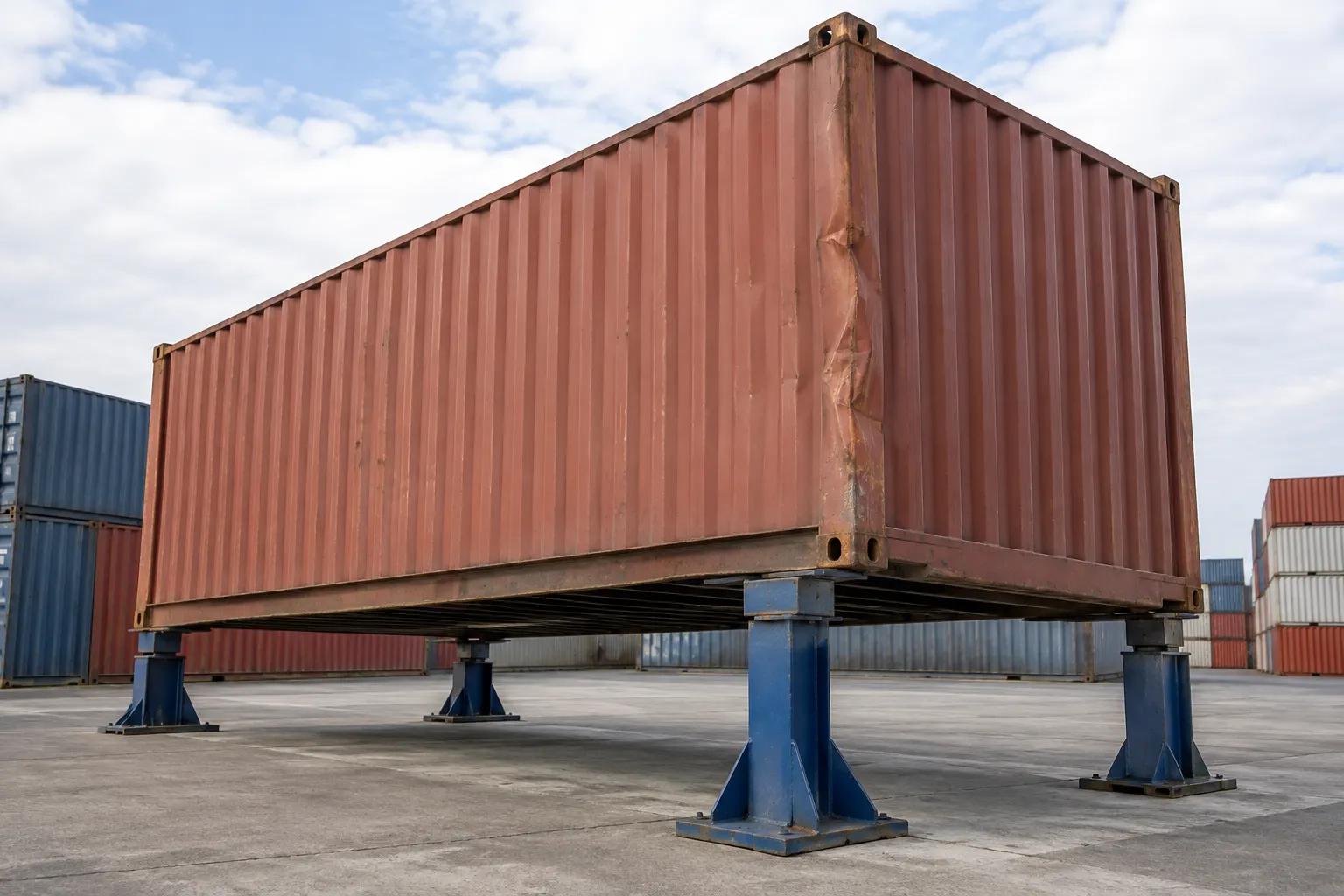
Never crawl beneath a suspended container or one supported only by lifting equipment. Never climb onto an unverified roof. If safe inspection is unavailable, mark the area unverified rather than assuming it is sound.
Escalate these findings:
- Cracked, deformed or heavily corroded corner fittings.
- Buckled corner posts or visibly distorted frames.
- Broken, missing or severely corroded crossmembers.
- Cracked welds around structural connections.
- Deep rail damage or undocumented cuts and alterations.
A photo checklist cannot certify structural capacity, lifting suitability or stacking safety. If you need transport service, ask for the applicable inspection documentation and confirm requirements with the relevant carrier or inspector.
The 40ft used cargo-worthy high cube is a useful candidate when that condition category matters, but the product label is not a substitute for unit-specific evidence. Review our container grade information and put the required condition and documentation into your quote.
Used Shipping Container Inspection Checklist Before Buying: Pass–Repair–Reject
Use this used shipping container condition checklist as a screening tool, not an engineering standard. Reject means do not accept the unit as currently documented; a qualified assessment may establish a viable repair.
| Area | Pass evidence | Repair before acceptance | Reject or pause |
|---|---|---|---|
| Identity | Photos and quote identify the same unit | Correct incomplete paperwork | Unit cannot be verified or substitution is unexplained |
| Roof and walls | No unintended openings or observed ingress in agreed checks | Defined local defect with documented repair and retest | Extensive perforation, distortion or uncertain patch quality |
| Doors and seals | Full operating video; continuous seals | Replace worn seals or service defined hardware faults | Persistent binding, cracked frame or unexplained misalignment |
| Floor | Intact panels; no unresolved damage or residue | Documented panel repair with support inspection | Soft areas, unknown contamination or unsupported capacity claims |
| Underframe and corners | Safe inspection finds no unresolved concerns | Specialist-approved repair with completion evidence | Buckling, fractures, severe section loss or inaccessible suspect damage |
Scuffed paint and shallow dents may be acceptable when they do not interfere with function or indicate deeper damage. Heavy scaling, penetrating rust and deformation at load-bearing connections need professional assessment.
There is no universal photo-based dent depth or rust percentage that makes every container acceptable. Location, remaining material, repair history and intended use all matter. Keep cosmetic preferences separate from functional acceptance criteria.
If repeated inspections uncover unacceptable wear, compare new one-trip containers. They still need inspection; a different condition category does not eliminate handling damage or documentation errors.
Put Repairs, Condition Guarantees and Rejection Terms in Writing
Turn each concern into a specific requirement. “Good condition” is difficult to verify. “Replace the torn lower door seal and provide a closing video plus the agreed water-test results” is much clearer.
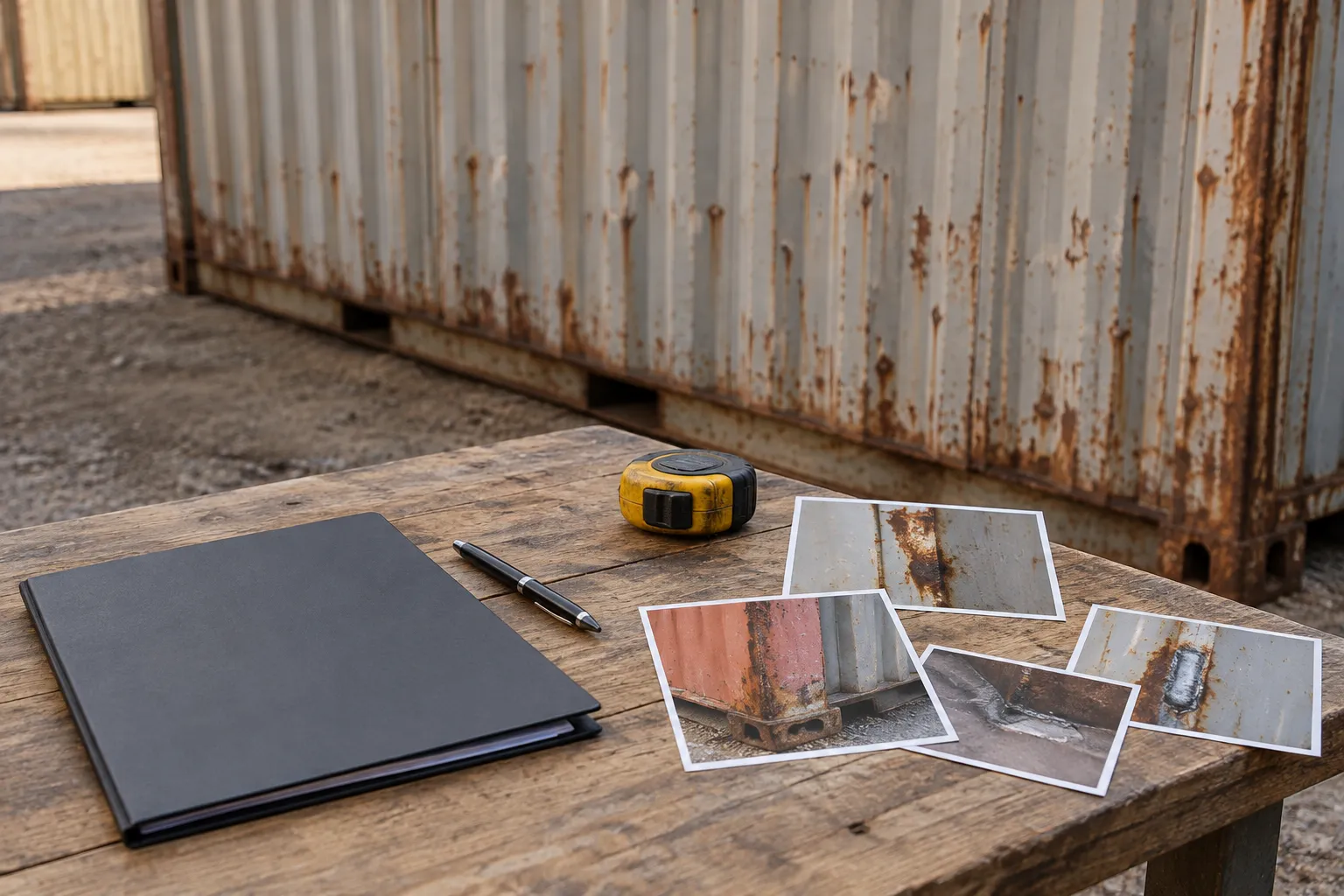
Before paying, request written agreement covering:
- Unit identity: the identifier and whether substitution requires your approval.
- Intended use: dry storage, transport or another declared application.
- Accepted defects: labeled photos of cosmetic wear you knowingly accept.
- Repairs: exact locations, scope, responsible party and verification method.
- Condition promises: what is covered, exclusions and the remedy if requirements are not met.
- Acceptance procedure: inspection opportunities and what happens if the unit fails agreed criteria.
These are requests for agreement, not automatic warranties. Do not assume you can reject a delivery without cost unless the applicable written terms support that outcome. Photograph the identifier and any apparent discrepancy on arrival, document it with the driver and follow the agreed reporting procedure.
Lease Lane Containers has a 30-day return window. Defective or incorrect units cost $0 to return. Change-of-mind returns carry a 15% restocking fee, and the customer arranges return freight. Read the refund and return policy alongside your quote.
For delivery planning, Lease Lane Containers provides free standard delivery to the contiguous United States (Lower 48). Remote or non-standard delivery sites are quoted in writing before you pay. Delivery is about a week and a half after full payment; the driver calls 1 day before arrival, and crane offloading is included. Review the shipping policy and disclose access limitations before purchase.
Save and Send This Inspection Request Before Paying
Copy the following request into a document, fill in the blanks and download or save it as a PDF to send with your quote request. This is a reusable template, not a separate hosted download.
Used-container inspection and acceptance request
- Buyer/project: [Name or reference]
- Intended use and anticipated loads: [Describe]
- Requested product and allocated unit identifier: [Complete]
- Inspection date and inspector: [Complete]
- Actual-unit evidence: Please supply dated photographs of all sides, roof, interior, floor, doors, repairs, corner fittings and safely accessible underframe, plus a continuous identification walkaround.
- Door evidence: Please show every door opening, closing and latching on suitable supports; identify seal or hardware defects.
- Weather resistance: Please describe the leak checks performed, areas tested, conditions and results. Identify any untested areas.
- Floor evidence: Please disclose known damage, repairs, cargo residues and treatment information, with supporting records for certification claims.
- Structural evidence: Please identify damage or repairs to rails, posts, crossmembers and corner fittings. State where specialist assessment is needed.
- Accepted cosmetic defects: [List and attach numbered photos]
- Required repairs and verification: [List scope and post-repair evidence]
- Unresolved or inaccessible areas: [List; do not mark passed]
- Decision: [Pass / repair and reinspect / reject or pause]
- Written terms requested: Please confirm unit identity, substitution approval, agreed condition, inspection access, remedies and rejection or return terms before payment.
Keep the completed request, seller response and original media together. Recheck repaired areas against the same criteria rather than accepting a general “work completed” message.
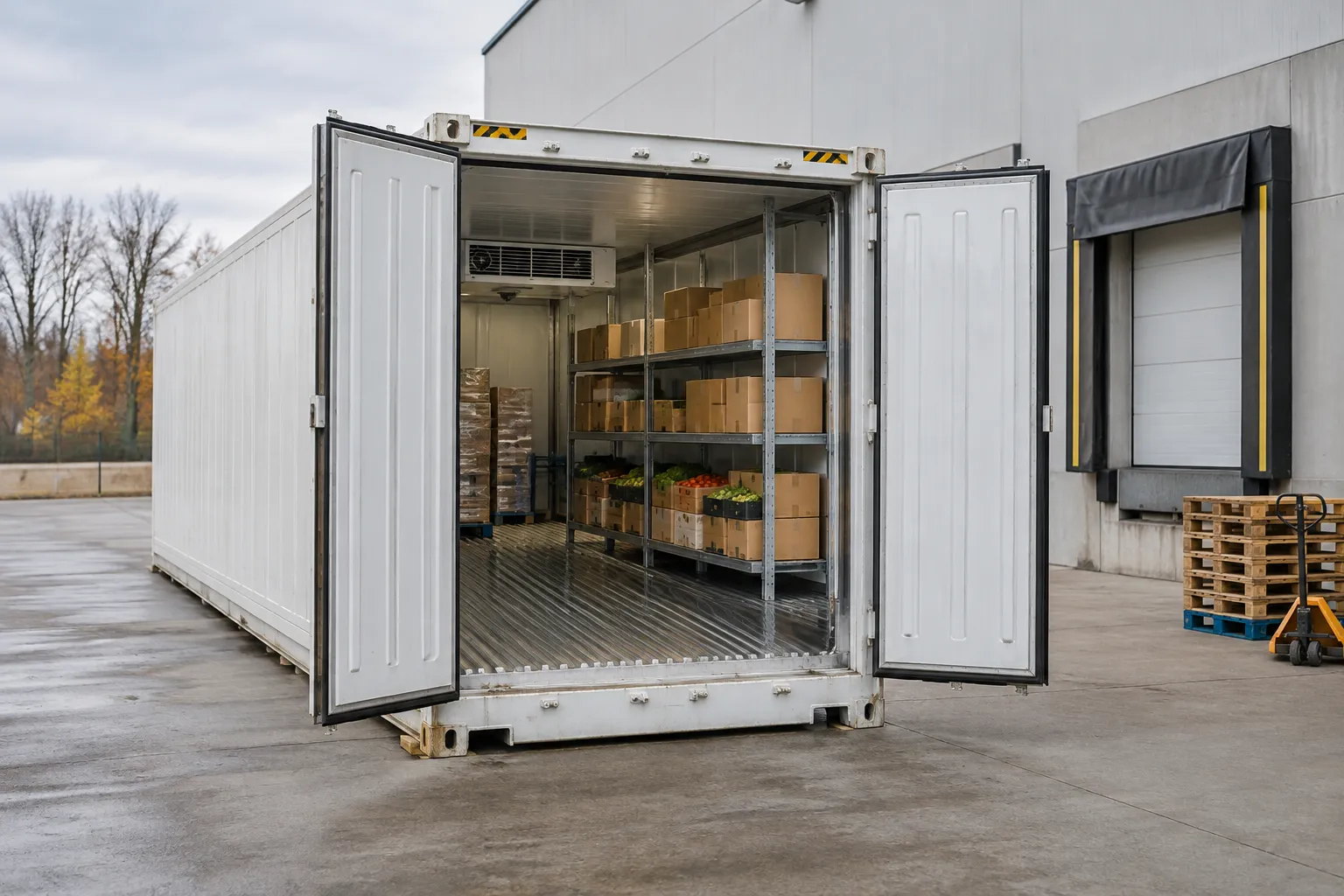
For refrigerated candidates, add the equipment checks in our refrigerated-container food-storage checklist; shell inspection alone cannot establish cooling performance.
Choose Evidence Before Appearance
The best used shipping container inspection checklist before buying ends with a documented decision: accept verified condition, require specific repairs or pause unresolved risks. Browse our 20ft containers or used inventory, then request a quote with the completed inspection request so the proposed unit and acceptance criteria are clear before you pay.
Frequently asked questions
Sources & further reading
- NOAA: El Nino looms large over U.S. Winter Outlook — October 15, 2026
- IICL: Clarification Regarding Floorboard Markings Referencing IICL TB 001
- Village of North Freedom: Ordinance 2026-02 — adopted October 12, 2026
- City of San Diego: Cargo Containers — Information Bulletin 149
- BBB Scam Alert: In the market for a shipping container? Watch out for this con
- BBB Scam Tracker: Consumer report 1423549 — September 14, 2026
Talk to our Raleigh team
Ready to find the right container?
Get a written quote, check availability or ask about delivery to your site. Lease Lane Containers LLC answers every enquiry personally.
- Call us
- +1 (984) 219-9882
- Visit
- 5832 Lease Ln, Ste B, Raleigh, NC 27617
- Business hours
- Mon - Fri: 9:00 AM - 5:00 PM · Sat - Sun: Closed (EST)