Delivery & Site Preparation
Flat Pack Storage Container for Sale: Kit vs Ready-Built Costs
A lower kit price does not always mean cheaper storage. Compare assembly, equipment, anchoring and installation costs before choosing flat-pack or ready-built.
9 min readBy the Lease Lane Containers team
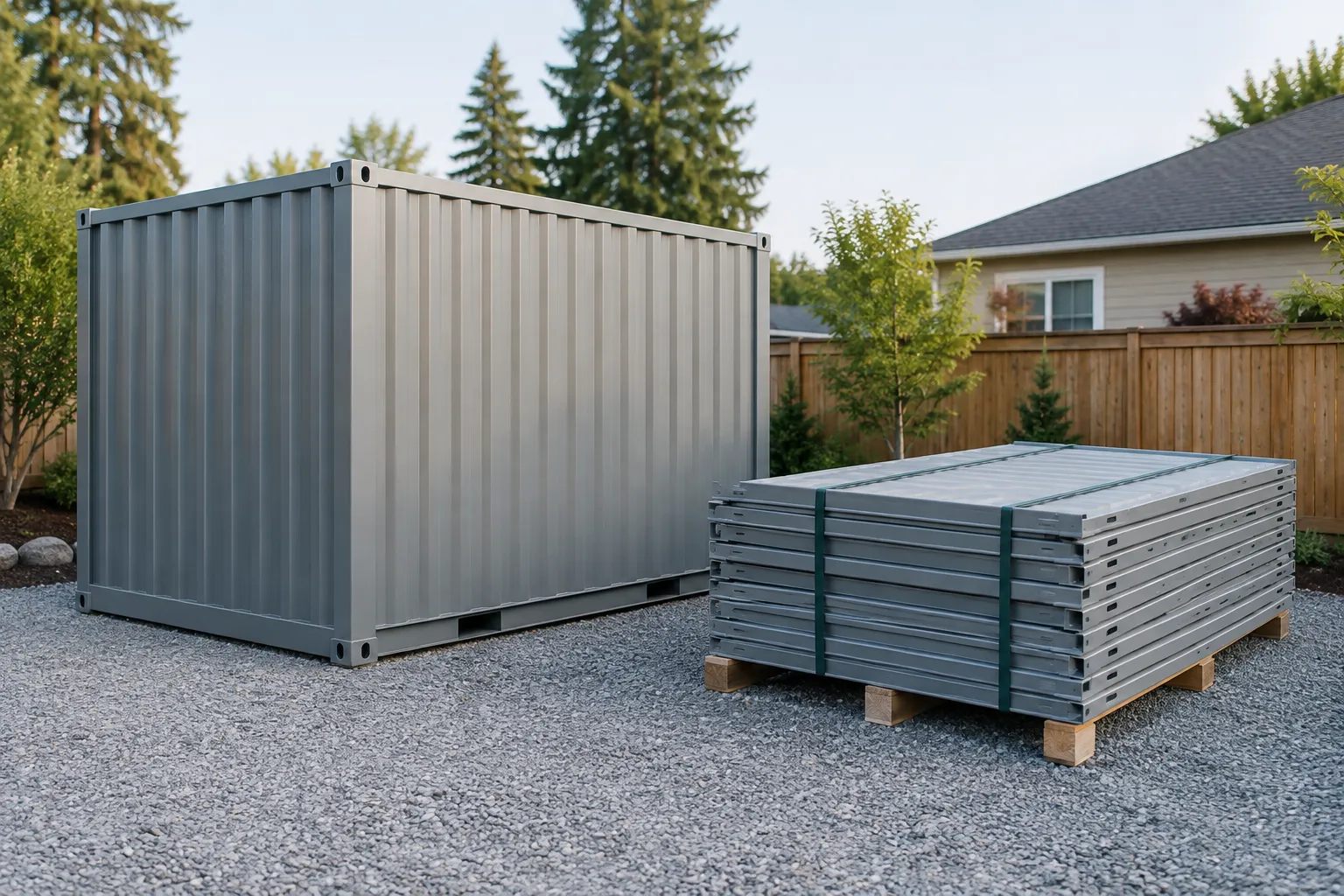
Shopping for a flat pack storage container for sale? A kit offers better value only when its purchase price plus unloading, assembly, foundation work and anchoring is lower than a comparable ready-built option—or when panel-by-panel access solves a placement problem worth the extra expense.
Compare installed prices, not kit prices against delivered container prices. Ready-built storage avoids panel assembly, but it may still need base preparation, anchors and permits. Flat-pack storage can simplify access in some settings, but only if the model’s panel weights, dimensions and assembly requirements actually suit your site.
Flat Pack Storage Container for Sale: What Exactly Are You Buying?
A flat-pack kit typically arrives as components assembled into an enclosure onsite. A ready-built container arrives as an assembled structure. Neither description, by itself, establishes load capacity, permitted use, installation scope or suitability for your location.
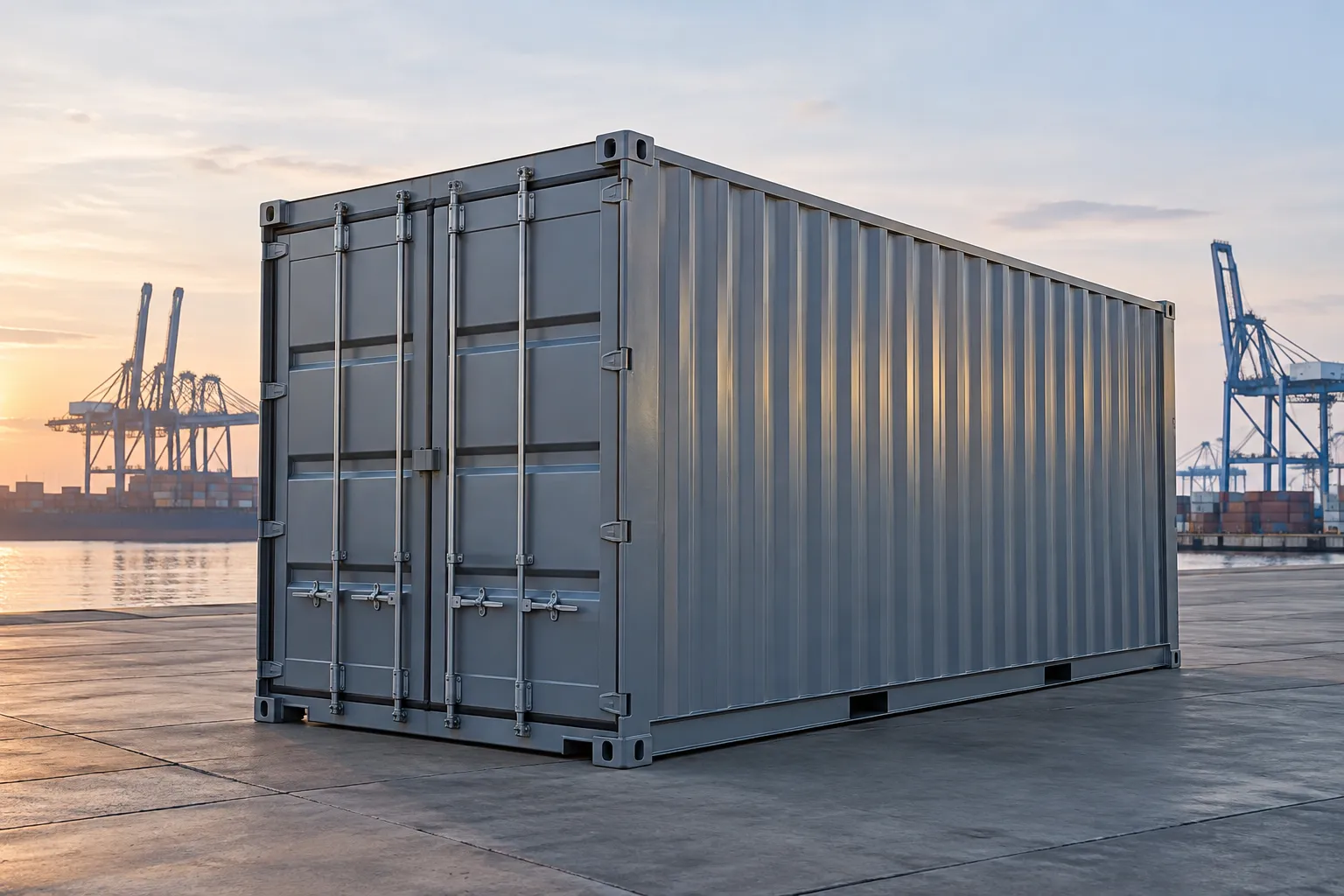
A bolt together storage container is not automatically an ISO freight container. Do not assume it can be stacked, transported loaded or lifted while assembled. Those capabilities require model-specific documentation. Likewise, a ready-built storage unit should not be assumed suitable for overseas transport.
Start with the Flat-Pack & Modular range, then compare an equivalent storage layout in 10ft Containers or Small Containers, 6ft–8ft. Match usable floor area, door opening, equipment access and storage purpose—not just nominal length.
For example, the 3 m green flat-pack storage bundle is $3,450, while the 10ft new shipping container with double doors is $2,850. These are starting product prices, not evidence of identical specifications or installed costs. Request the component schedule and internal dimensions before treating them as substitutes.
Our container buying guide helps establish the basic requirements before you compare installation proposals.
What Is Included in the Kit Price—and What Is Missing?
Ask for a written bill of materials showing the floor system, wall panels, roof, doors, fasteners, seals and joining components. An attractive photograph is not an itemized supply agreement.
The flat-pack steel garden store lists shelving and a retractable ramp, while the 2 m wood-effect flat-pack storage container offers a different size and finish. Verify exactly what each configuration includes rather than assuming every kit comes with the same accessories.
Use this comparison sheet for both proposals. Each line should say included, separately priced, customer-supplied or not applicable. A blank is not a zero.
| Quote line | Flat-pack proposal must identify | Ready-built proposal must identify |
|---|---|---|
| Product scope | Panels, floor, roof, doors, fasteners and seals | Container grade, doors and modifications |
| Delivery and placement | Packed configuration and placement scope | Assembled-unit placement scope |
| Assembly | Crew, equipment, sealing and door adjustment | Any onsite completion work |
| Base preparation | Required supports and leveling tolerances | Required supports and leveling tolerances |
| Anchoring | Design, hardware and installation | Design, hardware and installation |
| Approvals | Drawings, engineering and permit responsibility | Drawings, engineering and permit responsibility |
| Handover | Inspection, cleanup and correction of defects | Inspection, cleanup and correction of defects |
Also identify packaging disposal, touch-up materials, access equipment and any electrical work. Pre-wired components do not automatically include the onsite connection or required electrical inspection.
Sales tax is included and paid by Lease Lane Containers, so nothing is added at checkout.
What Unloading Equipment, Crew and Tools Does This Model Require?
“Flat-pack” does not mean every component can be safely carried by hand. Obtain packed dimensions, total shipping weight, the heaviest individual component weight and approved lifting points. Ask whether the assembly sequence requires mechanical support for the roof or wall panels.
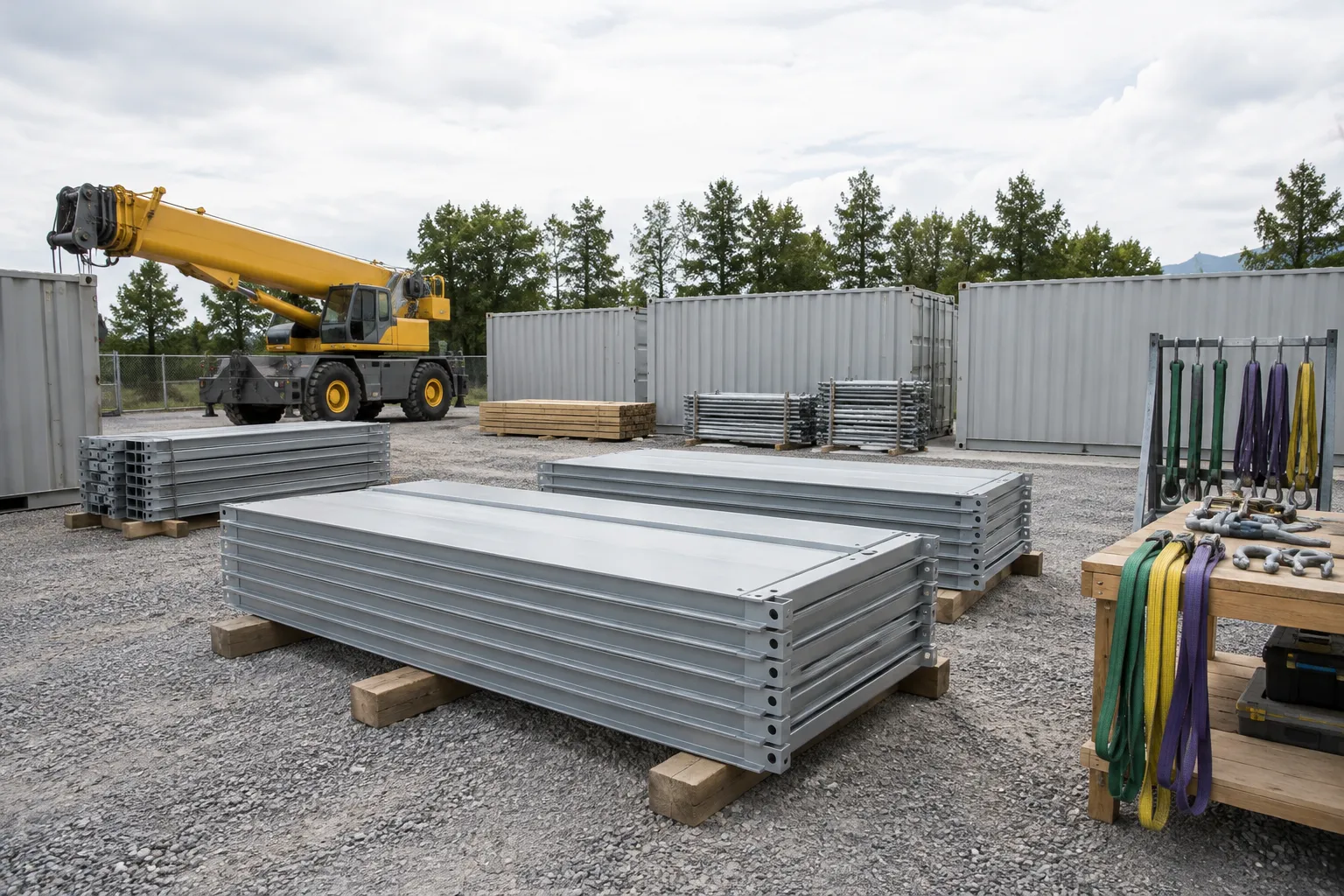
The supplier’s installation manual should establish required crew size and tools. The installer should then confirm the handling method, lifting equipment, temporary bracing, fastening sequence and safe working conditions. Do not substitute a generic online assembly video for that model’s instructions.
Separate three operations in the quote:
- Offloading the shipment from the delivery vehicle.
- Moving components from the placement point to the assembly location.
- Lifting and supporting components during assembly.
Paying for the first operation does not necessarily cover the other two. For Lease Lane Containers, containers, homes and offices are offloaded and placed by crane. For a flat-pack purchase, confirm the packed delivery configuration and agreed crane placement point in writing; do not assume delivery includes panel transport or assembly.
If the installer supplies a crew for construction work, include required welfare arrangements in its scope. OSHA’s construction sanitation standard addresses drinking water, toilets and washing facilities. Clarifying responsibility avoids another overlooked installation expense.
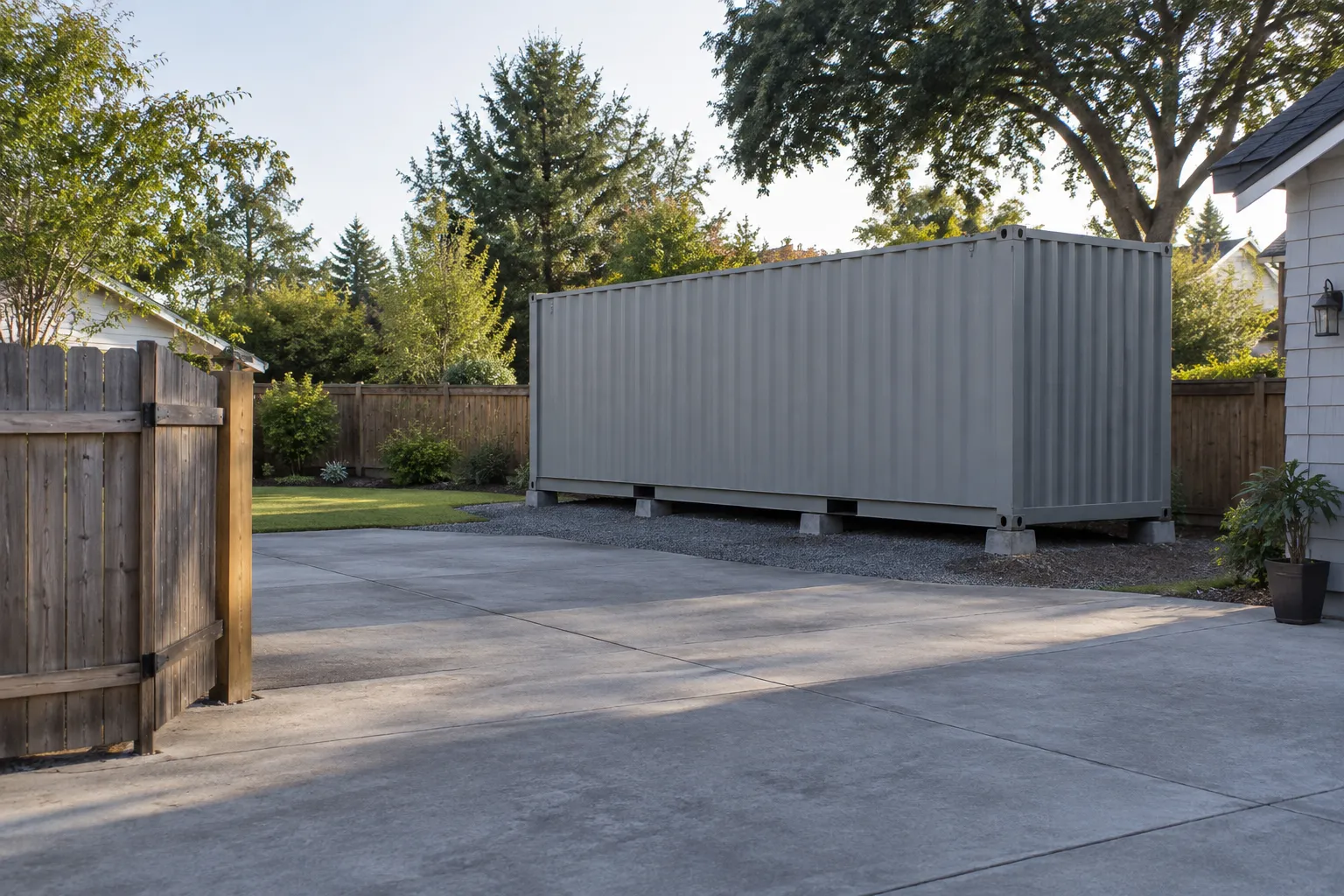
For physical access questions, use our backyard delivery site checklist. Here, the purchasing question is narrower: which party has priced each operation?
How to Compare Assembly Labor and Installed-Price Quotes
There is no dependable universal flat pack container assembly cost. Panel size, connections, base tolerances, access and crew experience all affect labor. A supplier’s assembly estimate may assume a prepared, level base with every component already beside it.
Ask the installer for either a fixed scope price or an estimate showing crew size, labor-hours, hourly charges, equipment and exclusions. Labor-hours are not elapsed hours: several workers assembling together accumulate several labor-hours during each hour onsite.
Use the same calculation for both options:
Installed total = product + applicable delivery charges + site preparation + component handling + assembly + anchoring + approvals + required finishing.
For ready-built storage, panel assembly may be not applicable, but foundation and anchoring costs remain model- and site-dependent. For a kit, owner-performed assembly should still carry a realistic allowance for your time, tools and qualified help.
A useful break-even test is to subtract the kit’s product price from the ready-built product price. That difference is the maximum extra installation expense the kit can absorb before losing its initial price advantage—assuming equivalent capacity and all other costs are equal. If the kit already costs more, its access or configuration benefits must justify that premium.
For another compact benchmark, request a scope comparison against the 8ft new shipping container with lockbox and barred windows. If insulation matters, consider the 4 × 2 m insulated flat-pack store, but do not compare it with an uninsulated shell without accounting for that difference.
Require written approval before extra work proceeds. Ask who pays for return visits caused by missing parts, an unsuitable base or incomplete preparation. Those exclusions can matter more than a small headline discount.
Which Wind, Snow and Anchoring Documents Should You Request?
Seasonal weather provides a reason to plan ahead, not a structural specification. NOAA’s October 15, 2026 winter outlook favors wetter-than-average conditions across the southern United States and Eastern Seaboard. That makes drainage and weather-sensitive assembly worth discussing, but it does not establish a container’s design loads.
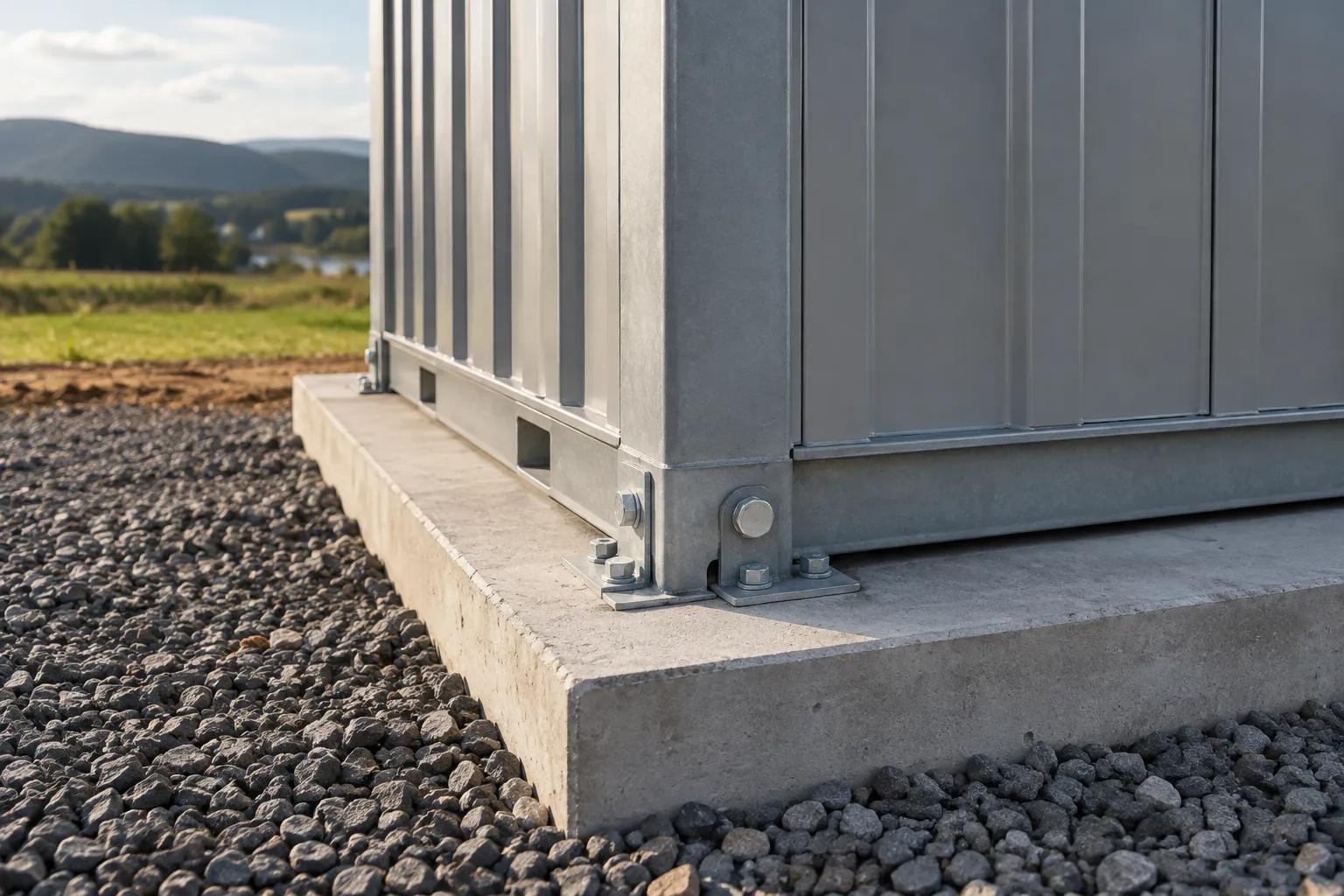
For location-specific hazard information, the ASCE Hazard Tool provides data used in structural design. The applicable standard edition, risk category and local code requirements need to be selected correctly. Ask a qualified design professional and your local authority which criteria apply.
Request these documents for the exact model and configuration:
- Wind design criteria, including speed basis and exposure assumptions.
- Ground snow criteria and the corresponding roof design information.
- Foundation reactions and the required support layout.
- Anchorage details addressing uplift, sliding and overturning.
- Drawings covering linked units, openings and optional components.
- Any engineering documentation required for local approval.
A flat pack container snow load claim is incomplete if it omits units, loading assumptions or the configuration tested or designed. Ground snow and roof snow loads are not interchangeable. Nearby structures can also affect drifting conditions.
Ask whether the quoted anchoring solution suits your actual soil or slab. A generic anchor kit is not automatically an engineered installation. Ready-built containers need the same site-specific review; their mass alone does not establish compliance. Our permanent storage permit guide explains the approval questions to raise before purchase.
How to Compare Floor Ratings, Door Security and Weather Seals
A fair flat pack vs shipping container comparison needs performance details as well as installation costs.
Floor capacity and usable storage
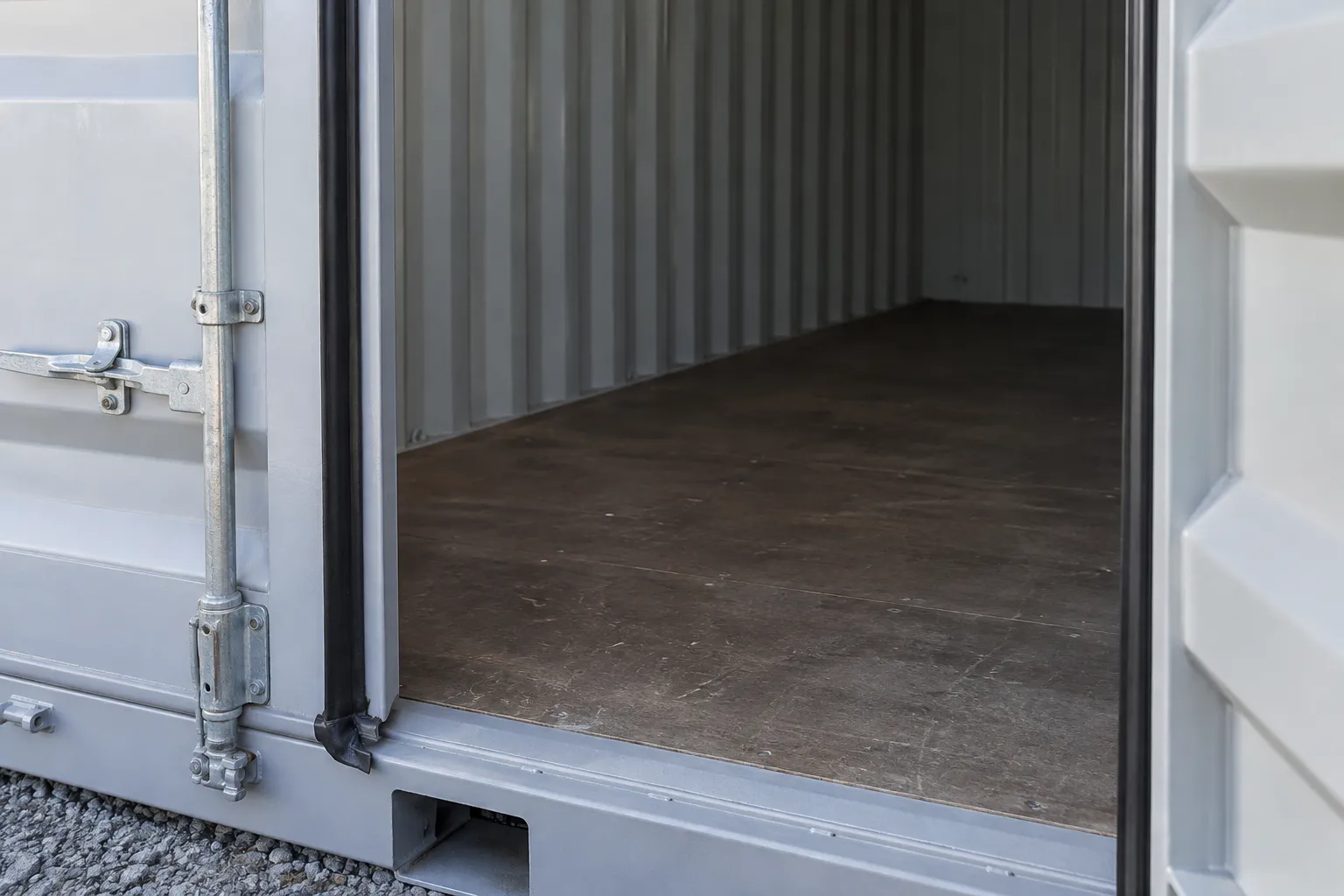
Request the uniformly distributed floor rating and any point-load or wheel-load limits. A total payload figure does not tell you whether a shelving leg, loaded cart or machine wheel is acceptable. Confirm the floor material, support spacing and whether heavy equipment can cross the threshold.
Check internal dimensions after insulation and shelving are accounted for. Compare door clearance against the largest item you intend to move, including its handling equipment.
Doors and security
Ask about the locking mechanism, hinges, frame attachment and lock protection. A lockbox is useful only as part of a suitable door assembly; it does not establish resistance to every forced-entry method. Make door alignment and smooth locking part of the installer’s handover inspection.
Seals and moisture
For a kit, establish who installs joint seals, what materials are specified and how completed joints are checked. Distinguish rainwater entry from condensation: insulation, ventilation and moisture management must suit the stored goods and local conditions.
Lease Lane Containers units pass our manual light test before dispatch. For flat-pack orders, clarify how onsite assembly joints will be inspected after completion; a dispatch check does not replace installation quality control.
30-Day Structural Guarantee: if a structural defect or leak is found within 30 days of delivery, we'll provide a mobile repair, an exchange or a full refund, as set out in our Refund & Returns Policy.
What Do Disassembly, Relocation and Returns Terms Allow?
Bolted construction does not automatically mean unlimited disassembly and reuse. Request written instructions covering dismantling, approved lifting methods and whether movement must occur empty or in component form.
Ask which seals, fasteners or other parts require replacement after dismantling. Include packaging, transport, a new base, new anchors and reassembly in any relocation comparison. A kit that fits a difficult location today may still be expensive to move later.
Clarify the installer’s responsibility for workmanship separately from the product’s structural coverage. Keep the assembly manual, component inventory, installation photographs and handover record. These help identify whether a later problem concerns the supplied unit, assembly or site support.
Lease Lane Containers has a 30-day return window. Defective or incorrect units cost $0 to return; change-of-mind returns carry a 15% restocking fee, and the customer arranges return freight. Read the Refund & Returns Policy before assembly or modification, and ask how your proposed work affects return eligibility.
Request a Side-by-Side Quote for Flat-Pack and Ready-Built Storage
When requesting a flat pack storage container installed price, send both suppliers and installers the same brief:
- Intended contents, usable space and door-opening requirements.
- Delivery ZIP code and proposed placement location.
- Exact product configuration and delivery condition.
- Available base information and applicable design criteria.
- Itemized assembly, anchoring, inspection and cleanup scope.
- Named responsibility for every exclusion and final acceptance check.
Lease Lane Containers sells its units. Every unit ships from our Raleigh, NC yard and is delivered by our own trucks, trusted freight carriers or a vetted partner delivery agency, depending on your location.
Standard Delivery is free on all orders delivered within the contiguous United States (Lower 48). Remote or non-standard sites and locations outside the Lower 48 are quoted in writing before you pay. For in-stock products other than container homes, handling is 1–3 business days, followed by Standard transit of 3–7 business days: 4–10 business days in total, about a week and a half.
All times start once full payment has been received and count business days only, Monday–Friday, excluding U.S. federal holidays. Enter your ZIP code on any product page to see estimated arrival dates. Our driver calls you one day before delivery to confirm the exact time. Review the shipping policy and keep onsite installation scheduling separate from freight arrival.
The best flat pack storage container for sale is the one with a documented, workable installed total—not simply the lowest kit price. Browse the relevant containers above and request a side-by-side quote, with any separately contracted installation clearly identified.
What "fully furnished" means: when one of our container homes is described as fully furnished, it means built-in amenities only: interior finishes and any built-in cabinetry, kitchen or bathroom fit-out, electrical and plumbing that are listed in this home's specifications. Loose furniture and appliances (for example beds, sofas, tables, refrigerators and microwaves) are not included unless listed in your written quote.
Frequently asked questions
Sometimes, but the kit price alone cannot establish better value. Compare equivalent usable space and performance, then add base preparation, component handling, assembly, anchoring and approvals to both options. A flat-pack kit can also justify a higher installed total when documented panel sizes and handling requirements solve an access problem that an assembled unit cannot.
There is no reliable universal assembly price. Ask an installer to quote the exact model using its assembly manual, component weights and base requirements. The proposal should identify labor-hours, crew size, lifting equipment, sealing, door adjustment and cleanup. Confirm whether the estimate assumes components are already beside a finished, level base and how additional work is authorized.
Possibly, if the manufacturer’s instructions permit it and you can meet the specified crew, equipment and safety requirements. Do not assume panels are suitable for hand carrying or that the roof can be installed without mechanical support. Obtain the manual before purchase, and use qualified help for lifting, structural anchoring or electrical work where required.
The required rating depends on location, applicable code, roof configuration and site conditions. Ask for documented ground snow criteria and corresponding roof design information for the exact model. A qualified design professional should confirm suitability, including possible drifting from nearby structures. Seasonal forecasts and a generic snow-load number are not substitutes for that review.
Free standard delivery should not be treated as an installed-price commitment. Lease Lane Containers offloads and places containers by crane, but flat-pack component movement, assembly, foundation preparation and anchoring must be explicitly identified in the written scope. Review the shipping policy and ask which tasks require a separate installer before comparing totals.
Sources & further reading
- NOAA — El Nino looms large over U.S. Winter Outlook — October 15, 2026
- American Society of Civil Engineers — ASCE Hazard Tool
- U.S. Census Bureau — Construction Spending: August 2026 release — October 1, 2026
- OSHA — 29 CFR 1926.51: Sanitation
- U.S. Energy Information Administration — Battery storage capacity averaged 70% growth over the last three years — August 7, 2026
- NFPA 855 — Standard for the Installation of Stationary Energy Storage Systems
Talk to our Raleigh team
Ready to find the right container?
Get a written quote, check availability or ask about delivery to your site. Lease Lane Containers LLC answers every enquiry personally.
- Call us+1 (984) 219-9882
- Emailsales@leaselanecontainers.llc
- Visit5832 Lease Ln, Ste B, Raleigh, NC 27617
- Business hoursMon - Fri: 9:00 AM - 5:00 PM · Sat - Sun: Closed (ET)