Permits, Zoning & Regulations
Buy Shipping Container for Permanent Storage Permit Requirements
Can a container legally stay on your property? Use this approval checklist and supplier-document template to confirm zoning, permits and purchase conditions before paying.
9 min readBy the Lease Lane Containers team
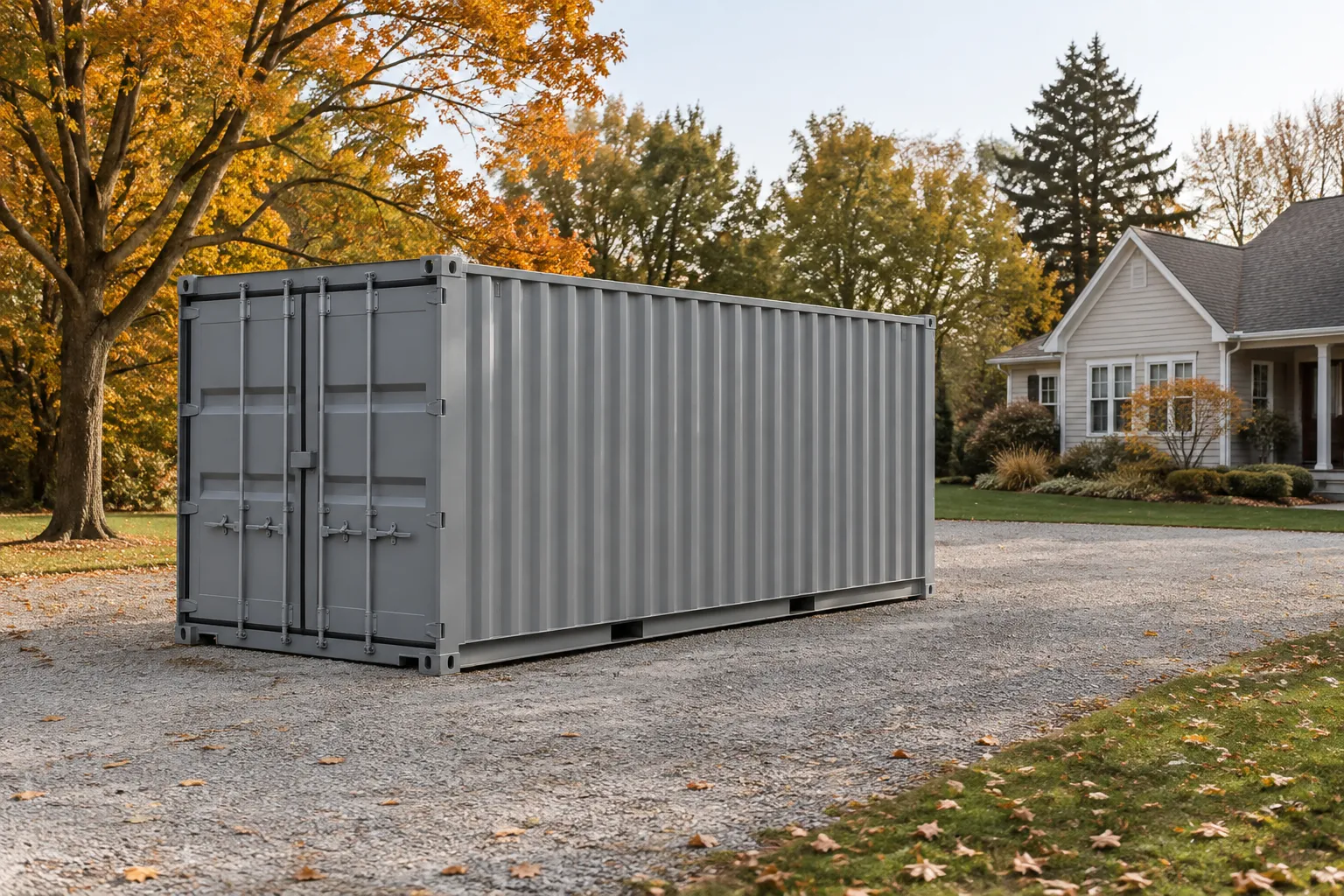
Before you buy, confirm that your local authority allows the proposed container, storage use and placement on your specific parcel. A building-permit exemption does not automatically mean zoning approval. If you are researching “buy shipping container for permanent storage permit requirements,” start with the property address and a written description of the intended use—not a nationwide size rule.
Portland and San Diego illustrate why local confirmation matters. Their published cargo-container guidance takes different approaches, and neither establishes a rule for the rest of the country. Use the checklist below to assemble a property-specific approval file before committing to a purchase.
Buy Shipping Container for Permanent Storage Permit Requirements: Start With the Parcel
The decisive question is not whether containers are generally legal in your state. It is whether this container can remain at this location for this purpose.
Find the agency responsible for the parcel. A mailing address may name a city even when the property falls under county jurisdiction. Supply the street address, parcel identification number, zoning district if known and a preliminary placement sketch.
Ask for a written response addressing the proposed dimensions, height, storage contents and duration. Keep the response with its date, staff name, applicable code references and any conditions. A general information email may explain the process without constituting formal approval; ask which authorization actually permits placement.
Avoid purchasing while the answer remains “probably.” Resolve whether you need zoning clearance, a building permit, additional review or written confirmation that no particular permit is required. This article is a planning aid, not a substitute for the authority’s decision.
Permanent Storage, Temporary Storage and Occupied Buildings: Define the Intended Use
Describe actual activities rather than simply calling the unit portable. A container that can be moved may still be regulated as an installed structure.
For permanent vs temporary storage container questions, give officials a start date and intended duration. Temporary permissions may depend on a construction project, event or defined removal date. Ask what happens when that authorization expires; do not assume moving the container briefly resets it.
Your use statement should identify:
- Household possessions, tools, business inventory or other stored materials.
- Whether people will only enter to retrieve items or regularly work inside.
- Any electrical service, refrigeration, plumbing or heating.
- Whether the container will remain unmodified, receive new openings or connect to another structure.
- Whether flammable liquids, cylinders, batteries or other regulated materials will be stored.
An office, workshop or customer-accessible space may require a different review from ordinary storage. Changing the use later can require another approval.
For an uncomplicated storage proposal, compare an unmodified 20ft used shipping container with a 20ft new one-trip container. Newness and appearance can influence product selection, but neither establishes permission to place the unit.
Zoning Approval vs Building Permits: What to Ask Each Department
Shipping container zoning approval concerns whether the use and location are allowed. Building review concerns applicable construction and safety requirements. Departments may coordinate these reviews, but one answer should not be treated as a substitute for the other.

| Review | Questions to ask | Record to retain |
|---|---|---|
| Planning or zoning | Is permanent container storage allowed on this parcel? What placement, appearance and duration rules apply? | Written determination, clearance or required land-use approval |
| Building department | Is a building permit required? What foundation, anchorage and structural documents are needed? | Permit checklist, exemption determination or issued permit |
| Fire authority, if applicable | Do contents, access or separation trigger additional requirements? | Applicable conditions or review approval |
| HOA or other private authority | Do recorded restrictions or architectural rules allow the proposal? | Written approval where required |
Ask planning whether the unit is treated as an accessory structure, outdoor storage or another classification. Ask whether that classification changes between residential and commercial parcels.
For a shipping container accessory structure permit, ask building officials whether they require engineered foundation details, anchorage calculations, container identification or documentation of modifications. Site-specific wind, seismic, snow or soil conditions may affect the required design.
Also ask who must prepare and sign each document. A seller’s specification sheet is useful product information, but it is not automatically an engineered plan accepted by your jurisdiction.
Does a Small Container Qualify for an Exemption? Compare Local Examples
There is no nationwide small-container exemption you can safely apply to every property. Read the local provision in full and confirm that it covers cargo containers, your use and your parcel.
Portland: an exemption does not remove zoning obligations
The City of Portland’s Cargo Container Building Code Guide 96-11 allows certain smaller residential storage containers without a building permit, subject to the guide’s conditions. Zoning compliance still applies.
Before relying on that guidance, ask Portland staff to confirm the current area and height limits, qualifying residential use and any additional conditions for your proposal. Do not reduce the guidance to “small containers need no approval.”
San Diego: installed containers follow a different rule
The City of San Diego’s Cargo Containers Information Bulletin 149 requires a building permit for installed cargo containers except for a specified special-event use. That narrow exception should not be treated as permission for permanent backyard or business storage.
These examples show why a 20ft shipping container storage permit question needs a local answer. A nominal 20-by-8-foot footprint is approximately 160 square feet, but area alone does not settle the permit requirement. Height, classification and container-specific provisions can matter too.
If a smaller footprint would help your proposal, consider a compact 10ft new shipping container. If greater capacity is essential, evaluate a 40ft standard-height storage-grade container. Submit actual exterior specifications for either choice; nominal product names are not application drawings.
Check Setbacks, Screening, Easements and HOA Restrictions Before Ordering
Draw the proposed container on a parcel plan showing property lines, existing buildings and relevant restrictions. Do not treat a fence as proof of the legal boundary.
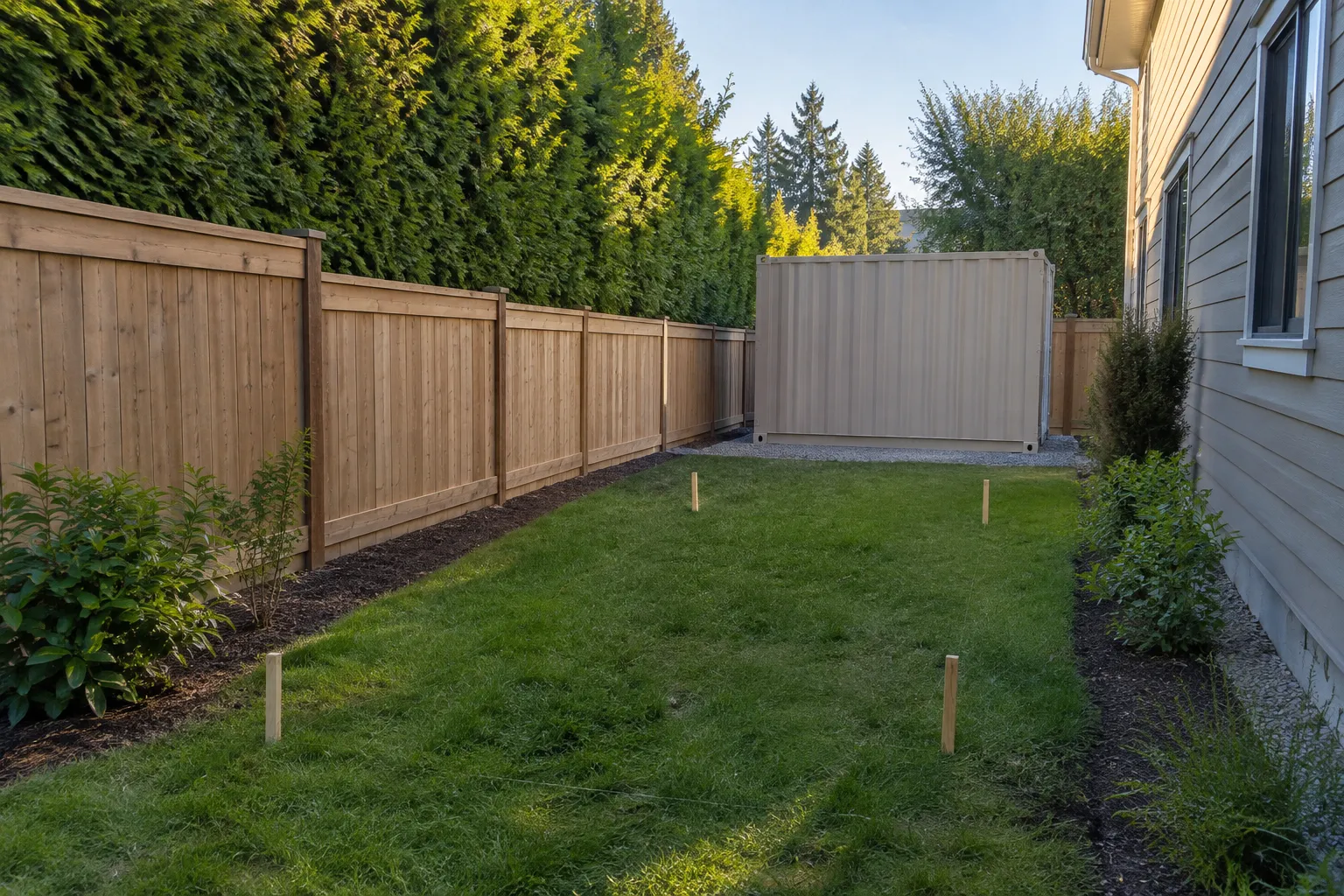
Ask officials to identify the applicable requirements rather than borrowing a setback distance from another town:
- Setbacks: front, side, rear and street-facing placement restrictions.
- Coverage and quantity: limits on accessory structures, total covered area or container count.
- Height and appearance: maximum height, permitted colors, cladding or screening.
- Easements: recorded utility, drainage or access rights that may restrict placement.
- Special areas: floodplain, historic, environmental or other overlay review.
- Separation and access: required distance from buildings and protection of emergency access.
An HOA approval does not replace municipal approval, and municipal approval does not override private covenants. Review both. Where an easement or boundary is unclear, obtain help from the appropriate surveyor, title professional or legal adviser before committing.
Screening is not a workaround for a prohibited use. Conversely, an allowed use may still need an approved screening design. Show proposed fencing or landscaping on the submission when requested.
Keep legal placement and delivery feasibility as separate checks. After establishing an approvable location, use our backyard delivery site checklist to evaluate physical access without confusing it with permit approval.
Documents to Request From the Seller Before Your Permit Application
Request shipping container permit documents early enough to identify missing information before ordering. Ask what is available for the proposed product and what must come from a local design professional.
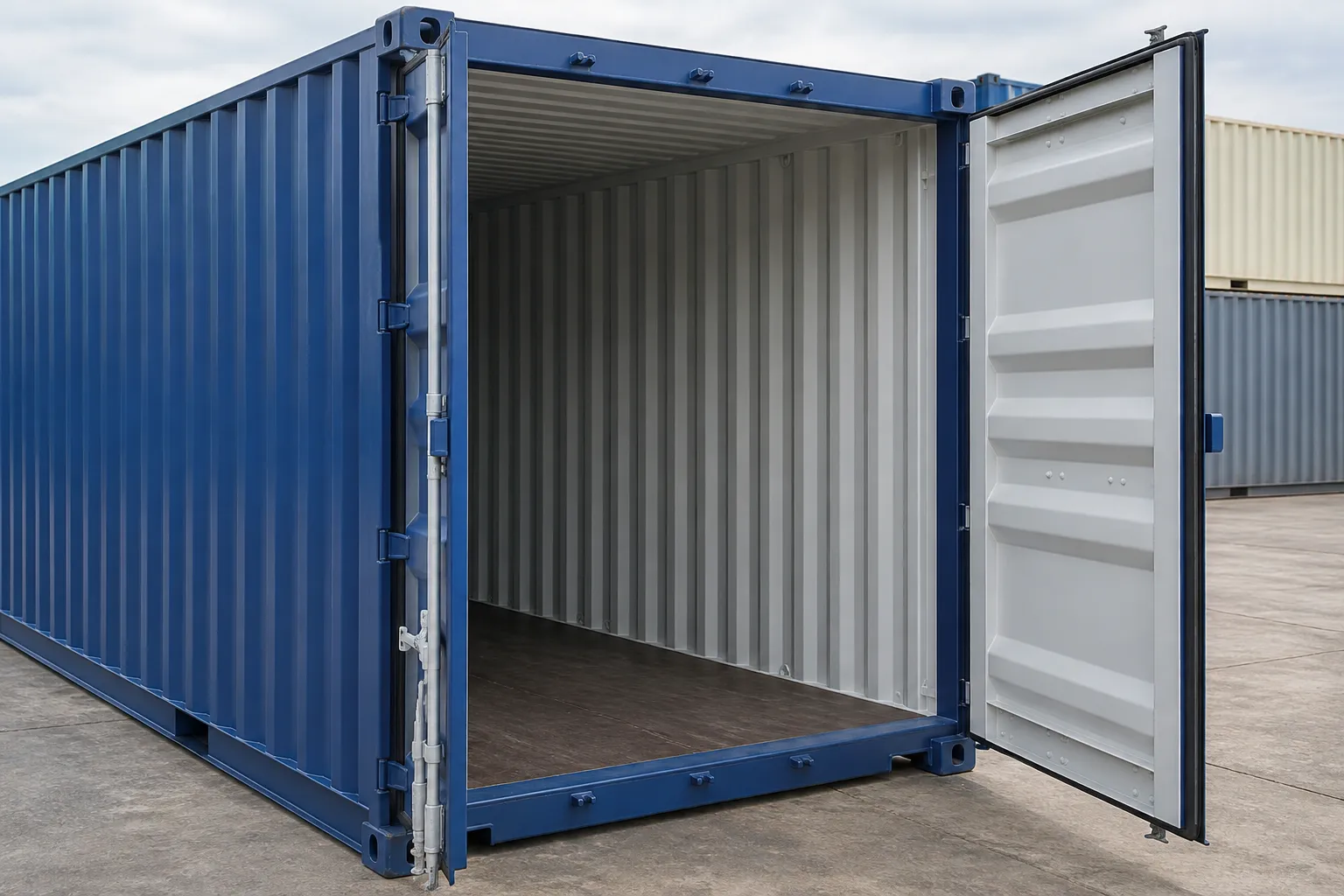
A useful preliminary package includes exterior dimensions, overall height, empty weight, door locations, available drawings and a description of modifications. If officials request identification plates, manufacturing information or structural records, ask whether those records are available rather than assuming they accompany every used unit.
A cargo-related designation or identification plate does not by itself establish compliance with local building requirements. Similarly, photographs help explain construction and condition but do not replace dimensioned drawings or engineering.
Supplier-document request template
Use this text when requesting a quote or information package:
“I'm evaluating a container for permanent storage at [property address and parcel ID]. The intended contents are [description]. People will [enter only for loading and retrieval / perform the following activities]. Utilities and modifications proposed are [details or none].
Please identify the proposed product and provide or confirm availability of:
- Exterior length, width, height, empty weight and door arrangement.
- A specification sheet and available dimensioned drawings.
- Details of existing openings, alterations and reinforcement, if any.
- Available manufacturer, identification-plate and structural documentation.
- Any foundation or anchorage information, clearly identifying whether it is generic or site-specific.
- Documents unavailable from the seller that I may need to commission separately.
- Written purchase conditions addressing approval delays, cancellation and any requested delivery hold.
Please distinguish product documentation from documents prepared specifically for my jurisdiction. I will obtain local confirmation before authorizing the purchase.”
Match the application to the configuration you intend to buy. A 20ft high-cube one-trip container has a different height profile from a standard-height option. A 30ft modified container with roll-up access also deserves explicit discussion of its altered opening.
Our container-grade guide and used-container inspection checklist help separate condition questions from approval questions. A sound container can still be unsuitable for a particular parcel.
What to Confirm About Deposits, Approval Contingencies and Delivery Holds
Before sending money to any supplier, clarify what happens if the permit is denied, takes longer than expected or requires a different product. Do not assume that a quote reserves inventory, that a deposit is refundable or that delivery can be postponed indefinitely.
Ask for written answers covering:
- Whether any approval contingency is offered and its exact conditions.
- Whether a requested hold is available, its duration and any associated charges.
- When cancellation terms change, especially for modifications.
- Whether a product substitution requires your approval and revised permit documents.
- What happens if the approved placement or dimensions change.
These are questions to resolve—not promises that Lease Lane Containers offers permit-contingent purchases or holds. Review the purchase terms and conditions before ordering.
Lease Lane Containers has a 30-day return window. Defective or incorrect units cost $0 to return. Change-of-mind returns carry a 15% restocking fee, and the customer arranges return freight. Read the Refund & Returns Policy and do not assume a permit denial creates a separate return entitlement.
Coordinate dispatch only after approval
Every unit ships from our Raleigh, NC yard and is delivered by our own trucks, trusted freight carriers or a vetted partner delivery agency, depending on your location.
Standard Delivery is free on all orders delivered within the contiguous United States (Lower 48). Remote or non-standard sites and locations outside the Lower 48 are quoted in writing before you pay. Containers, homes and offices are offloaded and placed by crane.
For in-stock storage containers, handling is 1–3 business days. Standard transit is 3–7 business days, 4–10 business days in total (about a week and a half). All times start once full payment has been received and count business days only (Monday – Friday, excluding U.S. federal holidays). Our driver calls you one day before delivery to confirm the exact time. Enter your ZIP code on any product page to see your estimated arrival dates, and review our shipping policy before ordering.
Pre-Purchase Checklist: Obtain Local Confirmation, Then Request a Container Quote
Use this final checklist to turn your “buy shipping container for permanent storage permit requirements” research into a purchase decision:
- Confirm the governing jurisdiction and parcel identification.
- Describe storage contents, duration, occupancy, utilities and modifications.
- Identify the exact proposed dimensions and configuration.
- Obtain the applicable zoning determination and placement conditions.
- Confirm whether a building permit is required and obtain it when necessary.
- Resolve easements, private restrictions and any additional agency approvals.
- Gather seller documents and commission required site-specific design work.
- Confirm that approval conditions match the product and placement in the quote.
- Review cancellation, return and any agreed hold terms before paying.
Buy for an approved use and location, not an assumed exemption. Once those questions are resolved, browse our 20ft containers, 40ft containers or used shipping containers and request a quote identifying the configuration your local authority reviewed.
Frequently asked questions
Possibly. The answer depends on the governing jurisdiction, zoning district, container dimensions, use and proposed location. Ask planning staff whether permanent container storage is allowed, then ask the building department whether a permit is required. A building-permit exemption does not remove zoning obligations, easements or applicable private restrictions.
Not automatically. A nominal 20-by-8-foot container occupies approximately 160 square feet, but a general small-structure exemption may not apply to cargo containers. Local rules can also consider height, use and installation. Submit actual specifications and ask the building department to identify the provision that applies to your specific proposal.
Do not assume so. Local rules may regulate an installed container regardless of whether it rests on concrete, supports or another surface. Explain the proposed support arrangement and intended duration to the building department. Ask whether a foundation or anchorage design is required and who must prepare that documentation.
Start with exterior dimensions, height, empty weight, door locations, available drawings and modification details. Ask officials whether they also require identification records, structural calculations or engineered foundation and anchorage plans. Confirm what the seller can actually supply; generic product specifications should not be assumed to satisfy site-specific engineering requirements.
Private restrictions can impose separate requirements even when a proposal meets municipal rules. Review recorded covenants and architectural standards, and obtain written approval where required. City approval does not override those restrictions. If the language is unclear or disputed, seek qualified legal advice before purchasing or arranging placement.
The lower-risk approach is to resolve required approvals before paying. If you are considering an earlier commitment, get any approval contingency, cancellation provision or delivery hold in writing first. Do not assume permit denial creates a refund right. Review the seller’s purchase and return terms alongside the conditions of your local approval.
Sources & further reading
- City of Portland — Building Code Guide 96-11: Cargo Containers
- City of San Diego — Cargo Containers, Information Bulletin 149
- Descartes — October 8, 2026 Global Shipping Report: U.S. Container Imports Reach Highest September Volume on Record
- Port of Los Angeles — Port Sets All-Time Monthly Cargo Record, October 9, 2026
- U.S. Consumer Product Safety Commission — Safety Barrier Guidelines for Residential Pools
- Axios — Hot Commodities: Pools Made From Shipping Containers, October 26, 2021
Talk to our Raleigh team
Ready to find the right container?
Get a written quote, check availability or ask about delivery to your site. Lease Lane Containers LLC answers every enquiry personally.
- Call us+1 (984) 219-9882
- Emailsales@leaselanecontainers.llc
- Visit5832 Lease Ln, Ste B, Raleigh, NC 27617
- Business hoursMon - Fri: 9:00 AM - 5:00 PM · Sat - Sun: Closed (ET)