Delivery & Site Preparation
Buy Shipping Container With Backyard Delivery: Site Checklist
A container can fit your backyard without being deliverable there. Use this measurement and photo checklist to assess access, crane setup, ground support and final placement before ordering.
8 min readBy the Lease Lane Containers team
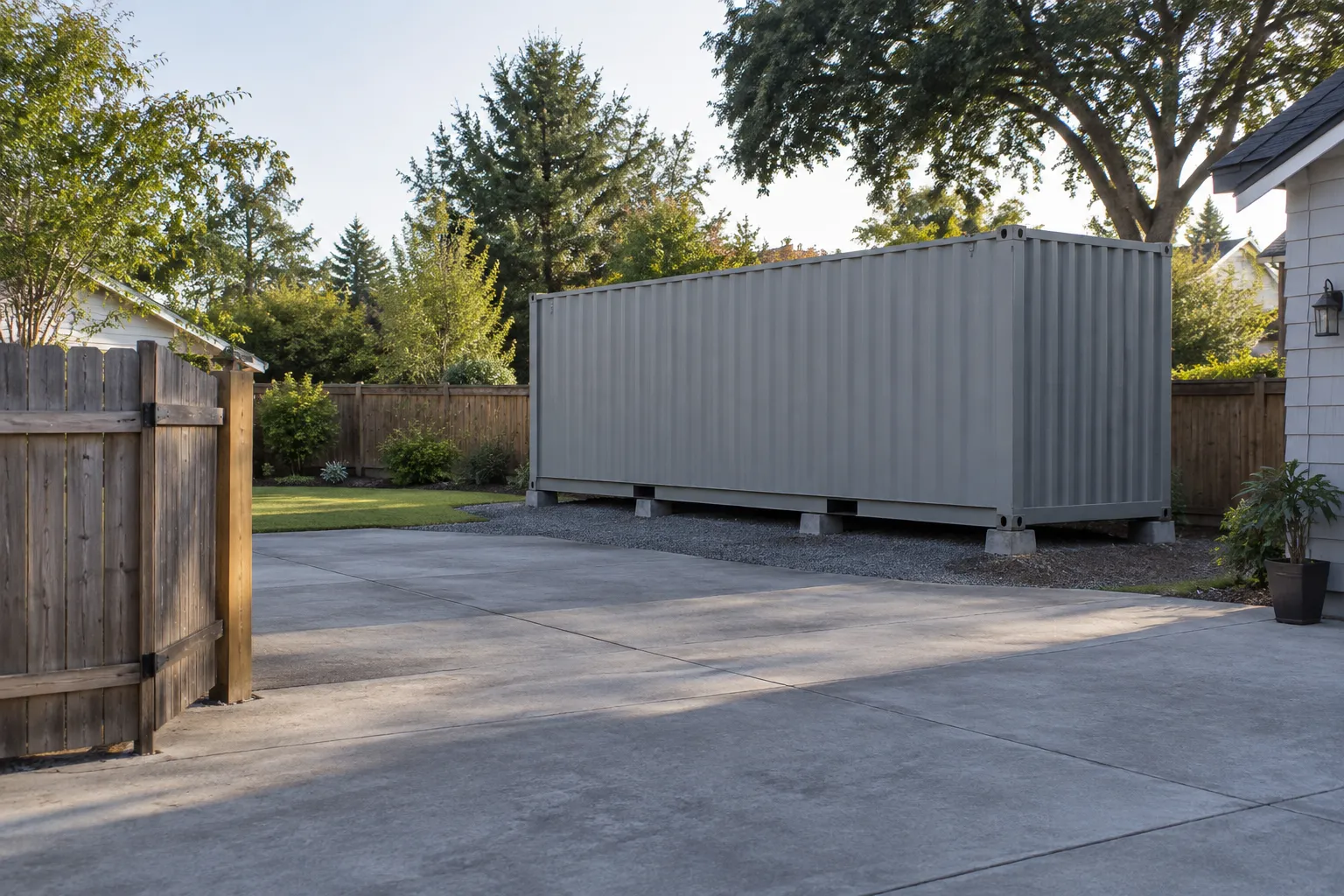
If you want to buy shipping container with backyard delivery, check the entire delivery route—not just the space where the container will sit. Backyard placement may be feasible when the delivery vehicle can reach a suitable unloading position and a crane can safely place the selected unit. A narrow gate does not automatically rule it out, but a crane cannot overcome every access problem.
Lease Lane Containers offloads and places containers, homes and offices by crane. Before purchasing, request a site-reviewed quote that identifies the proposed setup position, placement location and any preparation needed. Photos help screen a site; they do not establish ground-bearing capacity or replace the operator’s safety assessment.
Before You Buy Shipping Container With Backyard Delivery, Assess the Site
Treat delivery feasibility as three separate checks:
- Road access: Can the delivery vehicle reach your property, negotiate the entrance and leave safely?
- Crane setup: Is there a suitable operating area with adequate ground support, clearance and reach?
- Final placement: Can the container sit on approved supports with usable doors and required property clearances?
Passing one check does not mean passing all three. A roomy backyard may sit beyond the crane’s practical reach. A wide driveway may cover a septic tank or have an unsupported edge. A container may fit between fences but leave no room to open its doors.
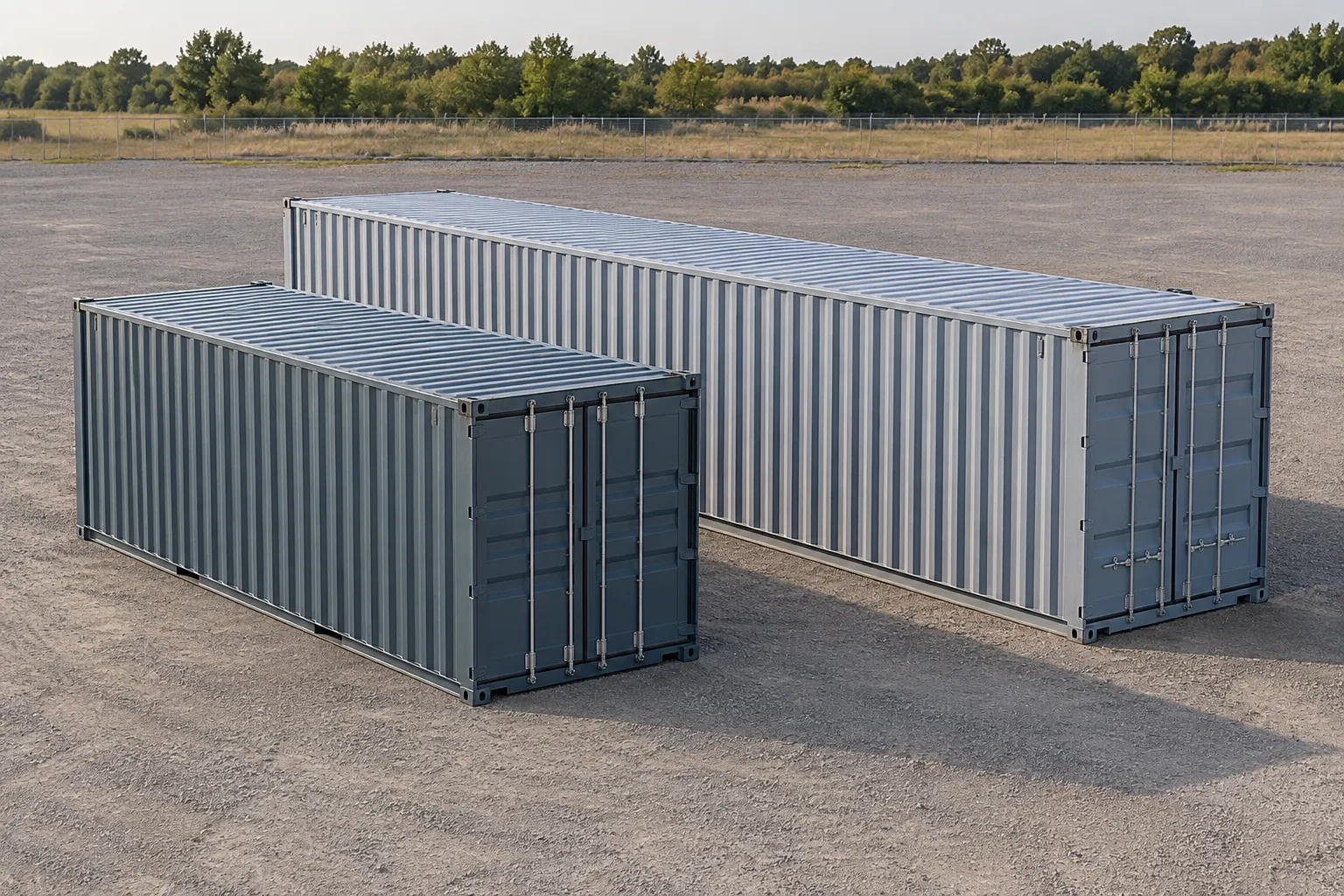
Start with a shortlisted product and its confirmed external dimensions and delivery weight. Compare 10ft containers for compact sites, 20ft storage containers and 40ft containers. Nominal length alone is not enough to plan the lift or foundation.
Our container buyers guide helps organize the purchase decision. A shipping container site assessment before purchase should also establish whether local zoning, permits, setbacks or association rules allow the intended placement and use.
What to Measure: Gates, Turns, Slopes and Unloading Space
There is no single driveway-width figure that approves every delivery. Shipping container delivery access requirements depend on the assigned vehicle, load, crane configuration and site geometry. Send actual measurements and ask the delivery team to confirm equipment-specific requirements.
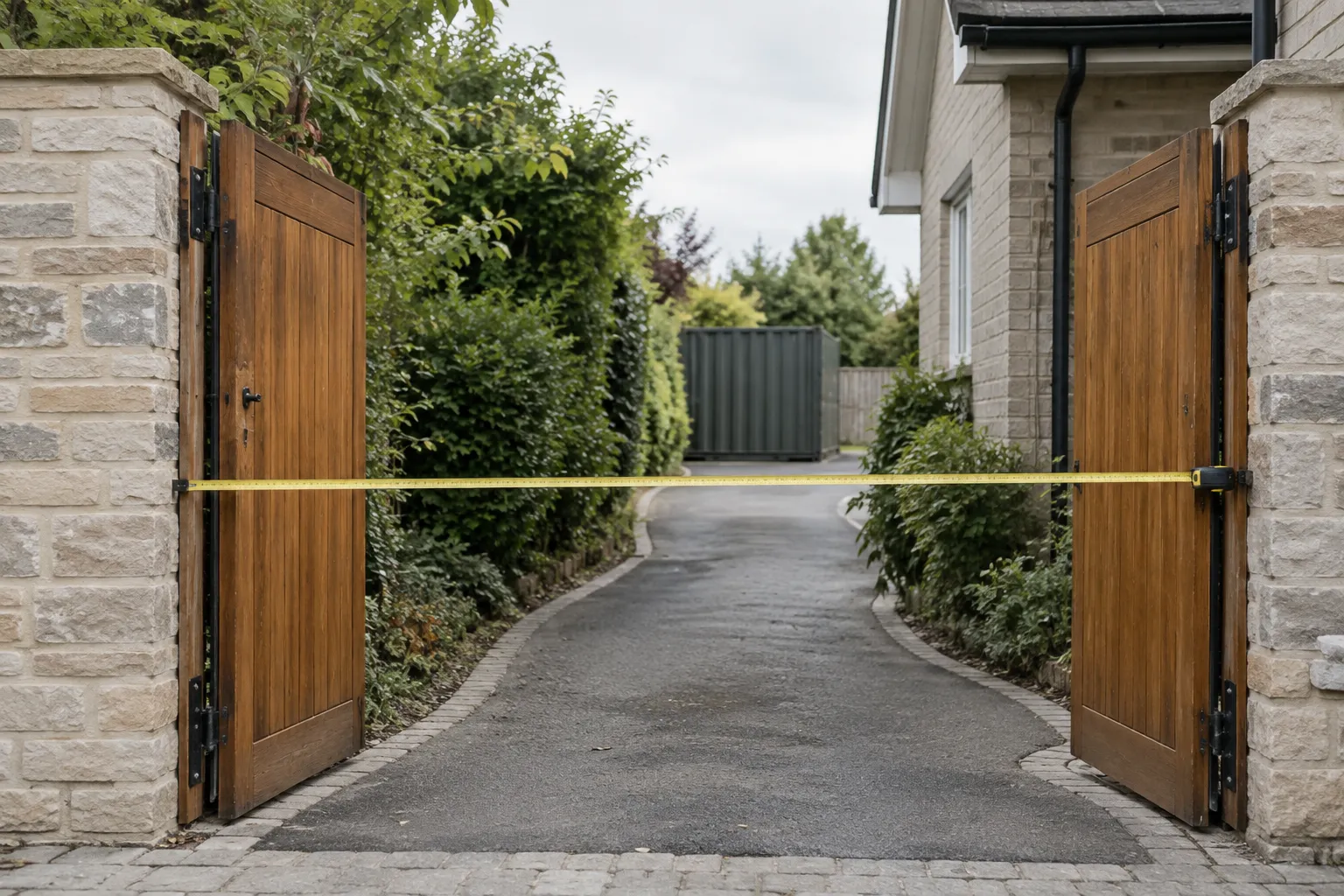
| Site feature | What to record | What the reviewer needs to assess |
|---|---|---|
| Entrance and gates | Narrowest clear width, opening height and fixed obstructions | Whether the vehicle can enter without striking posts or structures |
| Driveway turns | Width before, through and after each bend; nearby walls and trees | Vehicle turning path and rear swing |
| Slopes and transitions | Grade where known, cross-slope, crests and abrupt changes | Traction, clearance and suitable setup locations |
| Overhead obstacles | Photos and locations of branches, eaves and utility lines | Vehicle clearance and a safe crane operating envelope |
| Setup area | Available length and width, surface type and nearby edges | Crane placement, stabilizer space and ground support |
| Placement area | Container outline, door side and distances to obstacles | Lift reach, usable access and permanent support layout |
Measure gates between their closest fixed points, not simply between fence posts. Hinges, latches, open gate leaves and masonry caps can reduce usable clearance. Photograph both sides of the entrance so the reviewer can see the approach angle.
For shipping container delivery through a narrow driveway, include the street approach, parked-car restrictions and every bend. A vehicle may clear the entrance yet be unable to straighten out afterward. Include the exit route, too.
Photograph overhead services from a safe position on the ground. Never approach wires with a measuring pole or assume their height makes a lift safe. The operator must assess electrical hazards and required clearances; utility coordination may be necessary.
Crane Placement: What Must Be Confirmed?
The practical question is not simply whether a crane is available. It is whether the selected container can be lifted from the unloading position to its final supports using suitable equipment at your property.
Ask the reviewer to identify:
- The delivery vehicle’s standing position and the crane’s proposed setup area.
- The pickup point, final landing point and estimated lift radius.
- The container’s delivery weight and appropriate lifting arrangement.
- Obstacles along the load path, including buildings, trees and overhead lines.
- Space for stabilizers or outriggers and any engineered ground protection.
- The exclusion area needed to keep people away from the operation.
Crane capacity depends on the equipment configuration and working radius, not just a headline lifting-capacity figure. Moving the crane farther from the backyard can materially change feasibility. A fence lift and a lift over a house are not interchangeable requests.
Do not remove fencing, prune trees or book unrelated site work based on an assumed plan. First establish what actually needs changing and obtain any required permissions. Keep children, pets and bystanders out of the work area, and never walk under a suspended container.
Wet Ground and Drainage: What the Hauler Must Assess
Shipping container delivery on soft ground requires more than checking whether a lawn looks dry. Recent rain, waterlogged fill, hidden drains and weak driveway edges can affect vehicle access and crane support. A firm surface can conceal weaker material below.

Send photos showing standing water, ruts, seepage, soft shoulders and the transition from pavement to soil. Explain whether the route crosses recently excavated ground or an area that regularly ponds. If conditions change after your first submission, send updated photos before dispatch.
For crane operations covered by OSHA’s construction standard, OSHA 1926.1402 on ground conditions requires sufficiently firm, drained and graded ground, together with supporting materials where necessary, to meet equipment specifications for support and levelness.
That does not mean loose gravel, plywood or improvised blocking automatically makes a site suitable. The responsible professionals must determine whether preparation, mats or another setup location is appropriate.
Assess permanent drainage separately. The container’s final supports should not settle unevenly or redirect runoff toward neighboring property. Ask the site professional to account for the intended loaded use, not just the empty container arriving on delivery day.
Who Checks Ground Support, Buried Services and Crane Setup?
Assign responsibilities before ordering. A homeowner can document the property, but photographs cannot verify soil capacity, buried infrastructure or a safe crane configuration.
Your role as the property owner
Provide accurate measurements, known utility information, property restrictions and permission for access. Disclose septic tanks, drain fields, wells, irrigation, buried tanks, culverts, old foundations and recently filled trenches. Do not assume a utility-location service will identify every privately installed line or underground structure.
The operator’s and site professional’s roles
The crane provider evaluates equipment suitability, setup and lift execution. A qualified site contractor or engineer may need to assess ground support, drainage, foundation design or questionable pavement. Agree who arranges each assessment and who completes required preparation.
For covered construction operations, OSHA’s ground-condition rule also assigns responsibilities to the controlling entity, including necessary ground preparation and disclosure of known underground hazards. Which party holds that role depends on the project; it should not be guessed from a retail order.
The local authority’s role
Delivery feasibility is not permission to install or occupy a container. For example, Portland’s cargo-container code guide provides jurisdiction-specific guidance for cargo-container projects. Your own building and planning departments determine the rules applicable to your property. Storage, office and residential uses may have different requirements.
What If the Intended Placement Location Is Inaccessible?
Change the plan before committing to a unit that cannot be placed where you need it. Useful alternatives include moving the landing area closer to the accessible driveway, selecting a shorter container or revising the orientation to reduce obstructions.
Compare these options against your actual storage needs:
- A 10ft new shipping container offers a shorter footprint, although it still needs an approved delivery and lift plan.
- A 20ft used shipping container is worth evaluating when a larger unit creates turning or placement difficulties.
- A 20ft high cube one-trip container provides extra height, which must be included in clearance checks.
- A 20ft tunnel container with double-end doors can support access from either end if both door areas remain usable.
- A 40ft standard-height used container needs a longer landing area and an appropriately reviewed lift.
A smaller unit is not an automatic solution to weak ground or overhead electrical hazards. Likewise, extra doors help daily access but do not solve crane reach.
Our used-container inspection checklist addresses condition questions separately from site access. If you are considering a larger storage layout, the 40ft high cube pallet-fit guide can help determine whether that footprint is necessary before you redesign the yard.
Confirm Weather Delays, Failed Delivery and Rescheduling
Ask for written clarification before you pay: who decides whether conditions are unsafe, how changes are communicated, and what happens if the reviewed access route is blocked or the ground becomes unsuitable. Do not assume a failed attempt, waiting time or rescheduling is automatically free. Request the applicable terms rather than relying on an informal estimate.
Every unit ships from our Raleigh, NC yard and is delivered by our own trucks, trusted freight carriers or a vetted partner delivery agency, depending on your location.
Standard Delivery is free on all orders delivered within the contiguous United States (Lower 48). Remote or non-standard sites and locations outside the Lower 48 are quoted in writing before you pay. Containers, homes and offices are offloaded and placed by crane.
For in-stock products (everything except container homes), handling is 1–3 business days. Standard transit is 3–7 business days, 4–10 business days in total (about a week and a half). All times start once full payment has been received and count business days only (Monday – Friday, excluding U.S. federal holidays).
Enter your ZIP code on any product page to see your estimated arrival dates. Our driver calls you one day before delivery to confirm the exact time. Review the shipping policy and order terms alongside your site-specific written quote. Estimated dates do not establish that an unreviewed backyard is accessible.
Request a Site-Reviewed Quote: Your Submission Checklist
To buy shipping container with backyard delivery confidently, submit one organized package rather than isolated close-up photos. Include:
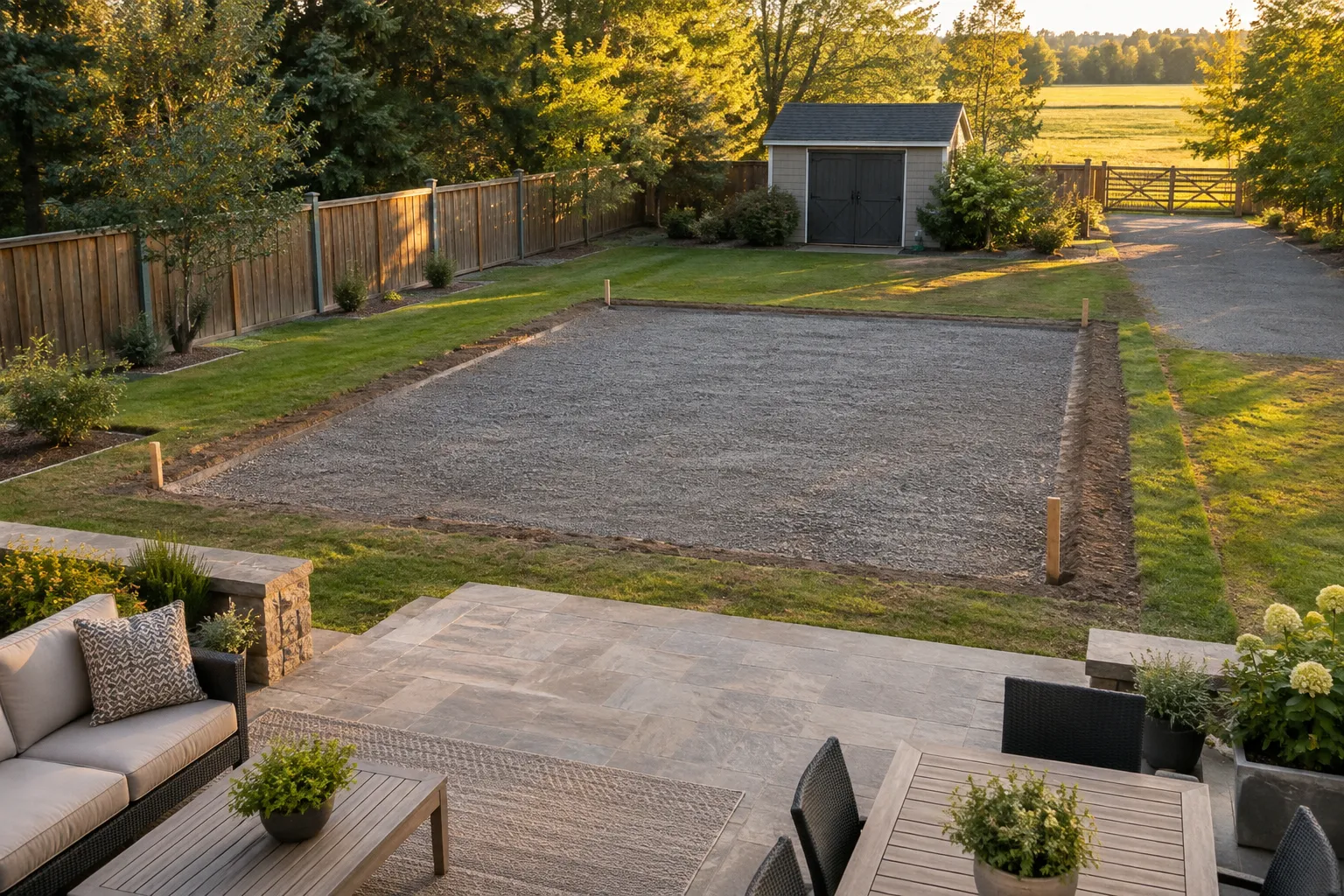
- Property location and intended use: Delivery address, ZIP code, storage or workspace purpose, and known restrictions.
- Selected product: Product link, quantity, confirmed dimensions and any alternative size you would accept.
- A simple site sketch: Street, entrance, driveway, turns, proposed crane area and container outline, with measured distances.
- Route photographs: Views from the street inward and from the backyard outward, plus each narrow point and turn.
- Ground information: Surface materials, slopes, drainage problems, recent excavation and known underground hazards.
- Overhead photographs: Utility lines, branches, roof edges and other obstacles along the approach and proposed lift path.
- Door orientation: Mark the door end with an arrow toward a fixed landmark, such as the driveway or house.
- Preparation and permissions: Required fence changes, utility coordination, permits and the person responsible for each item.
Ask the written quote to record the proposed placement, preparation requirements, unresolved conditions and any non-standard delivery arrangements. If photos leave important questions unanswered, ask whether an on-site assessment is needed before proceeding.
The best container is one that fits your use and can be placed safely. Browse the relevant container sizes, shortlist your preferred unit and request a site-reviewed quote before committing to backyard delivery.
What "fully furnished" means: when one of our container homes is described as fully furnished, it means built-in amenities only: interior finishes and any built-in cabinetry, kitchen or bathroom fit-out, electrical and plumbing that are listed in this home's specifications. Loose furniture and appliances (for example beds, sofas, tables, refrigerators and microwaves) are not included unless listed in your written quote.
Frequently asked questions
Possibly, but a fence does not establish whether a lift is feasible. The crane provider must evaluate container weight, working radius, setup space, ground support and the load path. Send fence photos and measured distances between the proposed crane position and landing area. Do not assume lifting over a house or utility line is acceptable.
There is no universal minimum that approves every delivery. Required clearance depends on the vehicle, container, turns, slope and nearby obstacles. Measure the narrowest clear width, photograph the street approach and show every bend. Lease Lane Containers uses crane offloading, so the review also needs a suitable setup area and a feasible path to the final position.
Grass alone does not tell you whether the ground can support delivery equipment or a container. Saturated soil, buried structures and recently filled trenches may create hazards. Disclose those conditions and have the responsible professionals assess support and drainage. Ground protection or another setup position may be needed; do not rely on improvised boards or loose gravel.
A shorter container may reduce the required landing footprint, but it does not automatically solve narrow vehicle access, inadequate crane support or electrical hazards. Compare the selected product’s dimensions and weight with the site constraints. Ask for both the preferred unit and a smaller alternative to be assessed before deciding which container to purchase.
Standard Delivery is free on all orders delivered within the contiguous United States (Lower 48). Containers, homes and offices are offloaded and placed by crane. That does not mean every backyard position is accessible. Remote or non-standard sites and locations outside the Lower 48 are quoted in writing before you pay. Request review of your specific placement location.
Sources & further reading
- NOAA — El Nino looms large over U.S. Winter Outlook
- OSHA — 1926.1402: Ground conditions
- City of Portland — Building Code Guide 96-11: Cargo Containers
- California HCD — Accessory Dwelling Units
- California HCD — Information Bulletin 2025-03: California Building Standards Code, Effective January 1, 2026
- California Energy Commission — 2025 Energy Code Accessory Dwelling Units FAQs
Talk to our Raleigh team
Ready to find the right container?
Get a written quote, check availability or ask about delivery to your site. Lease Lane Containers LLC answers every enquiry personally.
- Call us+1 (984) 219-9882
- Emailsales@leaselanecontainers.llc
- Visit5832 Lease Ln, Ste B, Raleigh, NC 27617
- Business hoursMon - Fri: 9:00 AM - 5:00 PM · Sat - Sun: Closed (ET)