Modifications & Custom Builds
Shipping Container Lock Box and Padlock: What Fits?
Container size does not determine lock fit. Use door photos, hardware measurements and a written compatibility check to choose the right lock-and-box combination.
8 min readBy the Lease Lane Containers team
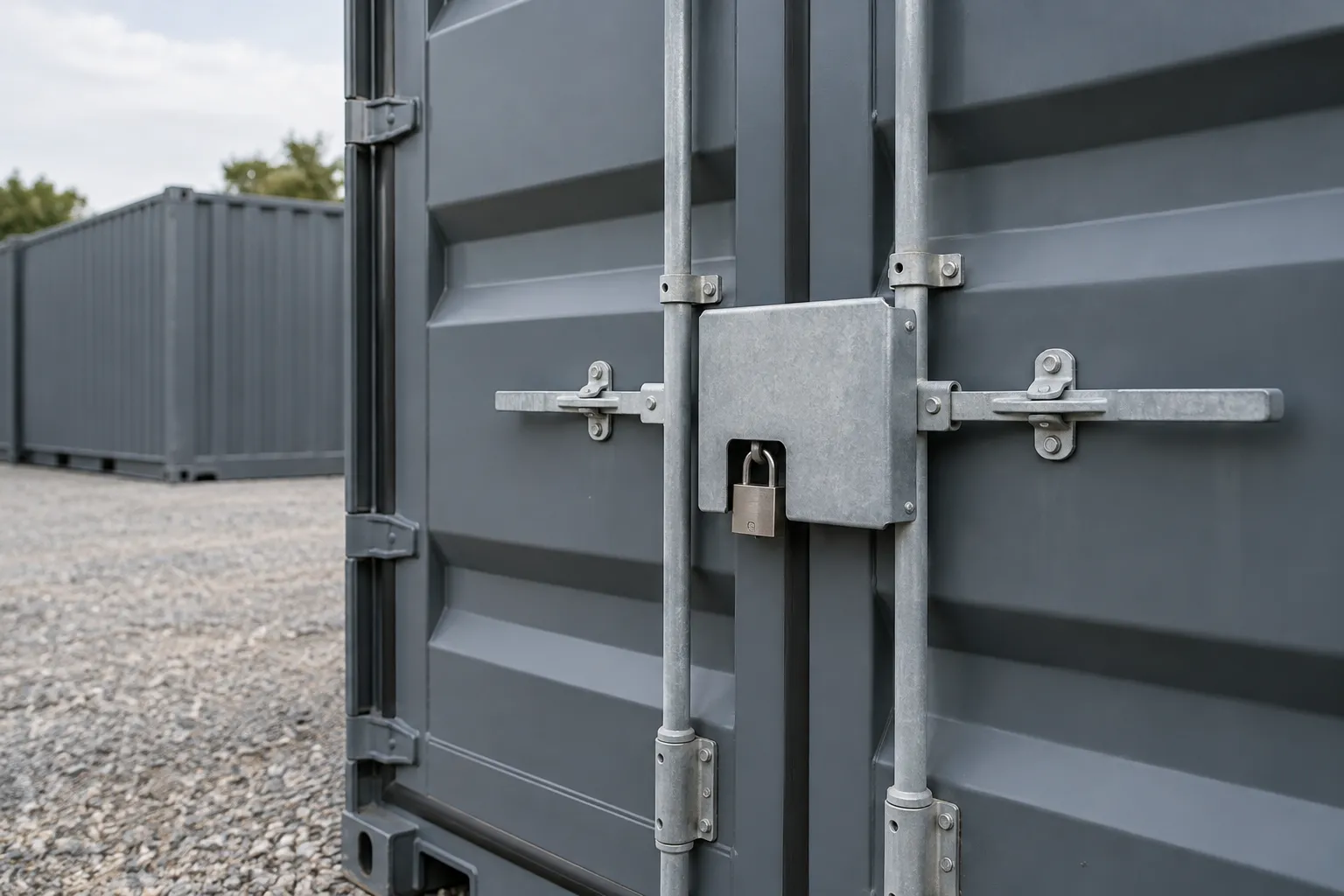
A shipping container lock box and padlock must fit each other and the door hardware—not simply a 20ft or 40ft container. Before buying, confirm the box’s usable internal space, the locking eye’s dimensions, the lock’s engagement geometry and room to operate the key. A matched package is useful only when those details are verified for the intended doors.
The safest buying sequence: identify the existing hardware, collect photos and measurements, then get the exact lock model and installation scope confirmed in writing. Do not order a puck lock or oversized padlock based on appearance alone.
Which Locking Hardware Does Your Container Already Have?
Cargo-door handles, locking rods and cams hold the doors closed. A padlock secures a compatible locking point; a lock box shields that connection. These parts work together, but they are not interchangeable.
Start by identifying which arrangement you have:
- Exposed handle hasp: the padlock passes through a locking eye near a door handle, without a surrounding box.
- Existing lock box: a steel enclosure covers a locking point, often near the meeting edges of the cargo doors.
- Dedicated puck-lock hasp: a purpose-built receiver accepts the lock’s concealed locking mechanism.
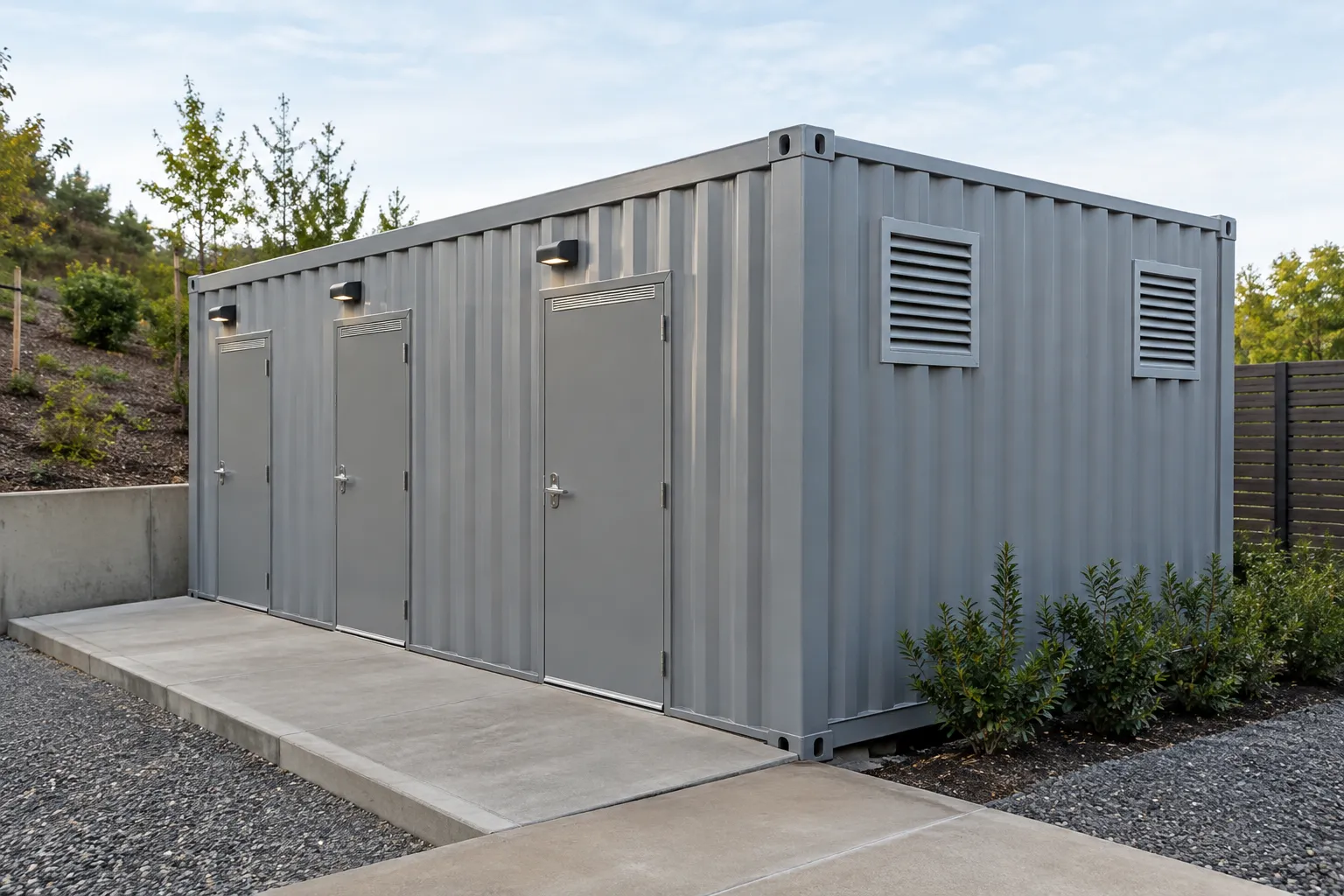
- Modified access door: a roll-up door, personnel door or side-opening assembly uses its own locking arrangement.
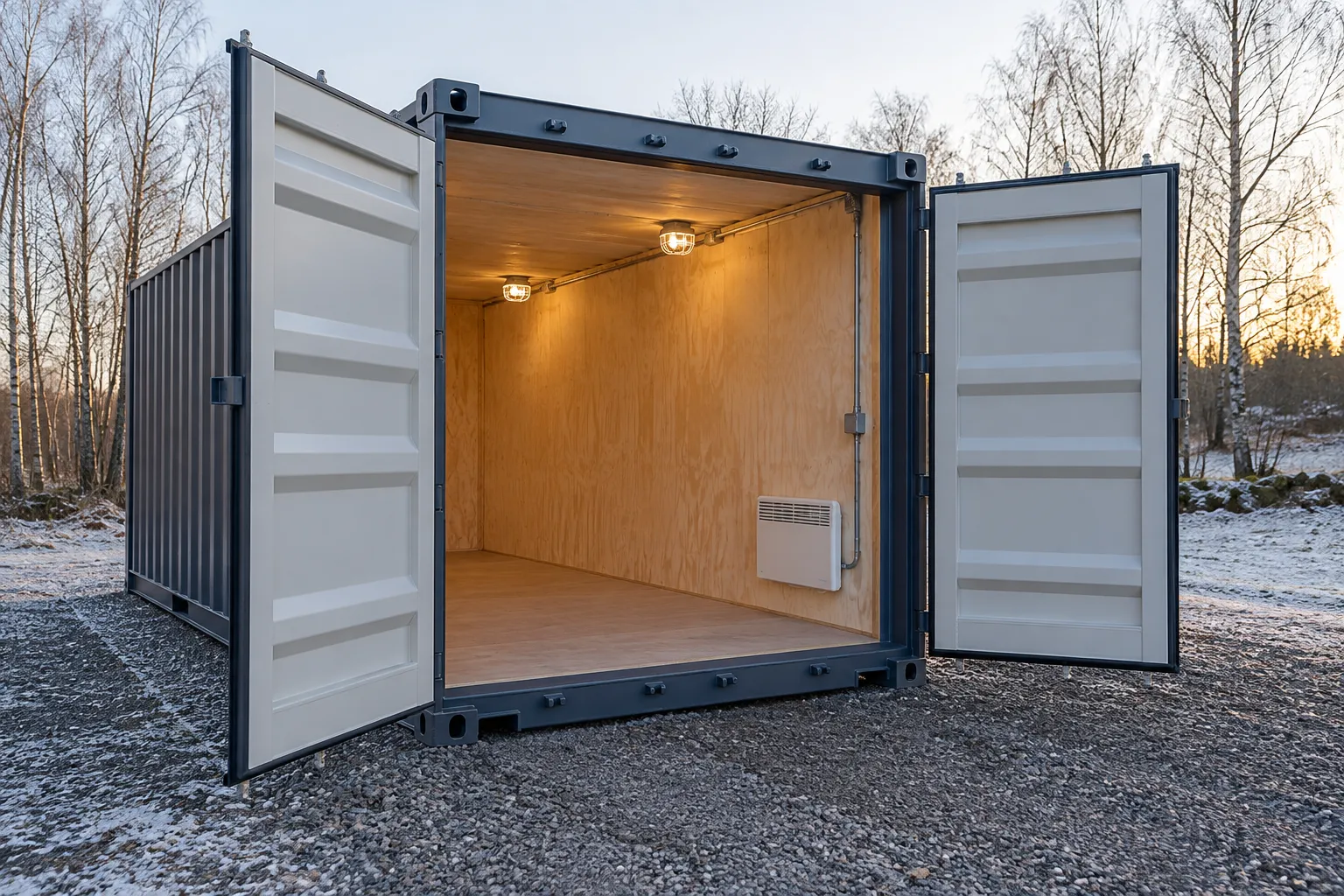
“Lockable doors” does not establish that a protective box or padlock is included. Our 20ft used container with lockbox included and 20ft insulated storage container with steel lock boxes are relevant starting points, but you should still confirm the included hardware and compatible lock model.
Container length and height are not lock specifications. An incoming 40ft high-cube unit may have different door hardware from another container of the same size. Use our container grades guide to understand condition terminology, then review the doors separately using the used-container inspection checklist.
Before a holiday closure, check operation rather than merely adding a larger lock. The National Equipment Register’s 2024 Thanksgiving report provides historical equipment-theft context and security advice; it is not a 2026 forecast or a rating of container locks.
The Door and Lock-Box Measurements to Collect Before Ordering
Photos reveal the arrangement; measurements establish whether the parts fit. Photograph your existing container with the doors closed and open. For an incoming unit, ask for the relevant hardware specifications and configuration confirmation before purchasing accessories.
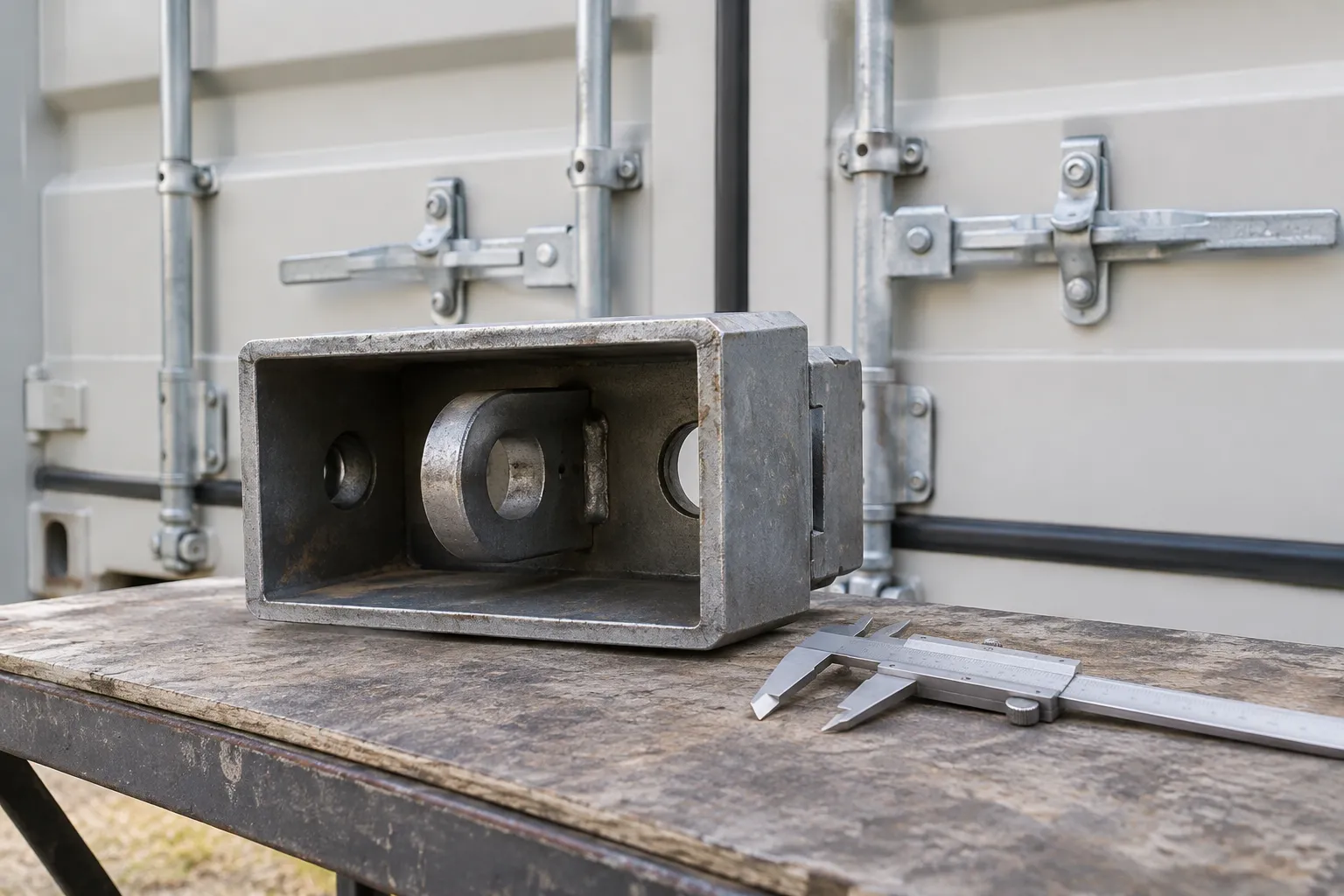
Build a useful photo set
- Photograph the complete door pair straight on, showing handles, rods and the center seam.
- Take a close-up of the locking point with a ruler in the same plane as the feature being measured.
- Photograph inside and underneath any existing box so the locking eye and access opening are visible.
- Show the proposed mounting area from the inside, including reinforcement, lining or obstructions.
- Include a side view showing how far the box, handle and locking eye project from the door.
Avoid angled photos as your only dimensional evidence. Record inches or millimeters consistently, and label each measurement. Do not post key codes or detailed key photographs publicly.
| Measurement | What to record | Why it matters |
|---|---|---|
| Box cavity | Usable internal width, height and depth | The lock body must fit around internal obstructions |
| Access opening | Narrowest insertion opening and approach direction | A lock may fit inside but not pass through the opening |
| Locking eye | Hole diameter, plate thickness and stacked thickness | The shackle or locking pin must pass through and engage |
| Eye position | Distance from the door face and box walls | Determines whether the lock can align with the receiver |
| Moving clearance | Shackle opening travel or puck-lock engagement space | The lock must unlock and come off, not just close |
| Mounting area | Hole spacing, surface profile and inside access | Establishes whether the specified box can be installed |
| Key access | Clearance for key insertion, turning and removal | Prevents an otherwise compatible lock from being unusable |
Measure the narrowest usable dimensions, not just the box’s outside dimensions. Paint buildup, weld beads and reinforcement can reduce clearance. Ask the hardware supplier to specify required operating clearance rather than assuming a snug fit is acceptable.
Also check that the doors close normally before measuring. A lock is not a remedy for a bent hasp or a container sitting out of level. Binding doors should be assessed before a new box is positioned.
Bolt-On vs Weld-On Lock Boxes: Compare Installation Quotes
A bolt on shipping container lock box can suit a retrofit when the door construction permits secure fastening and the installer can reach the inside. “Bolt-on” does not necessarily mean no drilling, no reinforcement or installation without specialist tools.
Ask the installer to identify the fasteners, backing arrangement, hole locations and treatment of penetrations. Confirm that exposed fasteners cannot simply be removed with the doors locked. Interior linings can make access more complicated than it appears from outside.
A weld on container lock box requires suitable steel surfaces, accurate positioning and coating restoration. Have a qualified installer assess the substrate and control heat near seals, insulation and interior contents. Hot work should not proceed without appropriate fire precautions.
Factory installation versus retrofitting
A factory-installed box may already be part of the container’s original specification. Pre-dispatch installation is a separate possibility to request—not something to assume is included with every purchase.
When comparing either with a field retrofit, ask:
- Is the box already fitted, or is fabrication required?
- Does the scope include the receiving hasp, reinforcement and a compatible lock?
- Are surface preparation, sealing and paint restoration included?
- Who verifies full door movement and lock removal after installation?
- Does the quote account for linings or existing electrical equipment?
For example, a 40ft used container with welded lock protectors deserves a hardware check before you budget for another box. Existing protection may suit your needs, but its description alone does not establish padlock compatibility.
Browse modified containers for configurations worth comparing. For a lined unit, the insulated-container specification guide helps you identify interior features that an installer must protect.
Puck Locks vs Shrouded-Shackle Padlocks: Check the Exact Fit
A shipping container puck lock usually conceals its locking mechanism behind a round body and engages a compatible hasp. A shrouded-shackle padlock protects much of its shackle with raised shoulders. Neither description establishes universal compatibility with container boxes.
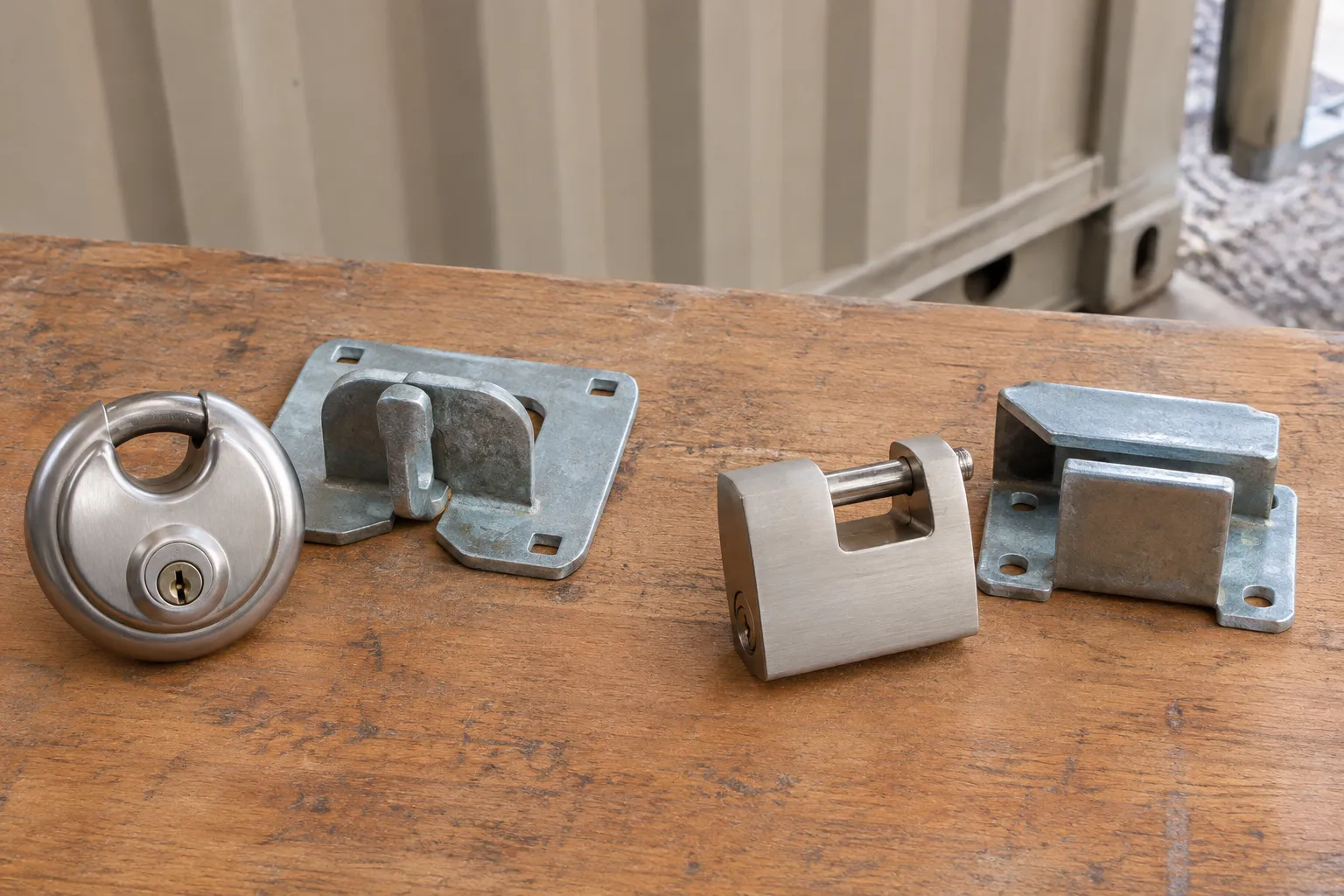
When a puck lock makes sense
Choose a puck-style design only after confirming the receiver geometry, locking-pin dimensions, body clearance and key orientation. A box intended for a conventional padlock may lack the receiver a puck lock requires. Being able to slide the body into the enclosure is not proof that it can engage securely.
When a shrouded-shackle padlock makes sense
Check shackle diameter, inside width and usable height, plus the body and shoulder dimensions. The shackle may pass through the eye while the shoulders prevent the body from reaching its locked position. Some designs also need extra room to rotate or withdraw the shackle.
Our armored-steel shipping container padlock with rotating shackle is $29. Confirm its dimensional specifications against your hardware before ordering; the product name alone does not establish that it fits every box or that it is a puck-style lock.
The best shipping container security lock for your setup is one that fits, operates reliably outdoors and has a workable replacement-key process. If a security rating matters to your insurer, request documentation for the exact model rather than relying on words such as “heavy-duty.”
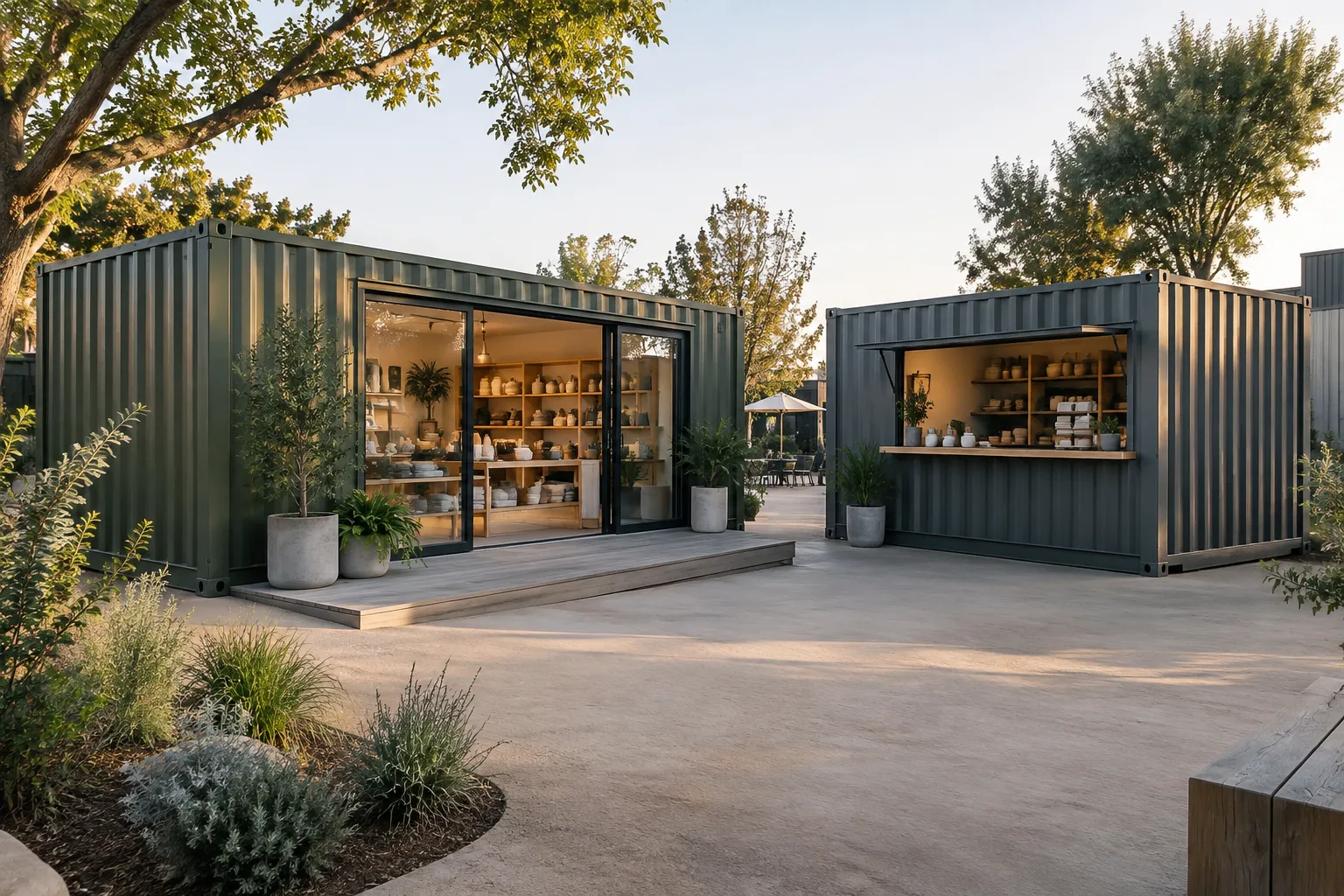
For offices or public-facing conversions, do not treat a cargo-door padlock as an occupied-space exit solution. The U.S. Access Board’s ADA Standards, including provisions for door hardware and operable parts, may affect accessible entrances. Have the designer or local authority confirm applicable accessibility and egress requirements.
Buying the Lock Separately vs Ordering a Matched Package
Buying separately makes sense when you already have a sound box and documented dimensions. It also lets you retain an established key system, provided the required lock model is compatible.
A matched shipping container lock box and padlock package reduces guesswork only if the supplier identifies both components and confirms their relationship to your door hardware. “Container lock kit” without model numbers or measurements is not enough.
Ask for these details in writing:
- Box model or fabrication drawing and intended mounting position.
- Exact lock model and compatible hasp or receiver.
- Number of locks and keys supplied.
- Whether installation and finish restoration are included.
- Whether keyed-alike options are available and what replacement locks require.
- Who checks operation and resolves a compatibility mismatch.
Count access points before choosing quantities. A 20ft high-cube container with double-end doors has two door ends to assess. Do not assume one package secures every entrance or that separate door ends use identical hardware.
Start with the container accessories collection and request compatibility confirmation for your chosen padlock. A quoted matched package should list its actual contents; do not assume a separate box or installation is included with a lock purchase.
Compare Hardware, Installation and Replacement-Key Costs
Container lock box installation cost depends on more than welding versus bolts. Compare quotes for the same completed result: a fitted box, compatible lock, restored finish and demonstrated operation.
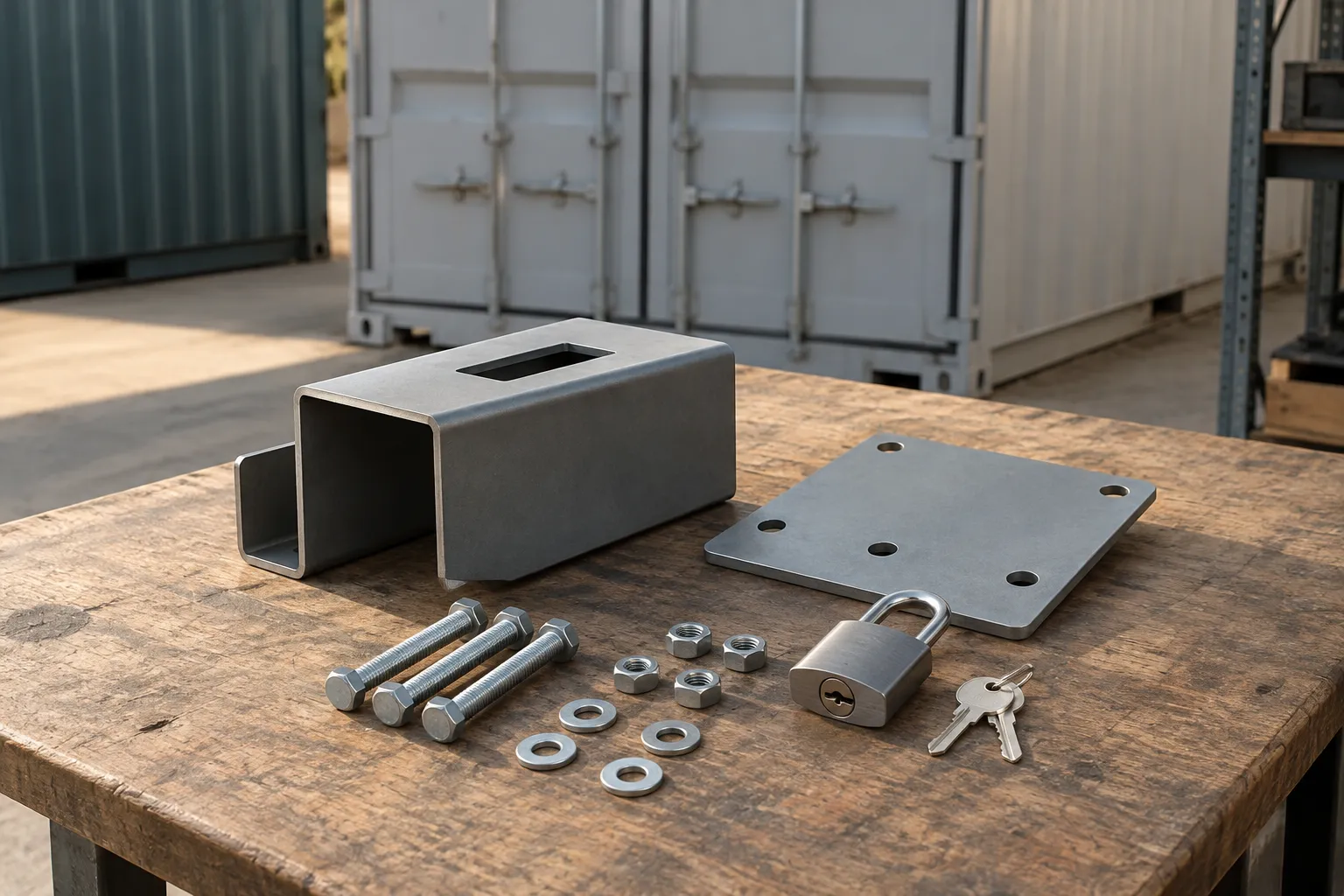
Separate the total into these items:
- Hardware: box, receiver, padlock, fasteners and any backing plates.
- Labor: preparation, drilling or welding, alignment and testing.
- Finish work: corrosion protection and treatment of penetrations.
- Site work: installer travel, access and interior obstruction removal.
- Key management: extra keys, replacement cylinders or replacement locks.
For a container comparison, our 20ft used unit with lockbox included is {{price:20ft-used-shipping-container-2/}}. Treat the included box as a specification to verify, not proof that a compatible padlock is included.
Keyed-alike locks can simplify access across several doors, but a lost key may affect every lock in that group. Keyed-different locks isolate access while increasing the number of keys to manage. Ask about supported options before committing to either approach.
Sales tax is included and paid by Lease Lane Containers, so nothing is added at checkout. Review the container buyers guide alongside your itemized quote so the hardware purchase stays aligned with the container and site requirements.
Request a Compatible Security Package With Your Container Order
Send a concise request: “Please confirm a compatible shipping container lock box and padlock for this door configuration. Identify the box, receiver, lock model, key quantity, installation method and itemized cost. Confirm any exclusions before I order.” Attach the measurement sheet and relevant photos.
Request an acceptance check covering normal door closure, handle movement, lock engagement, key turning and lock removal. Repeat the operational check after the container is placed on its prepared supports. Keep spare keys outside the container in a controlled location.
Every unit ships from our Raleigh, NC yard and is delivered by our own trucks, trusted freight carriers or a vetted partner delivery agency, depending on your location. Standard Delivery is free on all orders delivered within the contiguous United States (Lower 48). Containers, homes and offices are offloaded and placed by crane. Accessories ship by standard freight. Remote or non-standard sites and locations outside the Lower 48 are quoted in writing before you pay. Review the shipping policy for delivery planning.
Buy the fit, not just the lock’s appearance. Browse new one-trip containers or the accessories linked above, then request an itemized quote that confirms the hardware combination before you buy.
Frequently asked questions
There is no universal padlock size for container lock boxes. Measure the usable box cavity, insertion opening, locking-eye hole and plate thickness, then compare them with the lock body and shackle dimensions. Allow the operating clearance specified by the hardware supplier, including room to insert and turn the key and remove the unlocked padlock.
Only if the box and receiver support that exact puck-lock design. Body diameter alone is not enough: the locking mechanism must align with the correct hasp, and the keyway must remain accessible. Send photographs and measurements to the supplier and request written model-specific compatibility confirmation before replacing a conventional padlock with a puck lock.
The better choice depends on the door construction, installation quality and available access. Bolt-on boxes need suitable fasteners, backing and treatment of penetrations. Weld-on boxes require sound steel, qualified installation and coating restoration. Compare complete installation scopes rather than assuming either attachment method is automatically stronger or less expensive.
Do not assume it does. A lock box is the protective enclosure, while the padlock is a separate component unless the specifications or written quote include it. Confirm the exact lock model, key quantity and fit. Even when both items are supplied, ask whether installation and an operational check are included.
Potentially, if the selected lock model supports a keyed-alike option and compatible locks are available. Confirm that option before ordering rather than expecting unrelated locks to share a key. Consider the trade-off: fewer keys simplify access, but a lost key can affect every lock in the group. Ask how replacement keys and locks are obtained.
Sources & further reading
- National Equipment Register — Thanksgiving Heavy Equipment Theft Trends and Security Tips (2024)
- U.S. Access Board — ADA Accessibility Standards
- California Division of the State Architect — Access Compliance Reference Materials
- UL Solutions — New UL Standard Published: UL 1487, Battery Containment Enclosures
- International Code Council — 2024 International Fire Code, Chapter 3: General Requirements
- NFPA 855 — Standard for the Installation of Stationary Energy Storage Systems
Talk to our Raleigh team
Ready to find the right container?
Get a written quote, check availability or ask about delivery to your site. Lease Lane Containers LLC answers every enquiry personally.
- Call us+1 (984) 219-9882
- Emailsales@leaselanecontainers.llc
- Visit5832 Lease Ln, Ste B, Raleigh, NC 27617
- Business hoursMon - Fri: 9:00 AM - 5:00 PM · Sat - Sun: Closed (ET)