Permits, Zoning & Regulations
Buy Shipping Container for Storage in a Flood Zone: Elevate?
An elevated container can work, but its foundation, loading access and remaining flood exposure may outweigh the convenience. Compare three complete storage budgets before ordering.
9 min readBy the Lease Lane Containers team
Should You Buy Shipping Container for Storage in a Flood Zone—or Relocate?
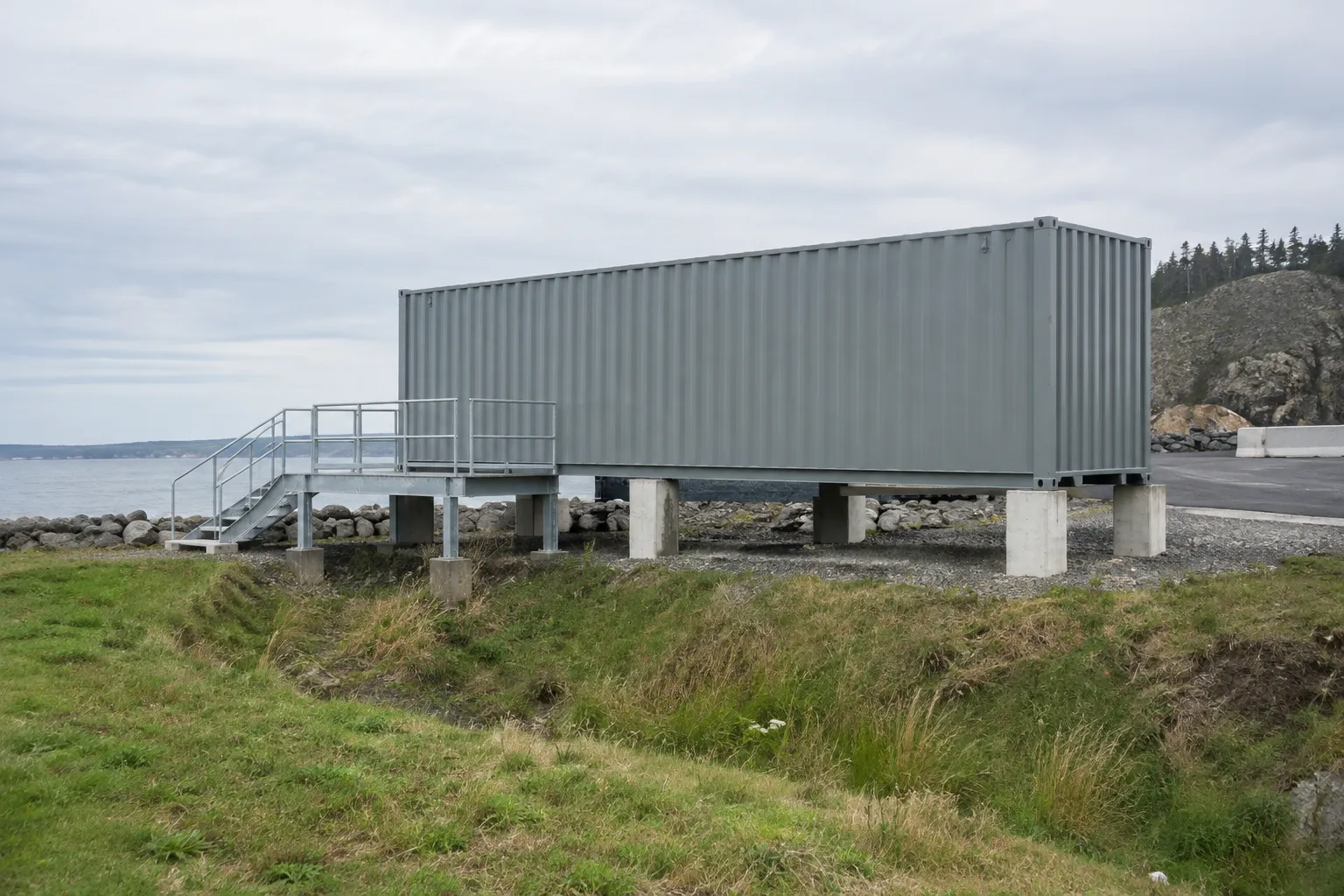
If you plan to buy shipping container for storage in a flood zone, choose elevation only when the proposed installation is locally acceptable, professionally engineered and practical to use. Relocate storage when the contents cannot tolerate flood exposure, access could be cut off or a safer location costs less overall.
The cheapest container is not necessarily the cheapest storage solution. Raising it can add foundations, anchorage, landings and material-handling equipment. A higher spot on the same property—or storage elsewhere—may avoid much of that work.
Use three decision gates before selecting a unit:
- Allowed: Will the local authority accept this placement, elevation and inventory?
- Usable: Can staff safely move goods and reach essential supplies when surrounding areas flood?
- Worthwhile: Does the complete installed and operating cost compare favorably with relocation?
This guide focuses on flood exposure and purchase economics. For broader land-use questions, see our permanent-storage permit guide. Neither a new container nor a cargo-worthy designation substitutes for site-specific flood design.
What Flood-Zone and Elevation Information Should You Obtain Before Requesting Quotes?
Send every contractor the same site information. Otherwise, one shipping container elevation cost quote may assume a shallow foundation while another includes piles, access structures and difficult crane positioning.
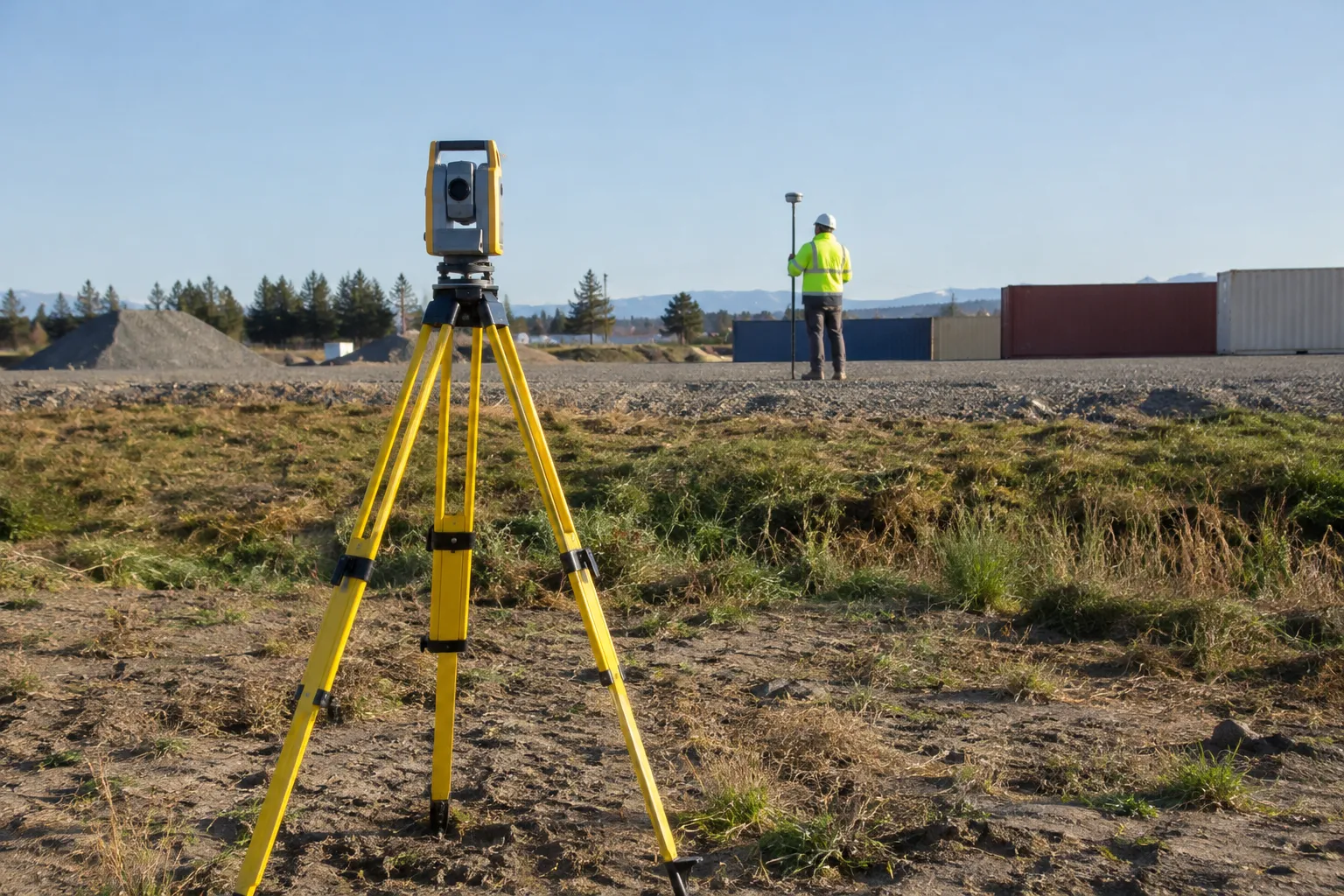
Ask your local floodplain administrator and a qualified surveyor to establish:
- The mapped flood zone and whether the proposed footprint lies in a regulatory floodway or coastal high-hazard area.
- The applicable base flood elevation, where established, and the locally required design elevation, including any additional height requirement.
- Surveyed ground elevations at the container corners, approach route and proposed crane setup area.
- The elevation reference system used, so survey and design numbers are comparable.
- Known drainage problems, previous high-water observations and exposure to moving water, debris or scour.
- Whether floodway restrictions, fill limitations or additional technical studies affect feasibility.
Ask which part of the installation must meet the required elevation. Do not assume that floor height, bottom rail height and the lowest structural member are interchangeable.
A flood-zone label alone does not describe water depth at your chosen footprint. Conversely, a location outside a mapped high-risk area can still experience drainage-related flooding.
Mark a second on-site location on the same survey. Comparing both footprints early makes shipping container flood zone requirements a location decision rather than an expensive redesign after purchase.
Which Stored Goods Would Make Flood Exposure Unacceptable?
Prepare an inventory with quantities, replacement values, contamination consequences and maximum tolerable downtime. Allowable contents and sensible contents are not always the same. Local acceptance does not establish insurance coverage or make losses affordable.
Consider relocating these goods to a demonstrably lower-risk facility:
- Irreplaceable records, archives and unique tooling.
- Electronics, precision instruments and moisture-sensitive stock.
- Food, medical supplies and products that cannot safely return to service after contamination.
- Emergency equipment needed while site access may be flooded.
- Chemicals, fuels or batteries requiring specialized fire and environmental controls.
Even washable tools may require costly cleaning, corrosion treatment and inspection. Elevation protects only against the conditions addressed by the design; it does not ensure continued road access or eliminate humidity and condensation.
Battery inventory deserves separate review. The 2024 International Fire Code, Chapter 3, including Section 320 addresses lithium-ion and lithium metal battery storage. Ask the fire official which adopted edition, quantity thresholds and safeguards apply to your inventory. Storage and charging are different activities; identify both if proposed.
A 20ft bunded storage container offers integrated spill containment, but that feature alone does not establish chemical compatibility, flood suitability or fire-code compliance. Have the actual contents reviewed before selecting specialized equipment.
How Could Elevation Change Loading, Access and Day-to-Day Use?
Sketch a normal workday before approving elevated shipping container storage. Trace a delivery pallet from the vehicle to its final position, then trace how staff retrieve individual items.
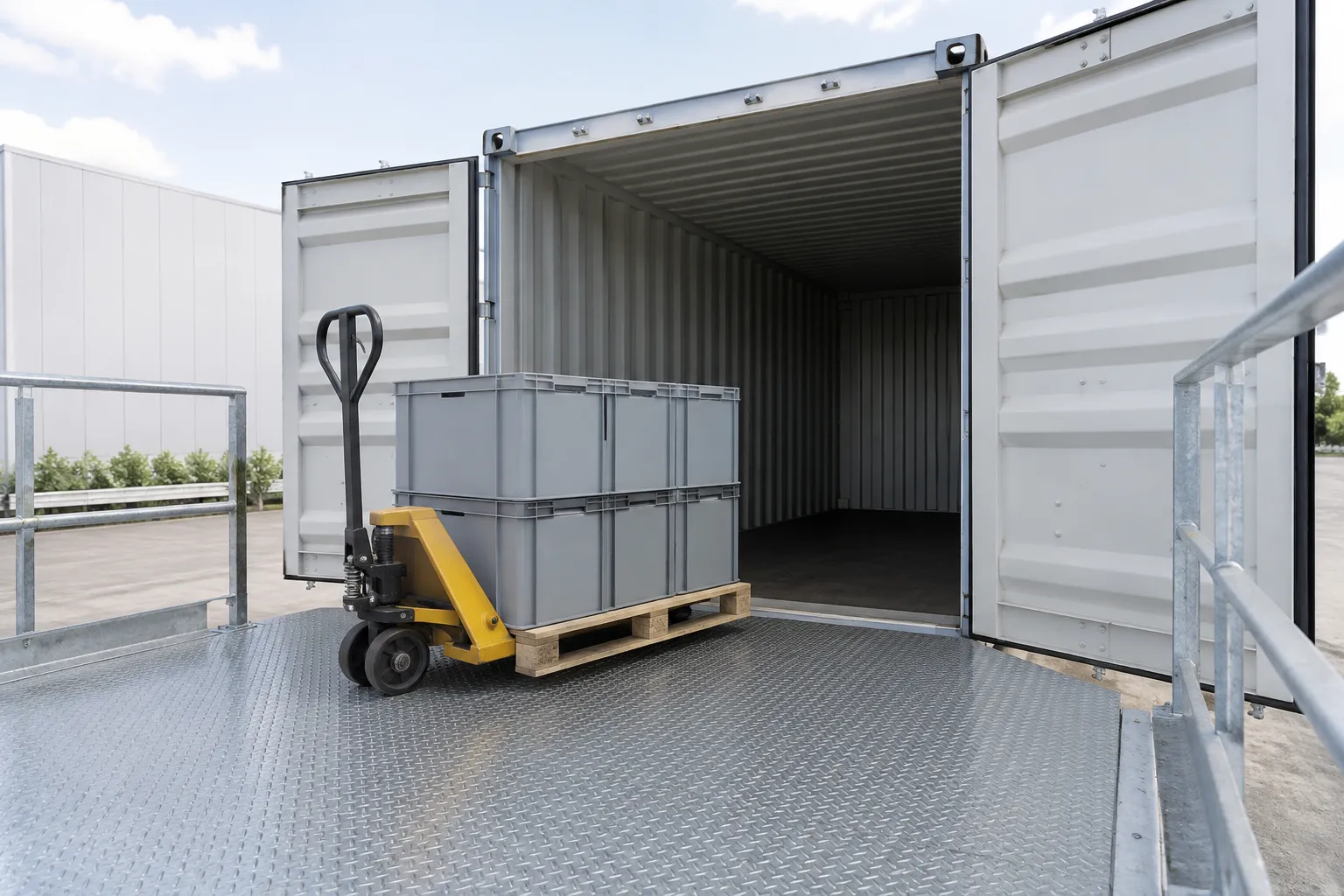
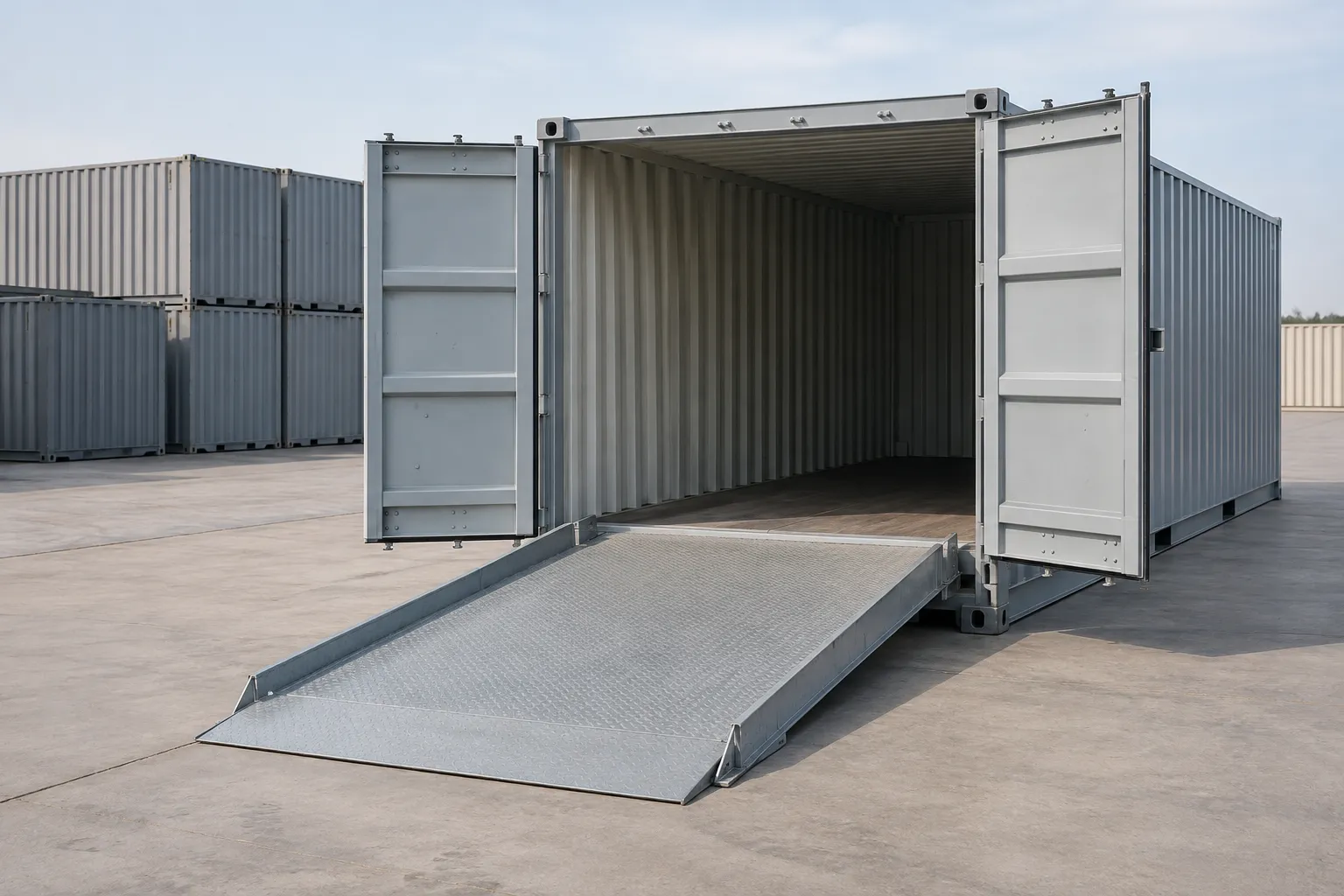
At a raised doorway, a short threshold ramp may no longer work. You may need a designed loading platform, longer ramp or appropriate lifting equipment. Include rated loads, edge protection, door swing, lighting and drainage in the access design. Do not assume a forklift can enter an elevated unit without checking the floor, platform and foundation loads.
Door configuration affects this calculation:
- A 20ft high cube container with double-end doors can improve retrieval, but using both ends may require two safe access points.
- A 20ft one-trip open-side container offers broad loading access, but an elevated installation may need a larger working platform.
- A 30ft modified container with roll-up access changes doorway operation, not the need for engineered elevated access.
Accessibility obligations depend on the facility and use. The U.S. Access Board's ADA Accessibility Standards address accessible routes, ramps, doors and related elements. Have the designer determine applicable requirements rather than assuming stairs are sufficient because the unit is used for storage.
For pallet-heavy operations, use our pallet-storage fit guide alongside the elevation plan. Interior capacity is useful only when goods can reach it efficiently.
What Should an Engineer Evaluate Before You Order the Container?
Ask a licensed engineer familiar with local flood conditions to evaluate the container, supports, anchorage and soil as one system. Container weight alone is not a reliable anchoring strategy, and loose blocks are not an engineered elevated foundation.
The assessment should address:
- Floodwater pressure, buoyancy, moving-water forces and debris impact where applicable.
- Wind loads at the proposed height, plus sliding and overturning resistance.
- Soil bearing, settlement, erosion and scour around supports.
- Connection details between the container, foundation and anchorage.
- Empty, fully loaded and unevenly loaded operating conditions.
- Floor loading, concentrated equipment loads and any structural modifications.
- Corrosion exposure, inspection access and maintenance needs.
Supply dimensions, condition information, intended inventory weight and door modifications for the selected model. Our container-grade guide helps explain purchasing terminology, but a sales grade is not a site engineering report.
Do not cut openings, add flood vents or seal the unit as a do-it-yourself substitute for design. Whether any floodproofing approach is allowable depends on the structure, use and jurisdiction. Ordinary cargo-door seals are not a submersion rating.
Lease Lane Containers units pass our manual light test before dispatch. 30-Day Structural Guarantee: if a structural defect or leak is found within 30 days of delivery, we'll provide a mobile repair, an exchange or a full refund, as set out in our Refund & Returns Policy. See our Refund & Returns Policy for terms; this is not a flood-engineering certification.
What Monroe County's Commercial-Container Guidance Illustrates—and Why Local Rules Differ
Local example—not a nationwide rule: Monroe County, Florida, publishes Shipping/Storage Containers at Non-Residential Locations for Storage Only. Its stated scope matters: non-residential locations and storage-only use.
Use that guidance as a starting document for a Monroe County discussion, not as permission to place a container anywhere in Florida or elsewhere. Confirm the current requirements and their application to the specific parcel with the county.
The useful purchasing lesson is to describe the actual use accurately. A proposal for storing tools is not automatically equivalent to battery charging, a workshop, an office or public-facing sales. Changing the use after purchase can change the review and required improvements.
Ask your own authority to answer these questions in writing:
- Is the proposed storage use acceptable at this footprint and elevation?
- Are there restrictions on contents or activities?
- What foundation, anchorage and flood-design documentation is required?
- Does any proposed below-design-elevation storage require a different compliance approach or have limitations?
Shipping container floodplain approval is jurisdiction- and site-specific. Do not borrow another county's elevation number, exception or storage classification for your quote.
Compare Three Budgets: Elevated Container, Alternative On-Site Location and Off-Site Storage
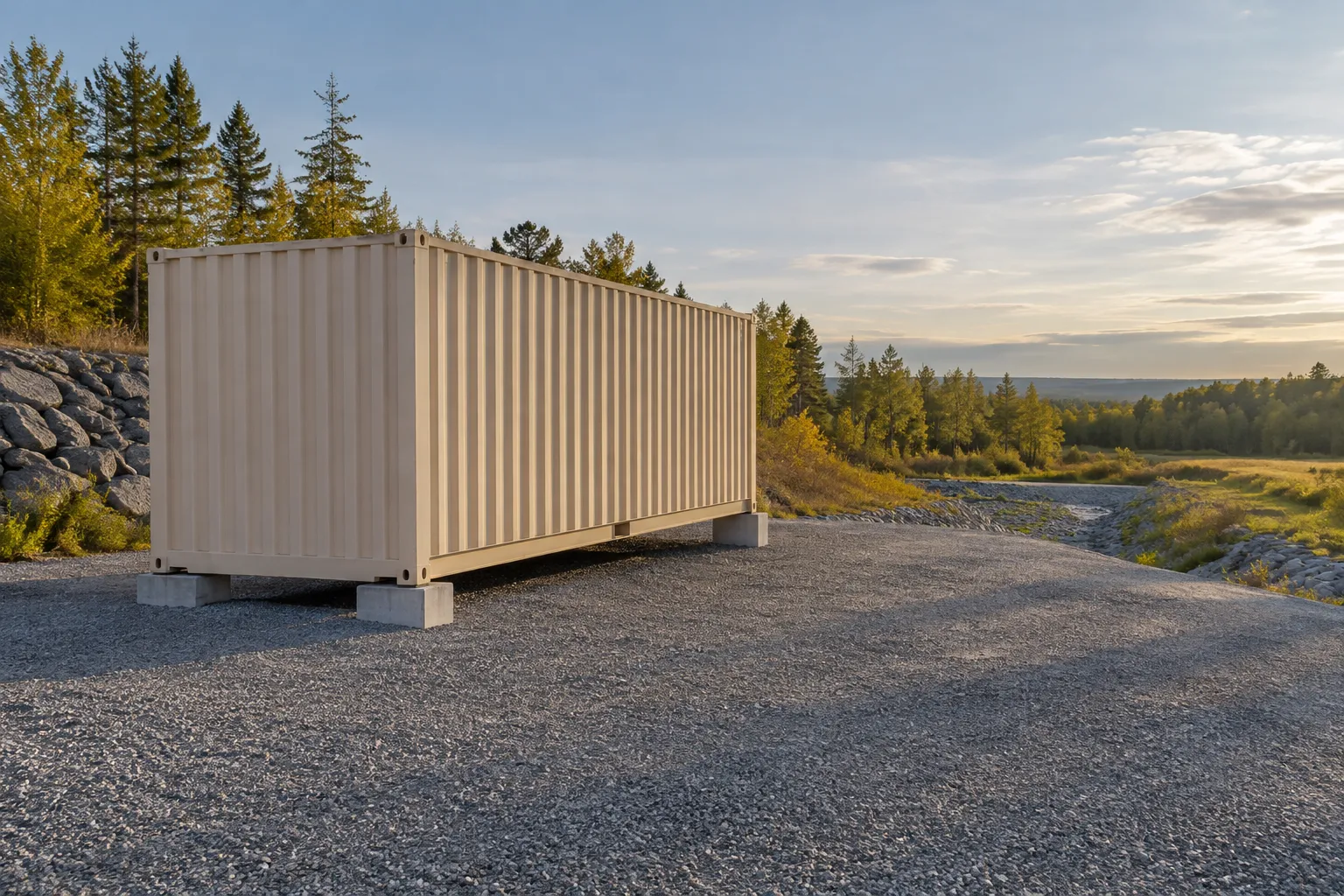
To buy shipping container for storage in a flood zone responsibly, compare the same usable capacity, inventory and planning period across all three options.
| Budget item | Elevated at original location | Alternative on-site location | Off-site storage |
|---|---|---|---|
| Storage provision | Container purchase | Container purchase | Facility charges or separate-site purchase |
| Site preparation | Survey, engineered supports and anchorage | Survey, grading and required supports | Verify what the facility includes |
| Handling access | Platforms, ramps or lifting equipment | Ground approach and loading area | Transport trips and loading arrangements |
| Risk and downtime | Residual flood exposure and access disruption | Confirm lower exposure and road access | Assess facility and travel-route exposure |
| Ongoing costs | Inspections, maintenance and insurance | Maintenance and insurance | Recurring charges, travel and insurance |
| Exit costs | Removal and foundation restoration | Removal and site restoration | Move-out and transport costs |
For purchase baselines, our 20ft used storage-class container is $2,295, and our 40ft used storage-grade container is $2,945. These are container prices—not complete elevated-installation budgets.
Request itemized quotes for engineering, foundations, access structures, anchorage installation and any non-standard placement. Identify exclusions and who supplies each component. Use the container buyer's guide to organize the equipment portion.
Compare total cost as: purchase or storage charges + site work + handling and travel + maintenance + insurance + removal. Evaluate potential losses and downtime separately rather than inventing a precise annual flood-loss estimate.
Run a disruption scenario too: if surrounding roads close, can the business still operate without those goods? A cheaper elevated installation may be poor value if critical inventory becomes inaccessible.
Sales tax is included and paid by Lease Lane Containers, so nothing is added at checkout.
What Written Approvals and Quote Conditions Should You Have Before Paying a Deposit?
Before committing funds, assemble a purchase-ready file:
- Written local determinations identifying the proposed use, contents, footprint and elevation, plus required approvals before installation.
- Engineered plans and a defined process for any required field inspections.
- A contractor quote tied to those plans, including exclusions and responsibility for anchorage.
- Written confirmation of insurance availability, contents coverage, exclusions and deductibles.
- A placement plan addressing crane reach, access, overhead obstructions and safe setup ground.
- Order terms explaining what happens if approval fails, the design changes or the site is not ready.
Do not treat delivery as foundation construction. Confirm responsibility for supports, connections and final inspection separately, and have the delivery provider review elevated placement before payment.
Every unit ships from our Raleigh, NC yard and is delivered by our own trucks, trusted freight carriers or a vetted partner delivery agency, depending on your location.
Standard Delivery is free on all orders delivered within the contiguous United States (Lower 48). Containers, homes and offices are offloaded and placed by crane. Remote or non-standard sites and locations outside the Lower 48 are quoted in writing before you pay.
For in-stock storage containers, handling is 1–3 business days, followed by Standard transit of 3–7 business days: 4–10 business days in total (about a week and a half). All times start once full payment has been received and count business days only (Monday – Friday, excluding U.S. federal holidays). Enter your ZIP code on any product page to see your estimated arrival dates. Our driver calls you one day before delivery to confirm the exact time. Review our shipping policy before scheduling site work.
Bottom line: elevate only when approval, engineering, access and the complete budget support it. Otherwise, choose a safer storage location. Browse 20ft containers, 40ft containers and modified storage units, then request a quote tied to your reviewed site plan.
Frequently asked questions
Possibly, but the answer depends on the parcel, proposed use, flood conditions and local rules. Obtain a written determination for the actual footprint, elevation and contents before ordering. A container's weight, cargo-worthy designation or new condition does not establish floodplain compliance. Some sites may require engineered elevation and anchorage; others may make relocation the more practical choice.
There is no universal height. A surveyor and local floodplain administrator should establish the applicable elevations and reference system, while the engineer determines the installation details. Ask which structural element must meet the required elevation and whether additional local height requirements apply. Raising the container a convenient distance above existing ground is not a substitute for that assessment.
The cost depends on required height, soils, flood forces, foundation type, anchorage, crane access and loading arrangements. Request an itemized site-specific quote rather than applying a generic foundation allowance. Compare that complete budget with a lower-risk on-site position and off-site storage, including ongoing handling costs, maintenance, insurance, downtime and eventual removal.
Do not treat ordinary cargo-door seals as protection against immersion or floodwater pressure. A manual light test is not a submersion test, and flood forces can affect the whole installation. Have an engineer evaluate the proposed protection strategy. Moisture-sensitive or irreplaceable goods may belong at a lower-risk location even when elevation is technically feasible.
Elevation alone does not make hazardous inventory acceptable. Give the fire official and relevant environmental authority the substance types, quantities, packaging and proposed activities, including any charging. Specialized containment or ventilation features do not automatically satisfy every requirement. Confirm compatibility, applicable fire rules, flood restrictions and insurance conditions before selecting the container.
Sources & further reading
- NOAA — El Nino looms large over U.S. Winter Outlook, October 15, 2026
- Monroe County — Shipping/Storage Containers at Non-Residential Locations for Storage Only
- U.S. Access Board — ADA Accessibility Standards
- California Division of the State Architect — Access Compliance Reference Materials
- International Code Council — 2024 International Fire Code, Chapter 3, including Section 320: Lithium-Ion and Lithium Metal Batteries
- NIST — Understanding the Risk of Lithium-Ion Battery Fires: Multi-Source Data Analysis, March 10, 2026
Talk to our Raleigh team
Ready to find the right container?
Get a written quote, check availability or ask about delivery to your site. Lease Lane Containers LLC answers every enquiry personally.
- Call us+1 (984) 219-9882
- Emailsales@leaselanecontainers.llc
- Visit5832 Lease Ln, Ste B, Raleigh, NC 27617
- Business hoursMon - Fri: 9:00 AM - 5:00 PM · Sat - Sun: Closed (ET)