Storage for Business, Farm & Construction
Buy Shipping Container for Road Salt Storage: Bagged or Bulk?
Bagged deicer and loose bulk salt need different storage decisions. Check material compatibility, floor loads, loading access, containment, and local requirements before choosing a container.
9 min readBy the Lease Lane Containers team
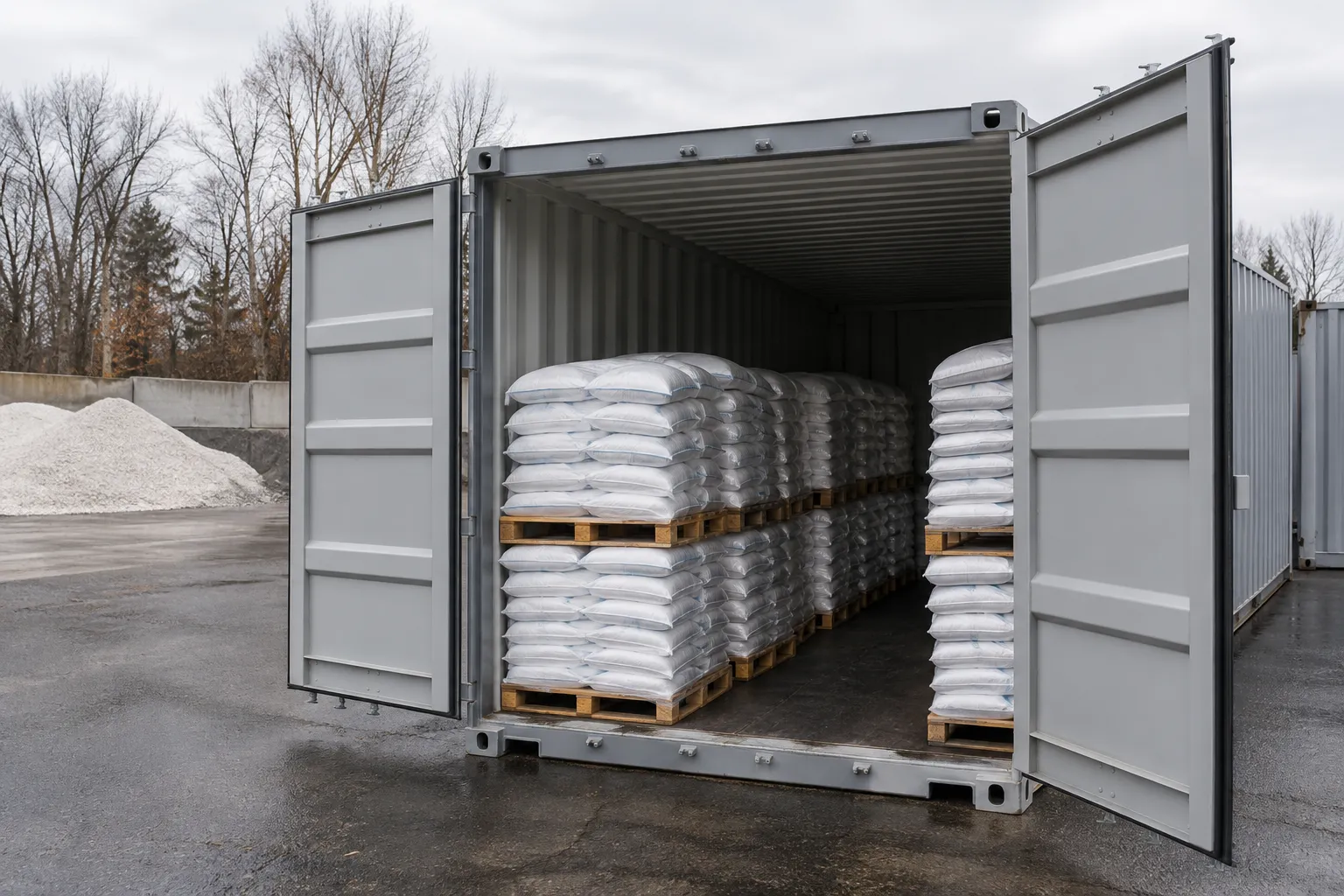
If you want to buy shipping container for road salt storage, start with the packaging—not the container length. A shipping container can be a practical enclosure for bagged deicer when its floor, loading arrangement, moisture controls, and site are suitable. Loose bulk salt requires a separate engineering and regulatory review. An ordinary container is not an engineered salt bin, and a larger box does not resolve that difference.
For snow-removal contractors buying ahead of winter, the useful question is: can this specific unit safely support, protect, and contain the material you actually handle?
Should You Buy a Container for Bagged Deicer or Loose Bulk Salt?
A shipping container for bagged salt storage keeps packaged inventory enclosed and allows controlled access. Intact bags reduce direct salt contact with the structure, but torn packaging, tracked-in snow, and condensation still need attention.
Loose salt changes the problem. The pile can exert pressure against walls and doors; loading equipment adds impact and concentrated loads; dissolved salt can escape through joints. Neither cargo doors nor a plywood floor should be assumed suitable for retaining a salt pile or brine.
| Storage arrangement | Sensible buying approach | Confirmation needed |
|---|---|---|
| Sealed bags on pallets | Evaluate an enclosed storage container | Loaded pallet weights, floor condition, access, moisture management |
| Bags in frequently opened stock | Prioritize access and spill cleanup | Safe handling route, damaged-bag containment, cleanable surfaces |
| Supersacks or other large packages | Treat as a distinct handling case | Package classification, lifting method, concentrated loads |
| Loose bulk salt | Start with engineered storage requirements | Lateral loads, containment, corrosion protection, loading and discharge design |
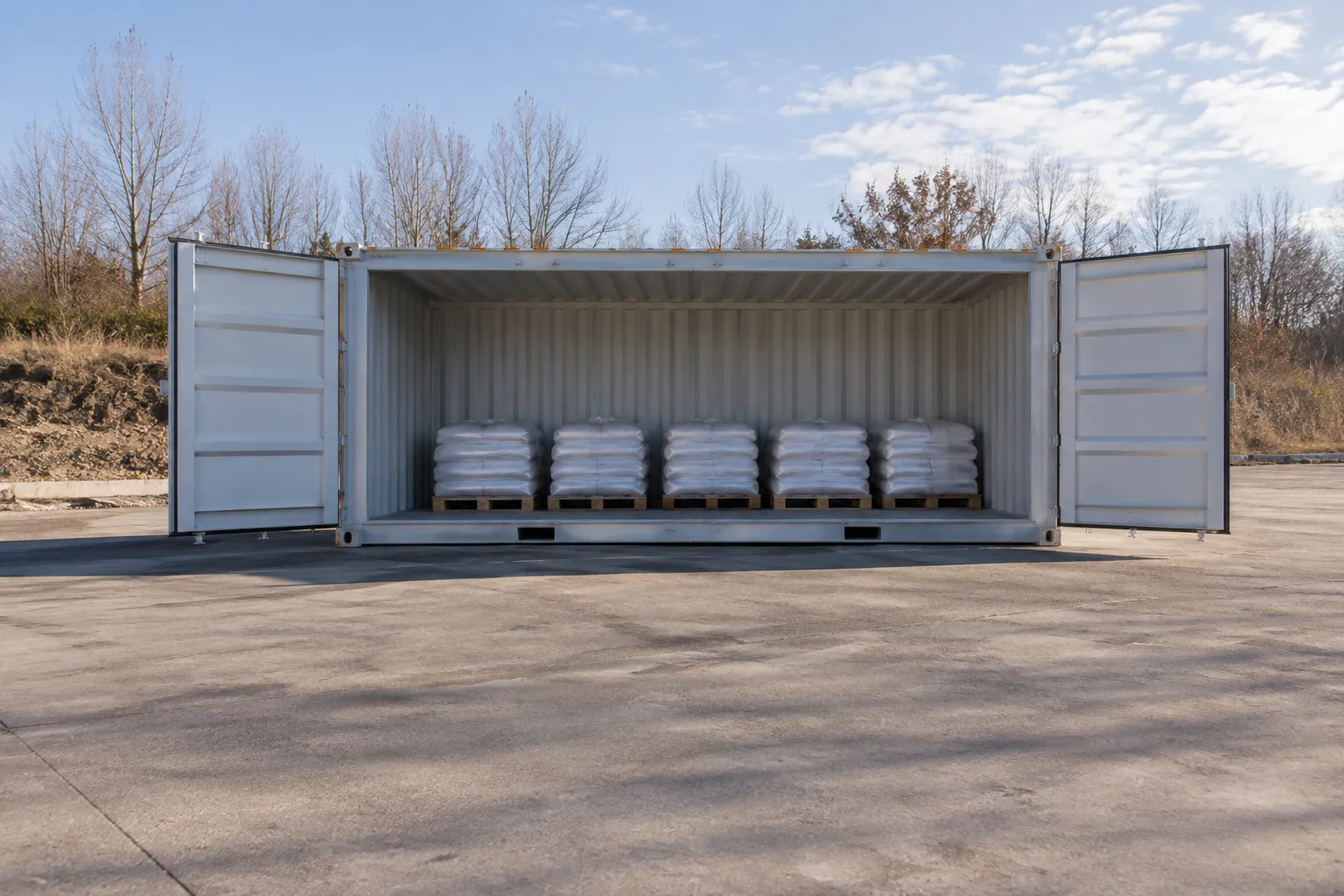
For bagged inventory, compare 20ft containers and 40ft containers only after calculating weight and planning retrieval. High-cube height adds space, not automatic permission to stack heavier loads.
Build Your Quote Around Salt Type, Packaging and Maximum Inventory
“Salt storage” is not a complete specification. Identify whether you store sodium chloride rock salt, calcium chloride, magnesium chloride, or a blended deicer. Supply the manufacturer's safety data sheet and storage instructions; moisture sensitivity and compatibility can differ.
State the maximum simultaneous inventory, including a replenishment delivery arriving before existing stock is depleted. Annual purchasing volume is not the floor load.
For example, 200 bags weighing 50 pounds each contain 10,000 pounds of product. Pallets, secondary containers, racking, and equipment add weight. This calculation is an inventory example, not a capacity recommendation for any unit.
Include:
- Product names, chemical composition, and safety data sheets.
- Bag weight, package dimensions, and loaded pallet weight.
- Maximum inventory and planned stacking arrangement.
- Frequency of opening, replenishment, and daily picking.
- Whether bags remain sealed or are opened inside.
- Any liquids, pre-wetted salt, or salt-and-sand mixtures.
A 20ft used storage-class container is a candidate for evaluating a compact bagged-stock layout, with a current price of $2,295. For a longer layout, compare the 40ft used storage-grade container at $2,945. Neither listing establishes a salt-specific approved load. Our container grades guide helps separate condition descriptions from application suitability.
Verify Floor Loads and Handling Equipment Before Choosing a Unit
A container's overall payload rating does not answer every stationary-storage question. Pallet feet, rack legs, forklift axles, and pallet-jack wheels concentrate loads over small areas. Floor condition and the support beneath the container also matter.
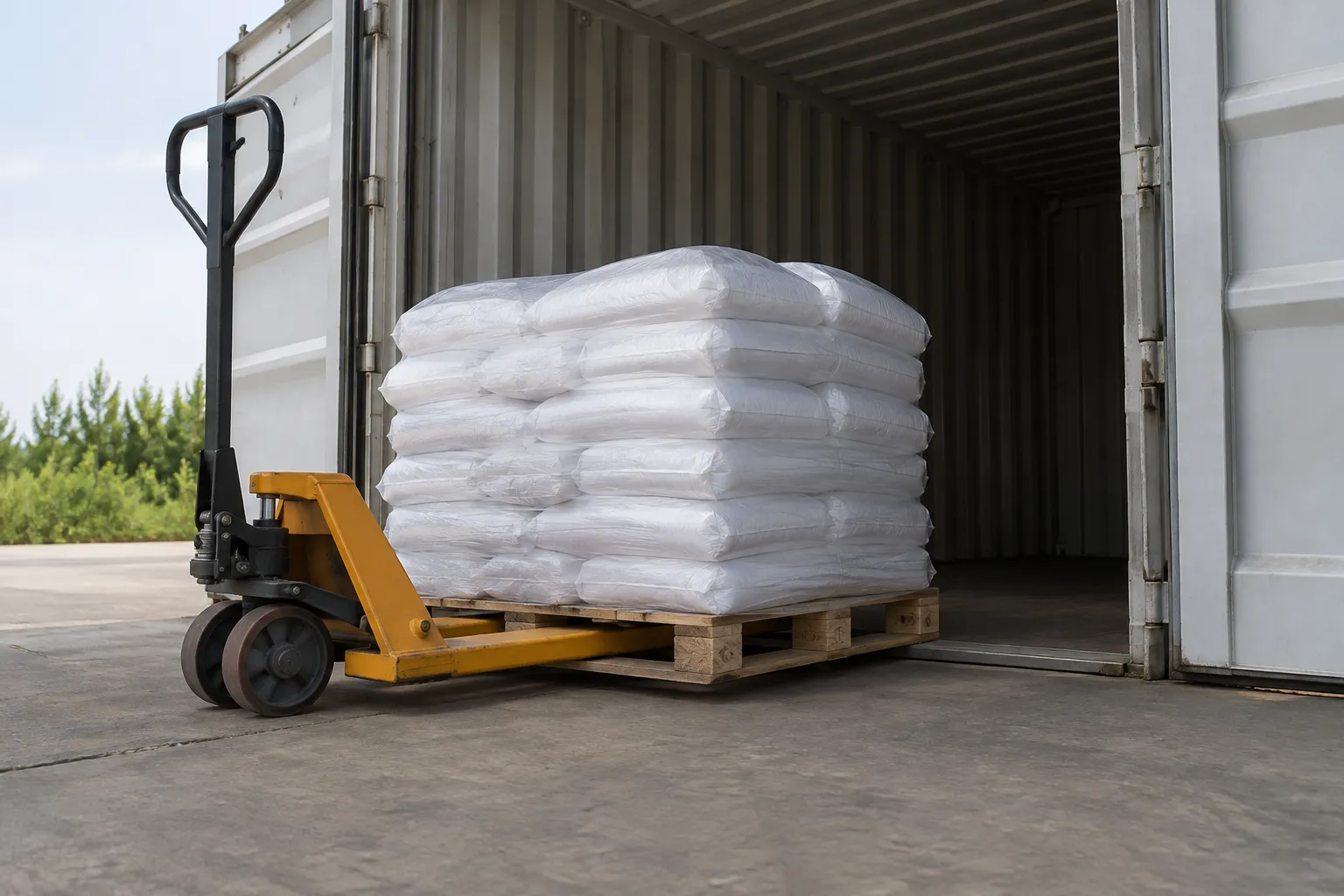
Before choosing a unit, ask for a review of:
- Stored load: product, pallets, racks, liners, and other installed components.
- Load distribution: pallet contact points, stack heights, and aisle layout.
- Handling loads: equipment operating weight plus the carried load, wheel spacing, and axle loads.
- Threshold access: ramp capacity, bearing, attachment, slope, and transition clearance.
- Site support: ground bearing, settlement risk, drainage, and specified support locations.
Do not drive a forklift inside simply because it fits through the opening. Request documentation appropriate to the proposed equipment and condition of the unit. Where the load case is uncertain, have a qualified engineer evaluate it before purchase.
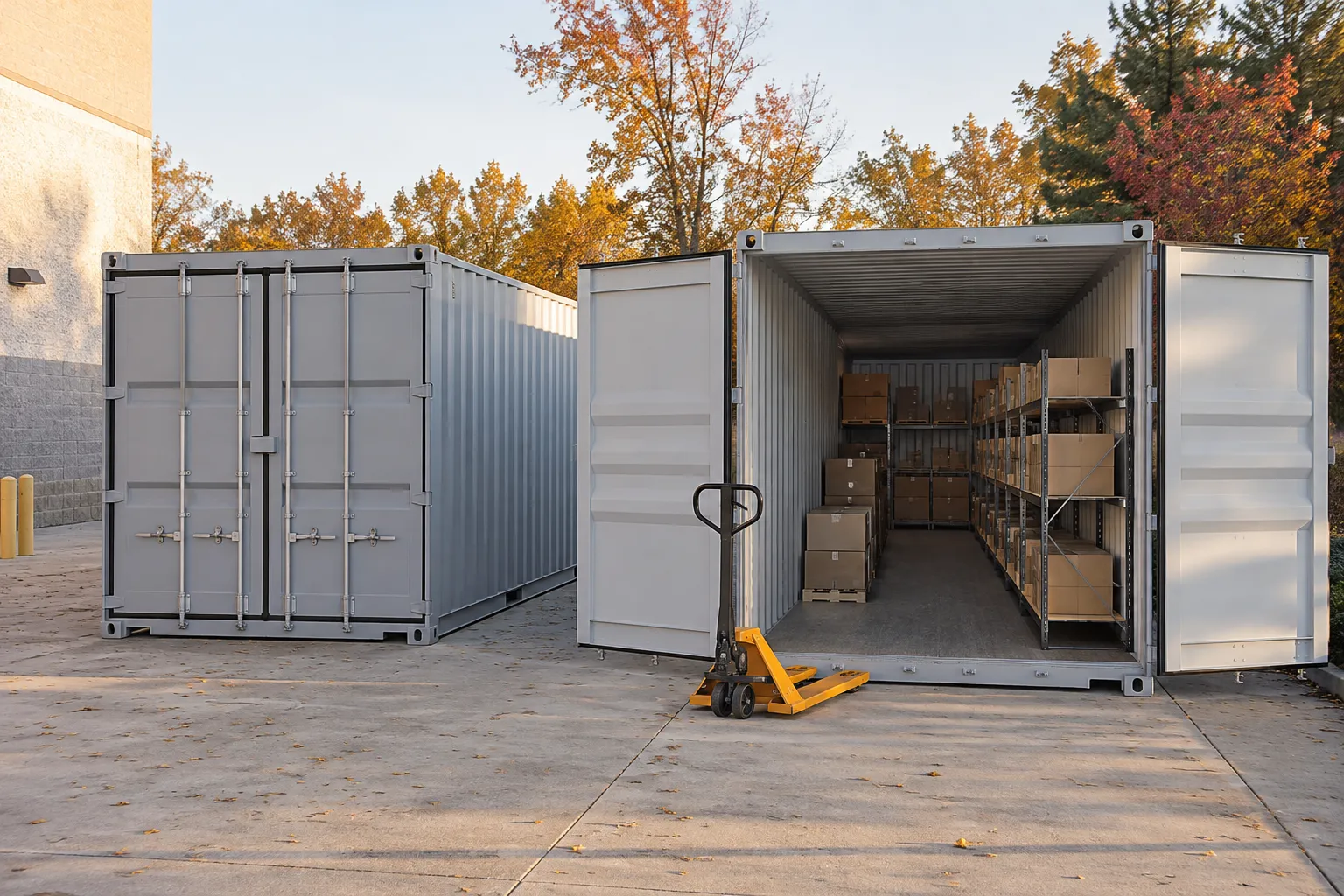
Keeping the forklift outside and retrieving pallets through side doors may simplify the workflow, but it does not remove stored-load checks. Pallet jacks also impose concentrated wheel loads.
Use our forklift ramp capacity and fit guide alongside the equipment specifications. Roof loading is a separate issue: review container checks for heavy snow loads rather than assuming a cargo rating establishes local snow-load suitability.
Compare End-Door and Open-Side Access for Daily Loading
End doors can work well when crews pick bags manually from an accessible aisle. They become less convenient when one product blocks another or a forklift must travel deep into the container.
The 20ft tunnel container with double-end doors offers access from both ends. Confirm that your placement leaves both approaches usable after snow clearing and stock deliveries.
For multiple deicer products, open-side containers can provide direct access along the storage length. Compare the 20ft one-trip full-length side-access container with your pallet dimensions, forklift reach, and available door-swing space. Full-length access does not mean every pallet position is automatically reachable with your equipment.
Mark the proposed layout on the site before ordering. Include door swing, clear pedestrian paths, snow-pile locations, equipment turning space, and spill-cleanup access. Keep bags away from seals and door hardware.
For snow contractor salt storage, the best arrangement is usually the one that lets crews retrieve the correct product without moving unrelated stock or carrying torn bags across the yard.
Specify Moisture Protection, Spill Containment and Cleanable Surfaces
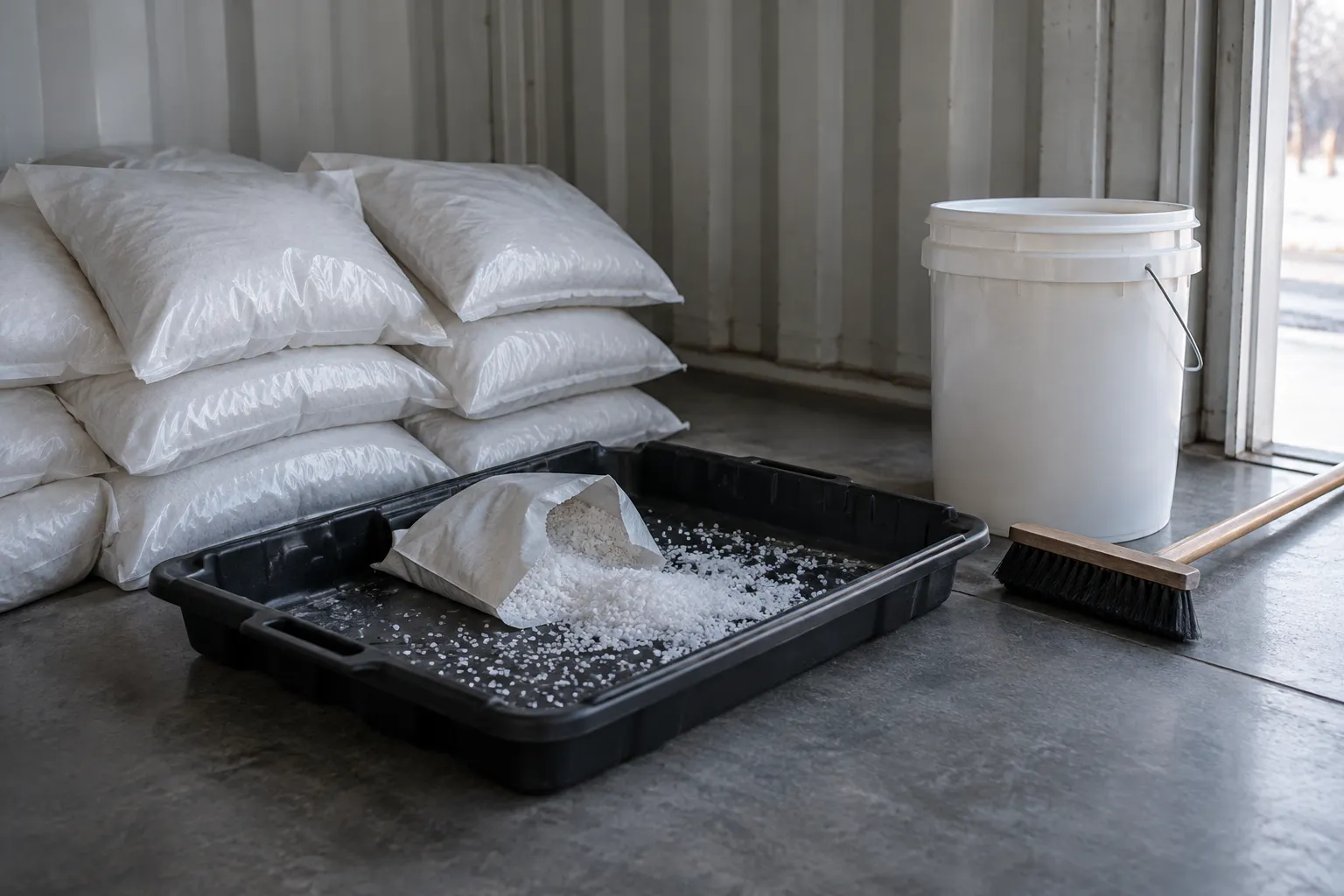
Moisture protection involves more than keeping rain off the stock. Humid air can condense on cold surfaces, and wet packaging or snowy equipment can introduce water. Some deicers readily absorb moisture, so follow the product manufacturer's instructions rather than assuming ventilation alone solves the problem.
For seasonal context, NOAA's October 15, 2026 winter outlook favors wetter conditions across the southern United States and Eastern Seaboard. That supports reviewing moisture exposure; it does not predict snowfall or salt demand at your location.
Specify a practical management plan:
- Keep packaging intact and separate damaged bags into compatible closed containers.
- Keep stock clear of walls where needed for inspection and cleanup.
- Assess condensation controls for the climate and product.
- Use compatible, cleanable protective surfaces where salt could contact the floor.
- Prevent runoff from entering through the loading area.
- Collect spilled salt before it dissolves; do not hose it into drains or soil.
A loose sheet of plastic is not an engineered containment system. Seams, punctures, forklift traffic, upstands, and retained liquid loads must be considered.
The 20ft bunded storage container is worth reviewing when integrated spill containment is part of the specification. Confirm usable containment volume, chemical compatibility, floor loads, and cleanup access in writing. A bunded design is not automatically suitable for a loose salt pile or compliant with every local rule.
Lease Lane Containers units pass our manual light test before dispatch. 30-Day Structural Guarantee: if a structural defect or leak is found within 30 days of delivery, we'll provide a mobile repair, an exchange or a full refund, as set out in our Refund & Returns Policy. See the Refund & Returns Policy for terms. This does not replace a material-specific storage assessment.
What Would Make a Container Unsuitable for Loose Bulk Salt?
Stop the purchase if the proposed operation depends on unverified assumptions about retaining a pile, entering with a loader, or draining brine. Bulk salt storage container requirements extend beyond enclosure size.
Suitability checklist
Proceed only when each applicable item has a documented answer:
- Material: the exact salt or blend and any moisture content are identified.
- Packaging: bags, supersacks, or loose storage are explicitly distinguished.
- Weight: maximum inventory and equipment loads have been reviewed.
- Structure: floor, walls, doors, and any internal bulkhead are suitable for the proposed loads.
- Handling: loading and unloading do not rely on bucket impacts or pushing against the shell.
- Containment: salt, brine, and cleanup water have an approved retention and disposal plan.
- Durability: coatings, liners, joints, and inspection access suit the material.
- Site: supports, drainage, setbacks, and applicable approvals are addressed.
An ordinary container is unsuitable for the proposed bulk use when those requirements cannot be demonstrated. A liner does not strengthen the walls, and closing cargo doors against a pile does not create a safe retaining bulkhead.
Even the 20ft top-loading dry bulk container needs salt-specific review. Its product category and loading arrangement are not evidence of approved road-salt storage. Explore modified containers as candidates for a documented specification—not as substitutes for engineering. A purpose-designed salt-storage structure may be the better solution.
Check Local Salt-Storage Rules: Wisconsin's Bulk-versus-Bagged Example
According to the Wisconsin Department of Transportation road-salt storage guidance, Trans 277 covers storage of more than 1,000 pounds of bulk road salt and excludes bagged salt.
That bagged-salt exclusion is not blanket approval under other rules. Zoning, building requirements, stormwater controls, environmental protections, and workplace obligations may still apply. Nor does the threshold establish a universal exemption elsewhere in the United States.
Ask the relevant local and state authorities:
- How is this material and packaging classified, including supersacks or opened bags?
- Which requirements apply to the maximum quantity and proposed site?
- What enclosure, pad, containment, drainage, and loading-area provisions are required?
- Are permits, plans, inspections, or ongoing records required?
- Would changing from bags to loose deliveries trigger a new review?
Keep written responses with your purchase specification. Our permanent-storage permit guide provides a useful starting point for site questions, but only the responsible authorities can confirm applicable local requirements.
Buy Shipping Container for Road Salt Storage: Request an Itemized Quote
When comparing a rock salt storage container for sale, ask sellers to price the same documented use. A low enclosure price is not a complete installed-storage budget.
Copy-and-complete quote form
- Material and safety data sheet: ___
- Packaging and package weight: ___
- Maximum salt weight, including replenishment overlap: ___
- Pallets, racks, and other added weight: ___
- Stacking layout and contact points: ___
- Handling equipment, loaded weight, axle loads, and dimensions: ___
- End-door, double-end, or side-access preference: ___
- Containment, liner, coating, and cleaning requirements: ___
- Site ZIP code, access, ground conditions, and placement plan: ___
- Authority requirements and engineering documents: ___
- Required purchase scope and exclusions: ___
Request separate quote items for the unit, modifications, site preparation, engineering, containment, and equipment access where applicable. Identify who supplies each item. Ask for written suitability confirmation tied to your submitted loads and method of use; a sales description is not engineering approval. Our container buyer's guide can help organize the comparison.
Delivery and placement
Every unit ships from our Raleigh, NC yard and is delivered by our own trucks, trusted freight carriers or a vetted partner delivery agency, depending on your location.
Standard Delivery is free on all orders delivered within the contiguous United States (Lower 48). Containers, homes and offices are offloaded and placed by crane. Remote or non-standard sites and locations outside the Lower 48 are quoted in writing before you pay.
For in-stock storage containers, handling is 1–3 business days. Standard transit is 3–7 business days, 4–10 business days in total (about a week and a half). Expedited Delivery (optional) costs $450 per unit for in-stock products; it isn't offered on accessories. Expedited transit is 2–5 business days, 3–8 business days in total.
All times start once full payment has been received and count business days only (Monday – Friday, excluding U.S. federal holidays). Enter your ZIP code on any product page to see your estimated arrival dates. Our driver calls you one day before delivery to confirm the exact time. Review the shipping policy and disclose crane access restrictions before ordering.
Before you buy shipping container for road salt storage, settle the bagged-versus-bulk decision and document the load, access, and containment requirements. Browse the relevant containers above or request an itemized quote for an ice melt storage container matched to your actual operation.
Frequently asked questions
Yes, a container can be a practical enclosure when the floor loads, handling method, site, and moisture controls are suitable. Provide the deicer's safety data sheet, maximum inventory weight, and stacking layout before choosing a unit. Keep bags intact, plan for damaged-package cleanup, and follow the manufacturer's storage instructions. Enclosed storage does not eliminate condensation.
Do not assume a standard container can safely retain loose salt. A pile creates lateral pressure, while loading equipment can impose concentrated loads and impacts. Salt and brine also require compatible surfaces and containment. Obtain a salt-specific engineering review and applicable regulatory approvals before considering this use; a purpose-designed salt-storage structure may be more appropriate.
Wisconsin DOT's guidance states that Trans 277 covers more than 1,000 pounds of bulk road salt and excludes bagged salt. That exclusion is specific to this rule, not blanket permission to store bags anywhere. Confirm zoning, stormwater, environmental, building, and workplace requirements separately. Ask the responsible authority how supersacks, opened packages, and mixed storage arrangements are classified.
Choose after calculating maximum inventory weight and designing the loading workflow. A longer container provides more layout space but does not automatically solve concentrated floor loads or equipment access. A 20ft side-access unit may be more convenient than a longer end-door unit for some operations. Verify the specific unit's condition and proposed loads rather than buying by length alone.
No. Integrated spill containment addresses only part of the storage problem. You still need to verify chemical compatibility, usable containment volume, floor and wall loads, loading methods, cleanup access, and local requirements. A bund does not establish that the walls can retain a salt pile or that the unit is approved for your jurisdiction and operating method.
Sources & further reading
- NOAA — El Nino looms large over U.S. Winter Outlook, October 15, 2026
- Wisconsin Department of Transportation — Road salt: Trans 277 and Salt Bid Information
- Freddie Mac — Mortgage Market Survey Archive: October 29, 2026
- Fannie Mae — Improvements Section of the Appraisal Report: Unique Housing Types
- U.S. Access Board — ADA Accessibility Standards
- California HCD — Information Bulletin 2025-03: California Building Standards Code Effective January 1, 2026
Talk to our Raleigh team
Ready to find the right container?
Get a written quote, check availability or ask about delivery to your site. Lease Lane Containers LLC answers every enquiry personally.
- Call us+1 (984) 219-9882
- Emailsales@leaselanecontainers.llc
- Visit5832 Lease Ln, Ste B, Raleigh, NC 27617
- Business hoursMon - Fri: 9:00 AM - 5:00 PM · Sat - Sun: Closed (ET)