Permits, Zoning & Regulations
Buy Shipping Containers for Stacked Storage: Two High?
Stacking saves container footprint, but stairs, lifting equipment and engineering change the calculation. Compare two-high storage with two ground-level units before ordering.
9 min readBy the Lease Lane Containers team
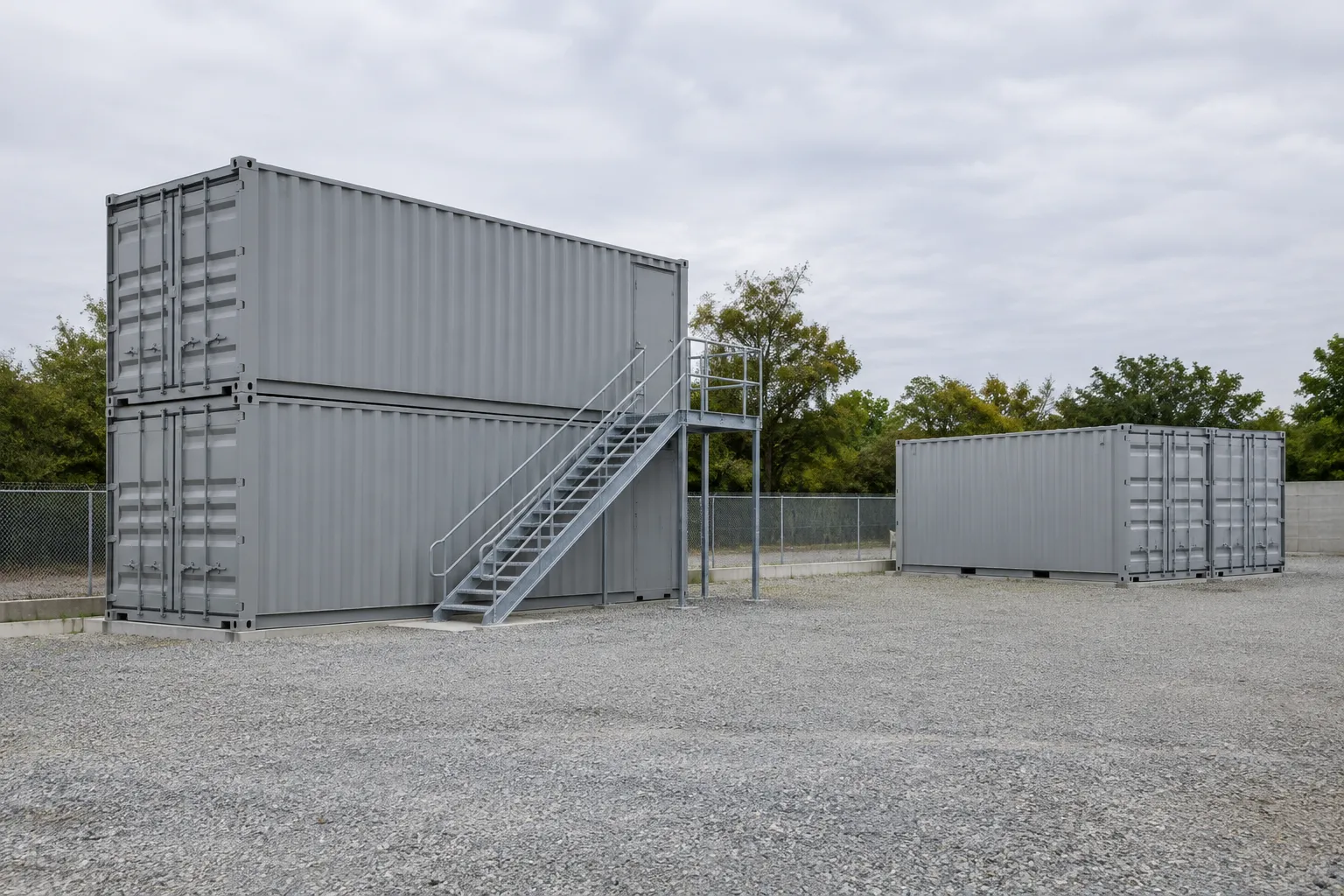
If you want to buy shipping containers for stacked storage, choose two high only when the ground space saved justifies engineered supports, connections and safe upper-level access. For frequently handled inventory, heavy goods or pallet traffic, two containers at ground level are usually the more practical purchase. Stacking preserves the pair’s enclosed capacity; it does not make that capacity equally convenient to use.
The right comparison is not simply two containers versus two containers. It is two complete storage systems, including approvals, structural design, loading arrangements and ongoing handling effort.
Should You Buy Shipping Containers for Stacked Storage or Keep Them Side by Side?
Start with your storage workflow. Seasonal decorations accessed occasionally may suit an upper container. Tools collected several times daily are better candidates for ground-level storage. Heavy stock belongs wherever the engineered loading and handling plan supports it—not automatically upstairs because space is available.
Two nominal 20ft-by-8ft containers occupy approximately 320 square feet side by side, excluding gaps and access. Stacking reduces the container footprint to approximately 160 square feet. Two nominal 40ft-by-8ft units similarly move from approximately 640 to 320 square feet. These are exterior footprint calculations, not usable interior floor areas.
Stairs, landings, clear exit routes and loading equipment consume some of that saved space. Measure the complete operating envelope before deciding.
| Decision factor | Two high | Side by side |
|---|---|---|
| Enclosed storage | Two container interiors | Two container interiors |
| Ground footprint | One container footprint, plus access infrastructure | Two footprints, plus circulation |
| Daily retrieval | Upper stock requires vertical travel | Both units accessible from ground level |
| Pallet handling | Needs a designed elevated transfer arrangement | Usually simpler, subject to equipment and threshold suitability |
| Structural scope | Stacking loads, connections, anchorage and foundations | Each container’s support and anchorage requirements |
| Best fit | Scarce land and infrequently accessed upper stock | Frequent access, heavy goods and changing inventory |
Compare 20ft storage containers and 40ft storage containers using measured shelving, aisles and item dimensions. A larger box is not automatically better if reaching its rear means unloading everything in front.
Check Whether Local Rules Allow Your Proposed Stacked Configuration
Before ordering, ask the building department about the specific two-high arrangement, not just whether storage containers are allowed. A permission or simplified process for one ground-level unit may not cover a stacked pair.
Portland’s Building Code Guide 96-11 for cargo containers provides a useful example: its simplified storage-container guidance excludes stacked configurations. Projects outside that scope must follow applicable building-code requirements. That distinction is not a nationwide prohibition on stacking, nor does it mean Portland automatically approves every unstacked layout.
For a stacked shipping container permit inquiry, provide the proposed height, container dimensions, storage contents, access method and site sketch. Ask:
- Which adopted code and approval pathway apply to this arrangement?
- Are structural drawings and calculations required from a locally licensed design professional?
- How will stairs, landings, exits and any accessibility obligations be reviewed?
- Do stored materials trigger additional fire-code requirements?
Request written direction before committing to a configuration. Our permanent-storage permit guide covers the broader approval questions; the critical issue here is whether stacking changes the review pathway.
What Container Identification, Condition and Structural Records Should You Request?
“Stackable storage containers for sale” is a starting point, not project approval. Request records tied to the proposed units and have your engineer identify any missing information.
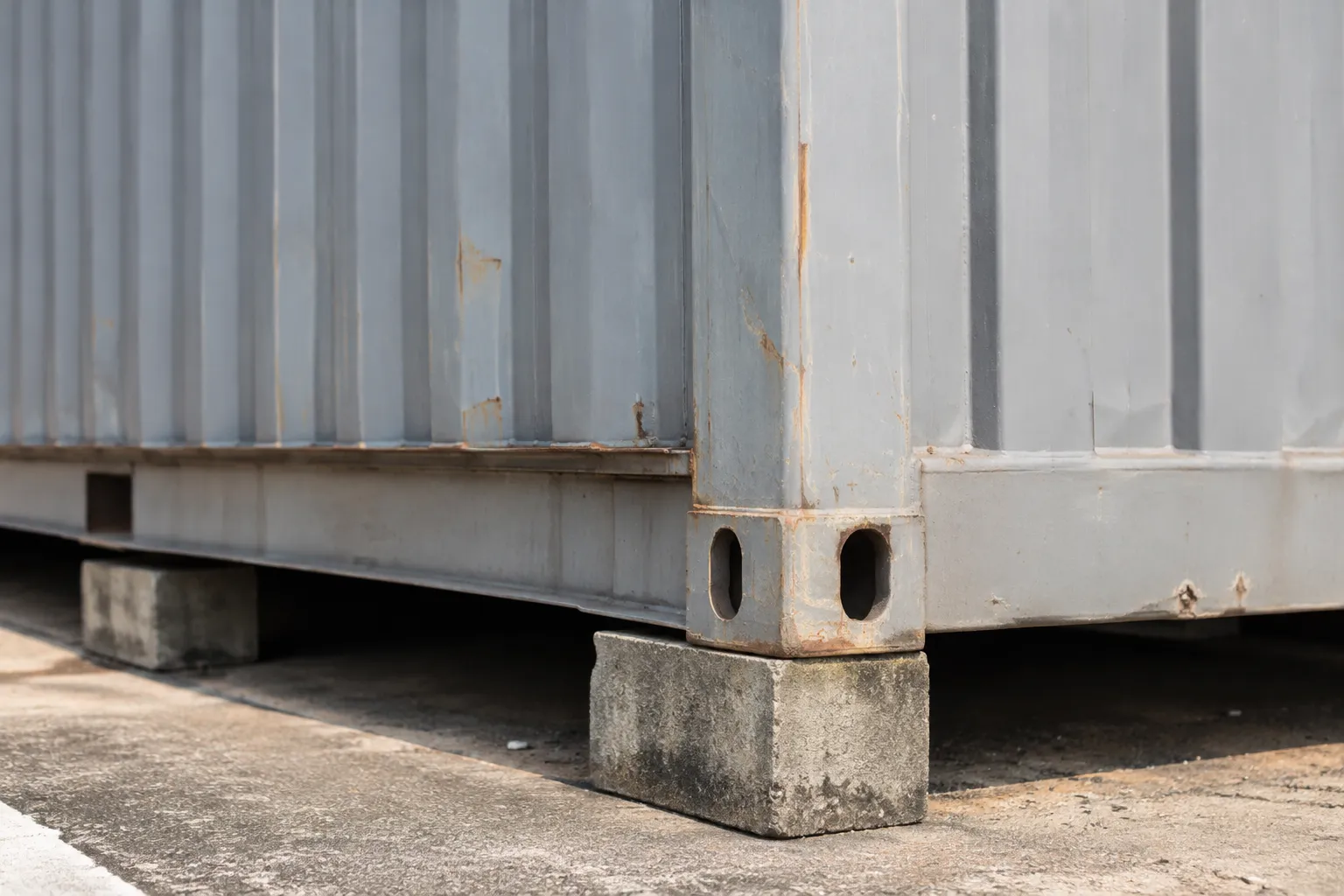
Useful documentation includes:
- Container identification, manufacturer and manufacture date where available.
- Dimensions, tare weight, rated gross weight and available safety-plate information.
- Photographs and inspection information covering corner castings, posts, rails, underframe and floor.
- Known repairs, corrosion, distortion and previous openings or other modifications.
- Available drawings or material information needed for the engineer’s assessment.
A CSC safety plate relates to freight-container safety; it does not replace approval for a site-specific stacked storage structure. Likewise, a cargo-worthy description is not a complete structural assessment for your loads and location.
For comparison, review the 20ft new one-trip container with double doors and 20ft used cargo-worthy container. Either remains subject to project-specific review. Matching nominal size is helpful, but matching corner geometry, condition and structural suitability matters more than matching paint.
Our container grades guide and used-container inspection checklist help distinguish appearance from issues requiring closer evaluation. New one-trip containers may simplify condition assessment, but they do not eliminate engineering.
Units pass our manual light test before dispatch. That checks for visible light entry; it is not a stacking certification.
30-Day Structural Guarantee: if a structural defect or leak is found within 30 days of delivery, we'll provide a mobile repair, an exchange or a full refund, as set out in our Refund & Returns Policy.
Have an Engineer Review Loads, Connections, Foundations and Proposed Openings
Shipping container stacking engineering must establish a continuous load path from the upper container through the lower container and into the ground. Do not assume the lower roof sheet can support upper-container corner loads.
Have a qualified, locally licensed structural engineer review:
- Geometry and alignment. Verify corner support locations and compatibility. Mixed lengths, offsets or cantilevers require specific analysis and potentially additional framing.
- Stored loads. Include container self-weight, total contents, concentrated shelving loads and handling equipment where applicable.
- Environmental forces. Address site-specific wind, seismic and snow effects, including sliding, uplift and overturning.
- Connections and anchorage. Specify hardware, capacity, installation details and inspection requirements.
- Foundations and settlement. Evaluate combined reactions, bearing conditions and differential movement—not just whether the surface looks level.
- Openings and attachments. Review side doors, personnel doors, stair connections, canopies and any proposed cuts before fabrication.
Our steel container twist locks are a hardware option to submit for review, not a universal connection design. The engineer must determine whether their documented specifications suit the project. Inter-container connections and ground anchorage perform different jobs.
The 40ft high cube one-trip container offers additional interior height, but that also affects overall stack height and access design. Do not select high cubes solely for extra volume without checking those consequences.
For exposed sites, our heavy-snow-load purchasing guide explains why roof loading needs separate attention. Freight stacking capability does not establish every roof or building-load capacity.
Plan Upper-Level Access, Material Handling and Emergency Egress
Treat access as part of the purchase decision, not an accessory added after delivery. Walk through one complete retrieval cycle: unlock, reach the item, lift it, carry or transfer it, and return safely to ground level.
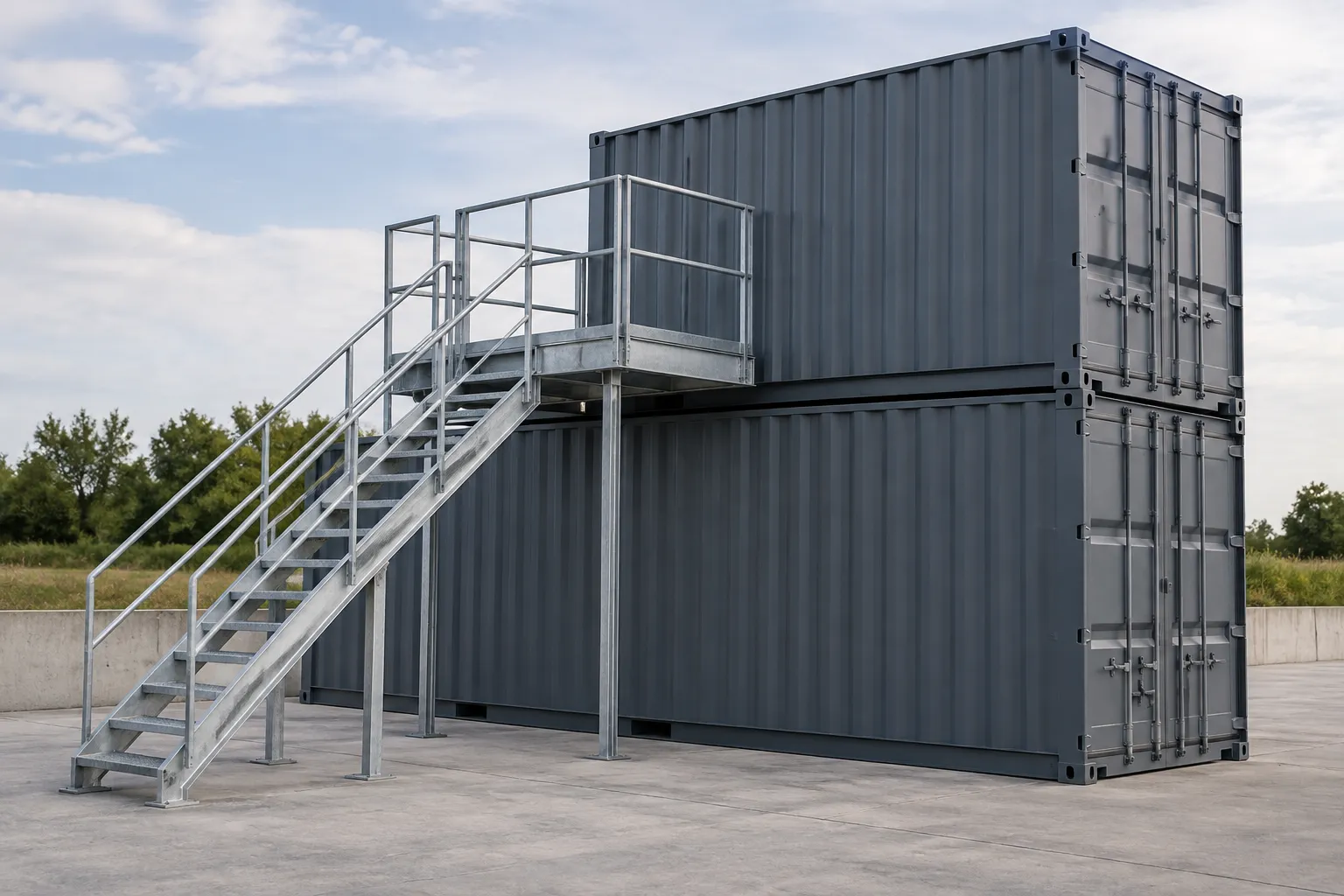
For two high shipping container storage, resolve these questions before buying:
- Will anyone enter the upper container, and how frequently?
- Can items be handled safely on stairs without obstructing sightlines or handrails?
- Where will cargo doors swing, and how will they be restrained?
- Does the landing accommodate the required clearances and door operation?
- How will pallets move without exposing workers to an unprotected edge?
- What exit hardware, guards, lighting and emergency arrangements are required?
A ladder is not a substitute for a reviewed routine-access plan. Do not use a container roof as a walkway or loading platform unless it has been specifically designed for that use. Never use forklift forks or a pallet as a personnel platform.
The steel cabin staircase with landing and handrails can be considered only after its dimensions, loading, attachment requirements and code suitability are checked. A product listing does not establish compatibility with a two-high stack.
Storage contents matter, too. If inventory includes lithium-ion or lithium metal batteries, flag that during design. Section 320 of the 2024 International Fire Code specifically addresses battery storage. Ask the fire official which adopted provisions, thresholds and exceptions apply; ordinary container storage should not be assumed suitable for every battery inventory.
Compare Complete Quotes: Containers, Engineering, Connections, Access and Crane Work
The useful stacked container storage cost is the installed, approved and usable system cost, not just the pair’s purchase price.
For a container-only baseline, the 20ft new one-trip container is $3,250 per unit, while the 20ft used cargo-worthy container is $2,650 per unit. Multiply the selected live price by two, then compare the same configuration and condition assumptions in each layout.
Request separate line items for:
- Both containers and any specified inspections or documentation.
- Engineering, drawings, permit fees and required inspections.
- Foundations, anchorage and inter-container connections.
- Reinforcement for openings or attachments.
- Stairs, landings, guards and required lighting.
- Material-handling equipment and elevated loading infrastructure.
- Crane placement scope, installation labor and connection inspection.
- Ongoing inspections and maintenance of access and structural components.
Separate seller-supplied items from work performed by your engineer and installation contractor. Ask who owns each interface: for example, who confirms foundations are ready, who installs connections and who authorizes upper-unit placement.
Standard Delivery is free on all orders delivered within the contiguous United States (Lower 48). Containers, homes and offices are offloaded and placed by crane. Remote or non-standard sites and locations outside the Lower 48 are quoted in writing before you pay. Do not assume an engineered upper-level placement, connection work or additional crane operations are included without written confirmation of scope.
Every unit ships from our Raleigh, NC yard and is delivered by our own trucks, trusted freight carriers or a vetted partner delivery agency, depending on your location. Review our shipping policy when coordinating delivery with the installation team.
For in-stock containers, handling is 1–3 business days, followed by Standard transit of 3–7 business days, or 4–10 business days in total. All times start once full payment has been received and count business days only (Monday – Friday, excluding U.S. federal holidays). Enter your ZIP code on any product page to see your estimated arrival dates. Our driver calls you one day before delivery to confirm the exact time.
Those delivery estimates are not a project-approval or construction schedule. Sales tax is included and paid by Lease Lane Containers, so nothing is added at checkout.
When Ground-Level Containers Are the Better Purchase
Choose side by side when the second footprint is available and vertical access would complicate ordinary work. This is especially persuasive for heavy equipment, frequent picking, mixed-size goods or stock handled by different workers throughout the day.
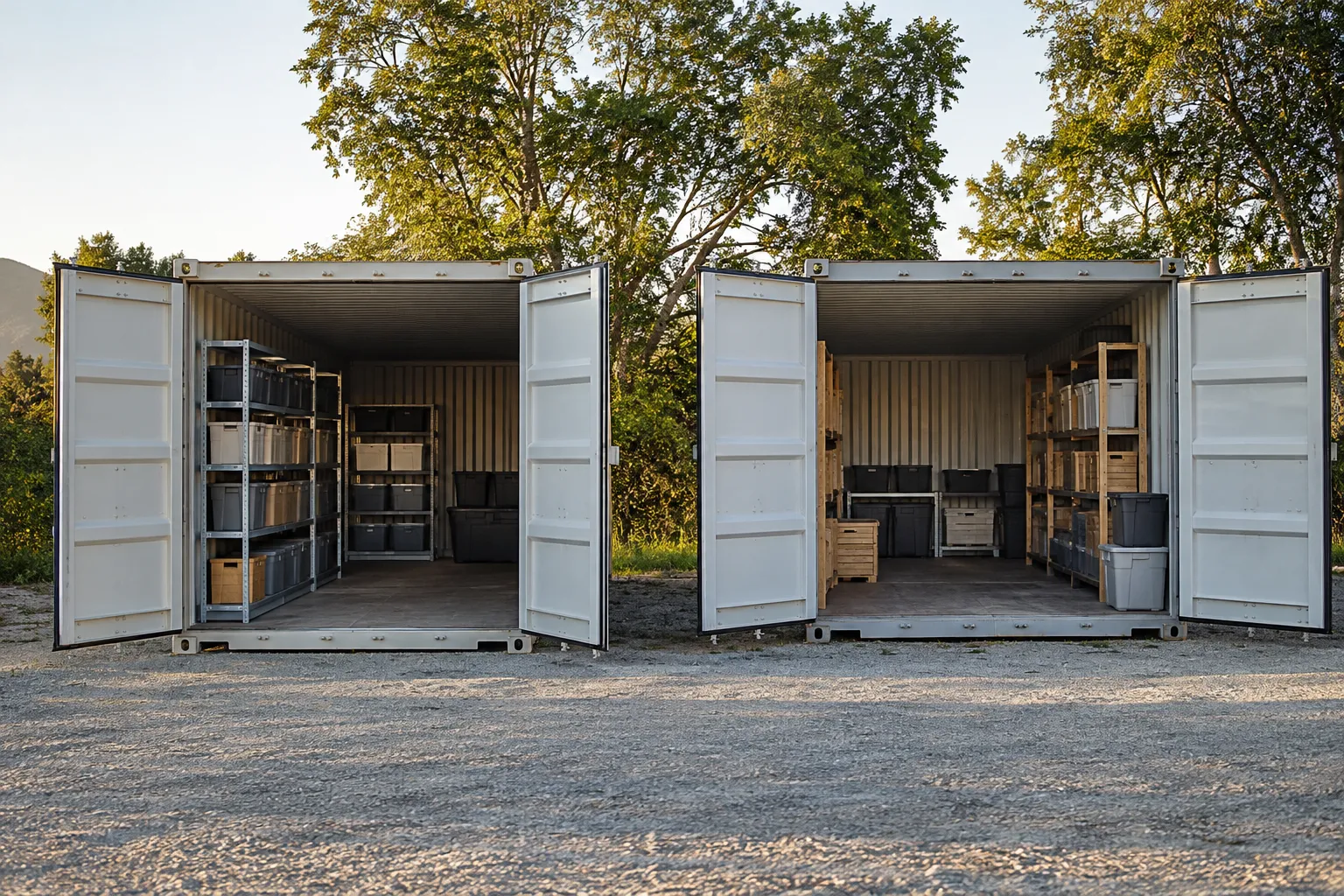
Before sacrificing ground space, test whether better access solves your capacity problem. The 20ft tunnel container with double-end doors provides another approach to reaching inventory without moving everything from one end. Confirm door clearances at both ends and evaluate its suitability for the intended layout.
Review container accessories for compatible shelving and handling improvements, but preserve required aisles and load limits. More shelving is not useful if it blocks retrieval or exits.
A practical test is to compare annual handling effort: retrievals per day multiplied by the additional time each upper-level trip requires. Add equipment operating and maintenance costs. Stacking may still win where land is scarce, but a lower footprint alone does not prove lower operating cost.
What to Submit for a Matched-Pair Container Quote
When you are ready to buy shipping containers for stacked storage, send a project brief rather than asking for “two stackable boxes.” Include:
- Delivery ZIP code and a dimensioned layout showing both alternatives.
- Preferred length, height, condition and door arrangement.
- Confirmation that the intended arrangement is two high.
- Storage contents, maximum weights and concentrated-load information.
- Retrieval frequency and proposed upper-level handling method.
- Local authority feedback and available engineering documents.
- Required identification, inspection records and modification details.
- Foundation, connection, access and crane responsibilities to be confirmed.
Use our container buyer’s guide to organize the purchase requirements. Ask for substitution controls so a different unit or door configuration does not invalidate the design.
Bottom line: buy shipping containers for stacked storage when an approved design and workable access plan make the land savings worthwhile. Otherwise, keep both units at ground level. Browse the relevant containers and request a matched-pair quote that separates container supply from the complete installation scope.
Frequently asked questions
Potentially, but the specific containers, support conditions, connections and local approval pathway must be suitable. Have a qualified structural engineer review the proposed pair and site loads before ordering. Freight-container stacking capability does not automatically establish that a permanent two-high storage arrangement, its foundations or its upper-level access complies with local requirements.
Portland’s Cargo Container Code Guide excludes stacked configurations from its simplified storage-container guidance. That is a scope limitation, not a blanket nationwide prohibition or an automatic approval decision for a particular project. Ask Portland’s building department which applicable building-code requirements and submittals govern your proposed stacked arrangement before purchasing the containers.
Not necessarily. Container purchase costs may be similar for the same pair, but stacking introduces engineering, connections, concentrated foundation loads and upper-level access requirements. Compare complete installed quotes and ongoing handling effort. Stacking is most compelling when the value of the ground space saved outweighs those additional project and operating costs.
Twist locks are only one possible component of the connection system. Their capacity and compatibility must be checked against the engineer’s design. They do not establish container condition, foundation capacity, ground anchorage, wind resistance or safe access. Request documented hardware specifications and have the engineer specify connections and inspection requirements for the complete structure.
Using nominal exterior dimensions of 20 feet by 8 feet, two containers occupy about 320 square feet side by side and about 160 square feet when stacked. However, stairs, landings, loading areas and clear circulation routes reduce the net site savings. These figures describe exterior container footprints, not usable interior storage area.
Sources & further reading
- City of Portland — Building Code Guide 96-11: Cargo Containers
- Global Wellness Institute — Hydrothermal Initiative Trends for 2026
- International Code Council — 2024 International Fire Code, Chapter 3, Section 320: Lithium-Ion and Lithium Metal Battery Storage
- UL Solutions — New UL Standard Published: UL 1487, Battery Containment Enclosures
- US Consumer Product Safety Commission — UL 1487 Battery Containment Enclosures Meeting Log, October 8, 2026
Talk to our Raleigh team
Ready to find the right container?
Get a written quote, check availability or ask about delivery to your site. Lease Lane Containers LLC answers every enquiry personally.
- Call us+1 (984) 219-9882
- Emailsales@leaselanecontainers.llc
- Visit5832 Lease Ln, Ste B, Raleigh, NC 27617
- Business hoursMon - Fri: 9:00 AM - 5:00 PM · Sat - Sun: Closed (ET)