Delivery & Site Preparation
Buy Shipping Container Los Angeles Depot Pickup: Release Checklist
Collecting a purchased empty container takes more than a receipt and a truck. Confirm release authorization, accepted equipment, loading responsibilities and destination unloading before dispatch.
9 min readBy the Lease Lane Containers team
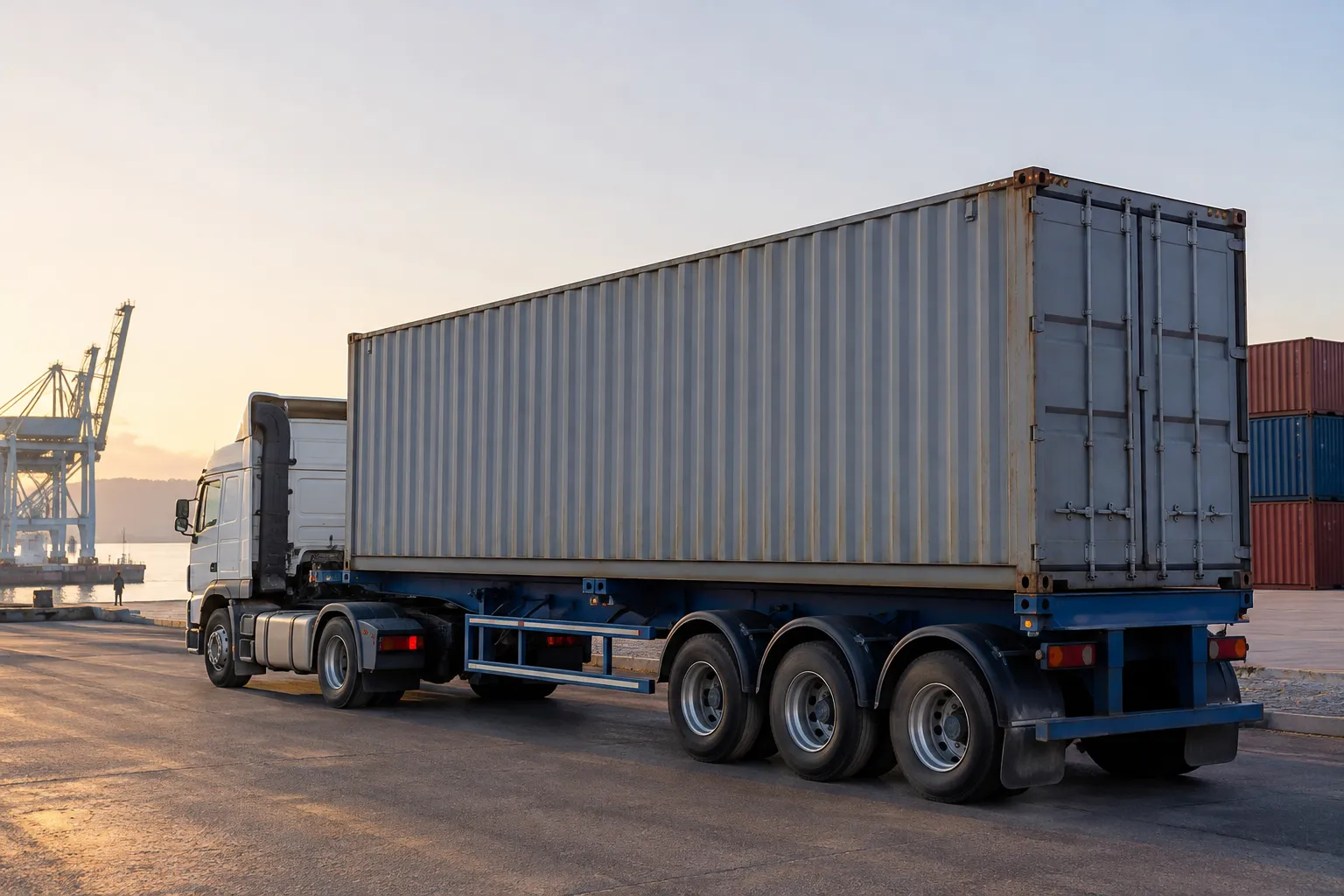
If you search buy shipping container Los Angeles depot pickup, the essential question is: what must be arranged before your carrier arrives? You need written collection approval, a valid release reference, an accepted truck and trailer, confirmed loading, compliant transport securement and booked destination unloading. A paid invoice alone does not establish all of those arrangements.
Important distinction: this is a general carrier-collection checklist, not an offer of Los Angeles pickup from Lease Lane Containers. Every unit ships from our Raleigh, NC yard and is delivered by our own trucks, trusted freight carriers or a vetted partner delivery agency, depending on your location. Do not book independent collection for our products without written confirmation that the requested arrangement is available.
Buy shipping container Los Angeles depot pickup: what is included?
Buying the empty container and arranging its movement are separate responsibilities unless the sale agreement explicitly combines them. For a carrier-collection purchase, get a written description of what the seller supplies and what you must arrange. Do not assume that “pickup available” includes lifting, an appointment, transport insurance or unloading.
Use this responsibility checklist before committing to a truck:
| Item | Written confirmation to obtain |
|---|---|
| Container purchase | Size, height, grade, quantity and agreed condition |
| Release authorization | Who issues it and who may collect |
| Collection appointment | Who books it and whether it is confirmed |
| Loading | Equipment, operator, included lifts and additional charges |
| Transport | Carrier, accepted trailer and securement responsibility |
| Destination unloading | Crane provider, booking and responsible party |
| Exceptions | Waiting, failed pickup, storage and rehandling charges |
The container is the cargo even when its interior is empty. That matters when choosing a carrier, checking insurance and documenting the handoff.
Start with the dimensions you actually need. Our 20ft containers and 40ft containers provide useful product comparisons, while the container buying guide explains broader purchase decisions. Product availability does not itself establish a collection appointment or location.
Confirm the actual collection address before paying
A city label is not a collection instruction. For any independently arranged collection, obtain the complete physical loading address, correct truck entrance, operating hours and identity of the party authorized to release the container. Have the carrier validate the route and facility acceptance before you authorize dispatch.
Keep the seller’s business address separate from loading instructions. Lease Lane Containers LLC is located at 5832 Lease Ln, Ste B, Raleigh, NC 27617, and every unit ships from our Raleigh, NC yard. Our products should not be treated as locally staged Los Angeles pickup inventory.
For anyone researching shipping container self pickup Los Angeles, the practical safeguard is the same: verify the actual origin before booking transport. A verbal location estimate is not enough for a firm hauling commitment.
Ask these questions:
- Is buyer-appointed carrier collection permitted for this order?
- Does the release location match the location used in the hauling quote?
- Has the loading operator accepted the proposed carrier and trailer?
- Are there gate credentials, safety rules or escort requirements?
- Who can resolve a release problem while the driver is waiting?
Our guide to buying a container online safely provides additional checks for verifying purchase details before committing.
Los Angeles route update: verify the reported November 7 closure
Route-update box — current closure status not independently verified here. The supplied Port of Los Angeles announcement dated October 29, 2026 concerns the SR 47 interchange project and is identified in the article brief as reporting a Vincent Thomas Bridge closure beginning November 7. Treat that date as a reported announcement, not confirmation that the bridge is currently closed or that the schedule remains unchanged.
Before booking a movement, have the carrier verify the current official closure status, applicable detours and truck restrictions. An interchange opening and a bridge closure are different route events; neither tells you automatically whether a particular haul is affected.
- Check the actual origin and destination against the carrier’s legal truck route.
- Ask whether the proposed route uses the Vincent Thomas Bridge.
- Confirm whether changed routing affects the appointment or quoted hauling charges.
- Recheck conditions before dispatch rather than relying on an older announcement.
Do not assume every Los Angeles container movement uses the same crossing. Route impacts depend on the specific journey and equipment, not simply the city named in a search result.
Get the release reference, pickup deadline and appointment requirements
Container depot release requirements are not interchangeable with proof of purchase. The sale establishes what you bought; the release tells the loading operator which equipment may leave and who can collect it. An appointment establishes when that collection is accepted.
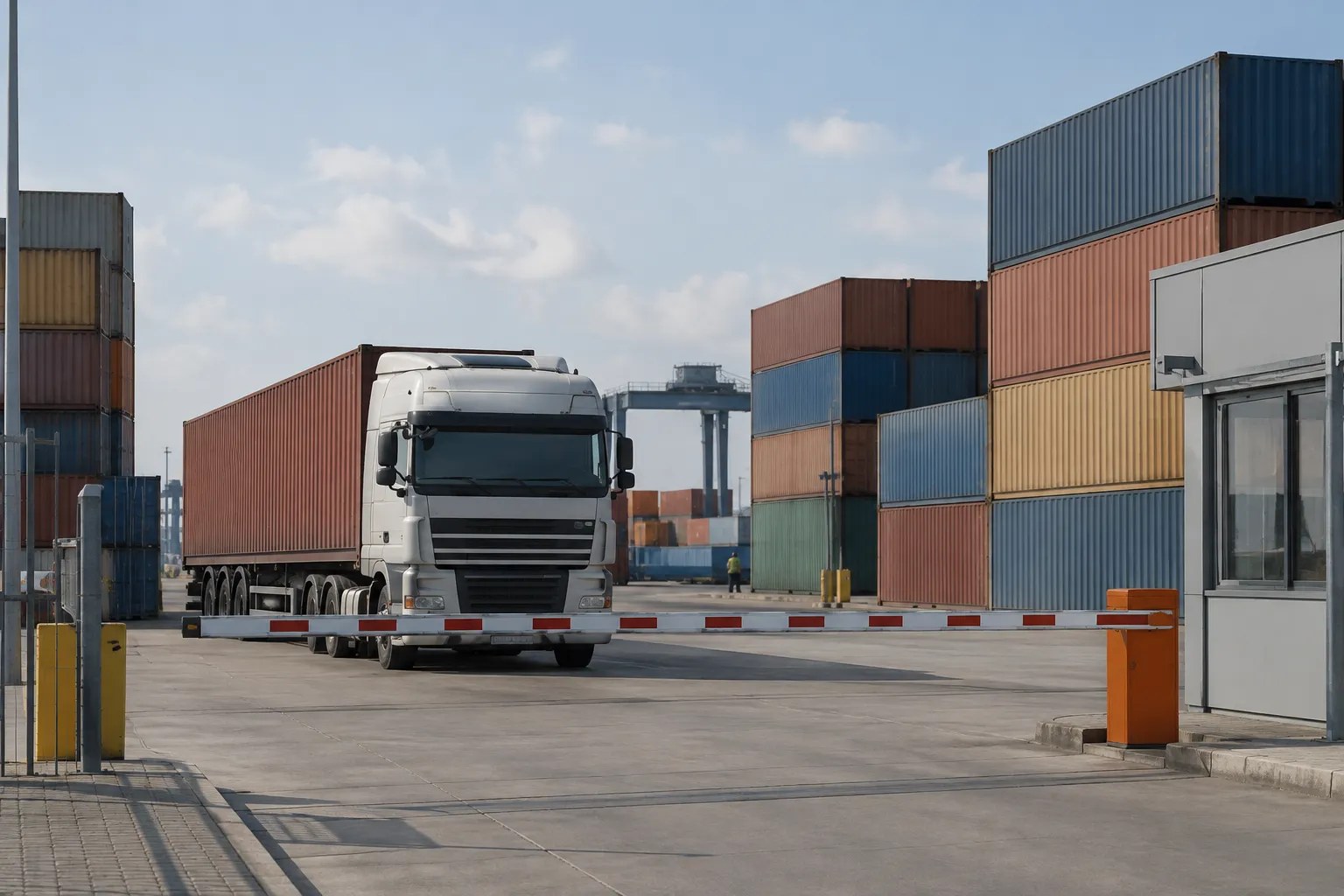
Request one written collection packet containing:
- The purchase or order reference and the seller’s authorization to release.
- The release reference accepted by the loading operator.
- The assigned container identifier, or the documented allocation procedure if assignment happens later.
- The approved carrier name and required driver identification.
- The collection deadline, appointment confirmation and local time zone.
- Any outstanding conditions that prevent release.
- The process for extending a deadline or replacing a carrier.
Ask when any storage charges begin and whether an extension must be approved before the release expires. Obtain the applicable rates or calculation method rather than accepting “charges may apply.”
Have the carrier confirm that the reference is usable before sending a truck. A booking request is not a confirmed appointment, and a payment receipt is not necessarily a gate release.
If the driver changes, clarify whether authorization must be reissued. Avoid sending someone else’s release screenshot without confirming that the new driver and carrier are approved to collect.
Confirm accepted trucks, trailers and loading arrangements
Container pickup truck requirements have two separate tests: the loading operator must accept the equipment, and the carrier must determine that it can transport the container legally and safely. Passing one test does not satisfy the other.
For a 20ft container pickup Los Angeles inquiry, send the carrier the actual container specifications—not just “a small empty box.” Confirm external dimensions, tare weight, any modifications and the proposed loading method. The same principle applies to a 40ft unit, with particular attention to overall vehicle dimensions and loaded height.
Useful specification comparisons include:
- A 20ft used shipping container with cargo doors for a conventional storage purchase.
- A 20ft new one-trip container when comparing new and used condition.
- A 40ft used standard-height container for longer storage capacity.
- A 40ft high cube one-trip container where extra container height affects loaded-height planning.
These are product comparisons, not statements of local pickup availability. Review container grades separately from transport requirements; a grade description does not certify a particular truck-and-container combination.
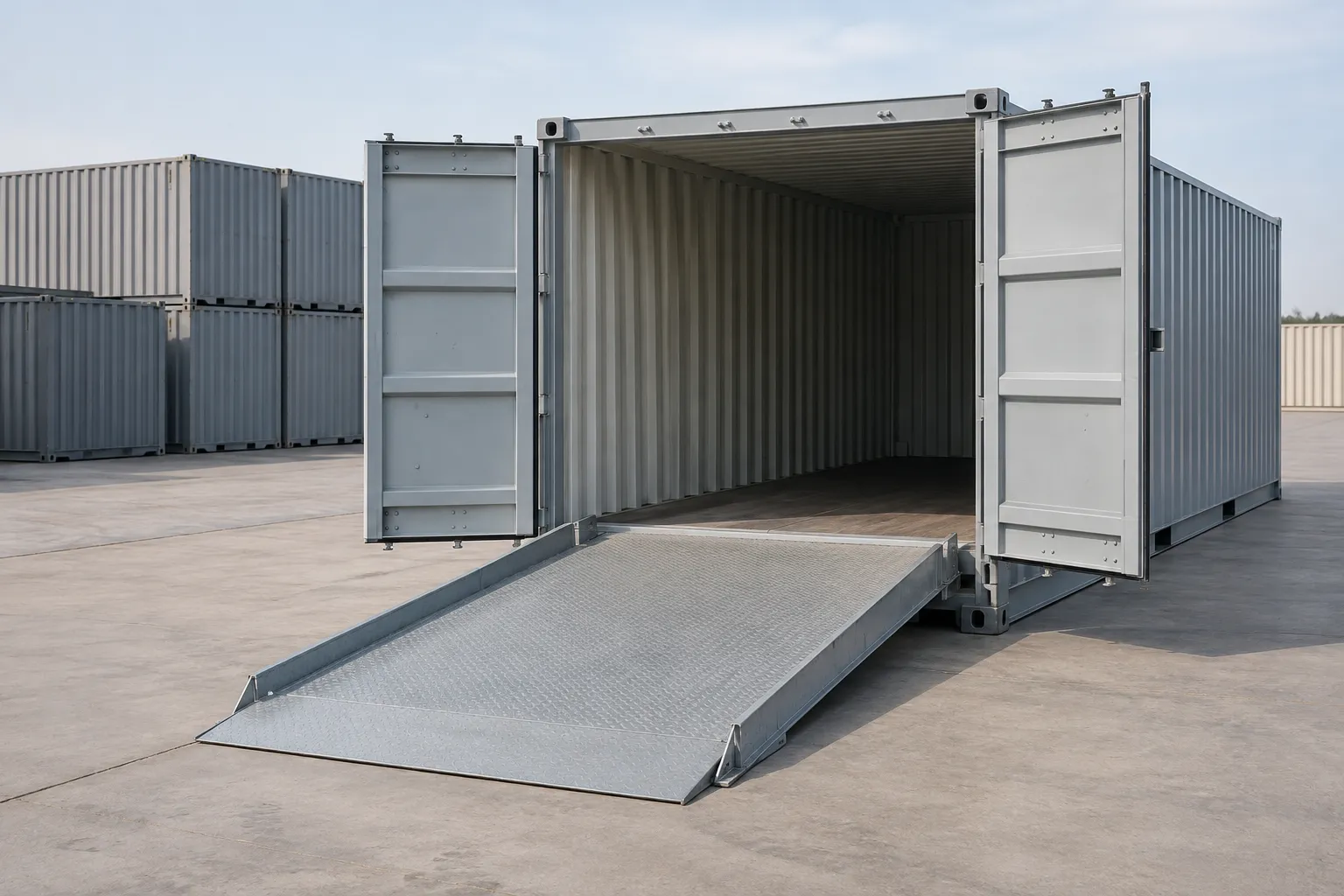
Ask who supplies the lifting machine and qualified operator, whether loading is included and whether trailer configuration creates handling restrictions. Confirm the required container orientation before loading, especially when door access matters at the destination.
Do not assume ordinary forklift pockets, an available forklift or a trailer’s advertised payload establish a suitable lift. The loading operator must verify the equipment, lifting points and container condition. Drivers and buyers should remain outside the lifting exclusion zone.
Ask your carrier about securement, insurance and responsibility
The FMCSA cargo securement rules identify intermodal containers as cargo with commodity-specific requirements under 49 CFR 393.126. Ordinary trailer tie-down advice is not a sufficient securement plan for a purchased container.
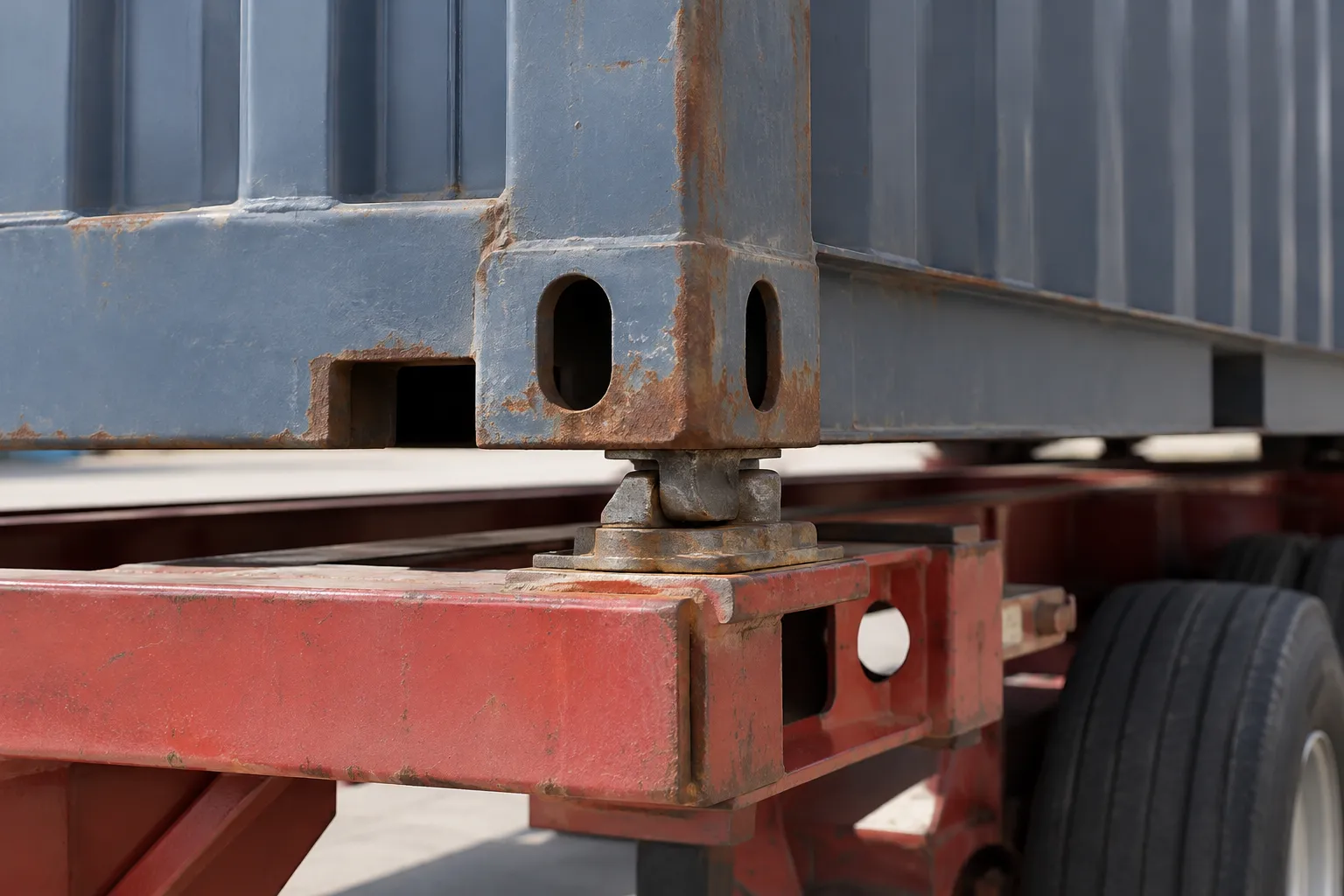
Ask the carrier which requirements apply to the actual combination of container and vehicle. Purpose-built container chassis and other vehicle configurations require different evaluation. Empty-container provisions do not mean that an empty box can simply sit unsecured on a trailer.
A qualified carrier should confirm appropriate supporting equipment, compatible securement devices, their condition and how the arrangement satisfies the applicable rules. Do not prescribe a generic chain count or buy hardware on the assumption that it makes any trailer suitable.
For shipping container transport from depot collection, obtain written answers to these questions:
- Who is the actual hauling carrier if a broker arranges the movement?
- Does the carrier have the operating authority required for this haul?
- Does cargo coverage apply to the purchased container itself?
- What limits, deductibles and exclusions apply?
- Who covers damage during loading and unloading?
- At what documented point does transport responsibility transfer?
- Who receives a claim and supporting photographs?
A certificate of insurance is useful evidence, but it does not explain every exclusion. Ask the carrier or its insurance representative to confirm coverage for this specific movement. Keep the sales agreement, hauling agreement and condition record together.
Agree on condition acceptance and failed-pickup charges
Decide before dispatch whether the driver may accept the container on your behalf and what the driver should do if it differs from the order. A driver collecting cargo is not automatically performing a detailed buyer’s inspection.
Request photographs of accessible exterior surfaces, doors, corner fittings and the interior when inspection is permitted and safe. Record the container identifier and note visible damage on the collection document. Never climb onto a container or enter a loading zone to obtain photographs.
Use our used-container inspection checklist to prepare the condition questions. Distinguish cosmetic wear consistent with the agreed grade from damage requiring a seller decision. If there is a material discrepancy, pause and obtain instructions before acceptance or removal.
Lease Lane Containers units pass our manual light test before dispatch. 30-Day Structural Guarantee: if a structural defect or leak is found within 30 days of delivery, we'll provide a mobile repair, an exchange or a full refund, as set out in our Refund & Returns Policy.
Review our Refund & Returns Policy for the applicable terms. The return window is 30 days; defective or incorrect units cost $0 to return. Change-of-mind returns carry a 15% restocking fee, and the customer arranges return freight.
For an independently arranged collection, separately allocate responsibility for expired releases, rejected trailers, missed appointments, waiting and repeat trips. Ask who pays when the container is unavailable despite a valid appointment. Do not leave these decisions until a truck is already waiting.
Request a quote with collection and unloading confirmed
Before you buy, request a written scope that joins the purchase, loading, hauling and unloading arrangements. A confirmed truck does not mean a crane has been booked at the destination, and origin loading equipment does not accompany the container automatically.
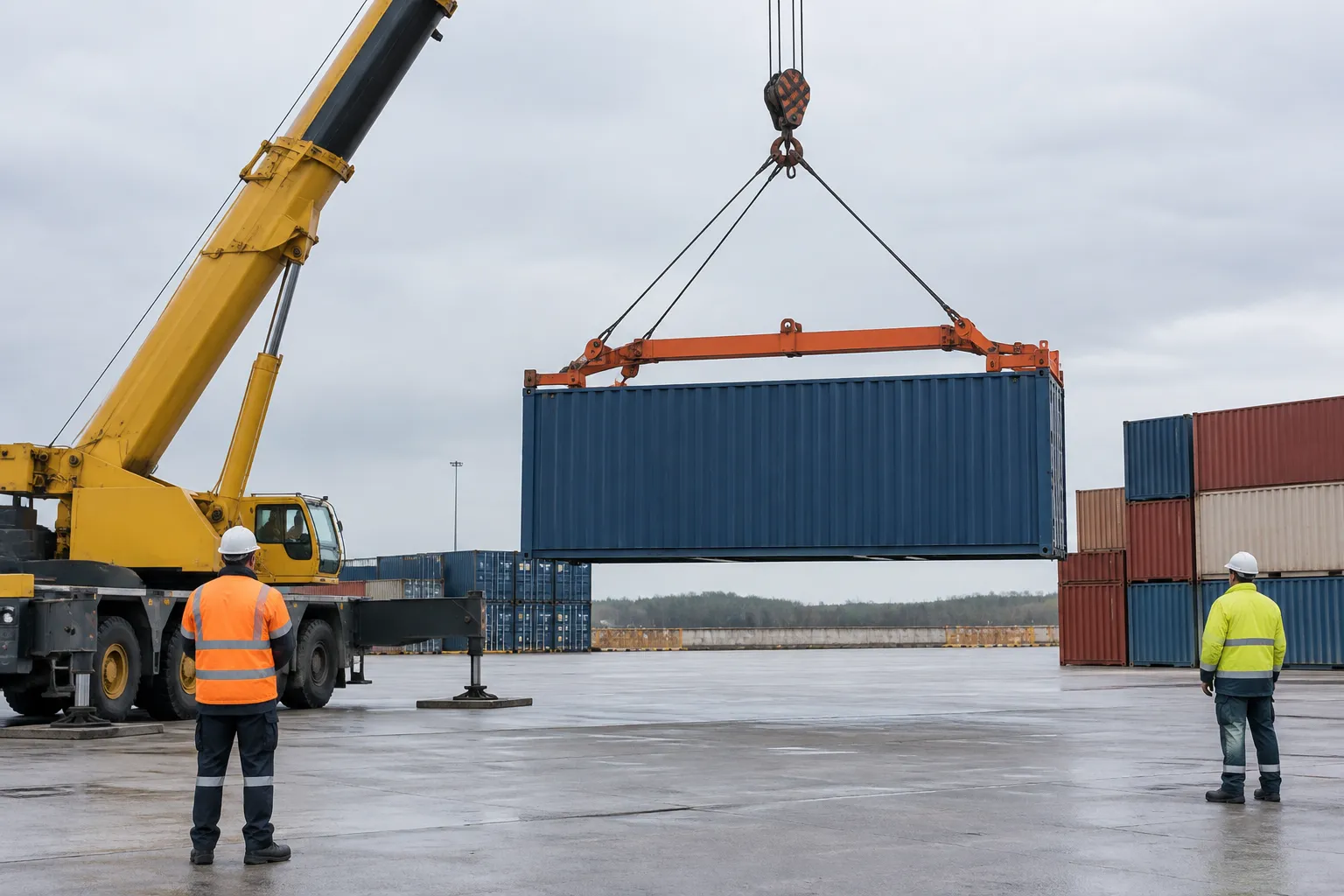
For a proposed carrier collection, your request should identify:
- Container size, height, grade and quantity.
- Whether buyer-appointed collection is expressly approved.
- Release issuer, confirmed origin and accepted vehicle configuration.
- Loading provider and included handling.
- Carrier responsibility, insurance and route verification.
- Destination crane provider and unloading responsibility.
- Waiting, cancellation, storage and failed-collection terms.
- Condition documentation and exception procedures.
Lease Lane Containers delivery is a separate, defined service. Standard Delivery is free on all orders delivered within the contiguous United States (Lower 48). Containers, homes and offices are offloaded and placed by crane. Remote or non-standard sites and locations outside the Lower 48 are quoted in writing before you pay.
For in-stock containers, handling is 1–3 business days, followed by Standard transit of 3–7 business days, for 4–10 business days in total. All times start once full payment has been received and count business days only (Monday – Friday, excluding U.S. federal holidays). Our driver calls you one day before delivery to confirm the exact time. Enter your ZIP code on any product page to see your estimated arrival dates and review our shipping policy.
Confirm the handoffs before committing
The practical answer to buy shipping container Los Angeles depot pickup is to verify every handoff: release, accepted equipment, loading, securement, transport and unloading. Do not dispatch on the strength of a receipt alone.
Browse our used shipping containers or request a written quote for your selected unit. For Lease Lane Containers purchases, plan around shipment from Raleigh and obtain written confirmation before assuming any independent collection arrangement.
Frequently asked questions
This article does not offer Los Angeles pickup. Every unit ships from our Raleigh, NC yard and is delivered by our own trucks, trusted freight carriers or a vetted partner delivery agency, depending on your location. Do not book your own carrier for a Lease Lane Containers order unless the requested collection arrangement has been explicitly confirmed in writing.
Requirements vary by loading operator, but generally you should confirm a valid release reference, purchase reference, authorized carrier and driver details, and appointment confirmation. Include the assigned container identifier or documented allocation procedure. Ask about release expiration and outstanding holds. A paid invoice alone may not authorize the driver to remove the container.
No. The carrier must verify dimensions, weight, support, securement and legal operating requirements for the actual container and trailer. The loading operator must also accept that equipment. FMCSA identifies intermodal containers as cargo with specific securement requirements. Generic advice about trailer straps or chains is not a substitute for a compliant, equipment-specific transport plan.
The written agreements should identify both providers separately. Confirm whether origin loading includes the lifting equipment and operator, then establish who books and pays for destination unloading. Do not assume the hauler supplies a crane. For Lease Lane Containers delivery services, containers, homes and offices are offloaded and placed by crane.
It depends on the actual origin, destination and legal truck route. The reported November 7 announcement should not be treated as verified current closure status. Ask your carrier to check official updates, restrictions and detours before dispatch, then confirm any effect on appointments or hauling charges. Not every Los Angeles container movement uses that bridge.
Sources & further reading
- Port of Los Angeles Completes $139 Million SR 47 Interchange Project — October 29, 2026
- Cargo Securement Rules — Federal Motor Carrier Safety Administration
- Initiative Trends 2026 — Global Wellness Institute
- September 2026 Fire: How Did the Fire Happen? — US Environmental Protection Agency
- US Department of Labor Issues Letter of Interpretation on Recording Workplace Injuries Related to Lithium-Ion Batteries — February 9, 2026
- Lithium-ion Battery Safety: Control — Occupational Safety and Health Administration
Talk to our Raleigh team
Ready to find the right container?
Get a written quote, check availability or ask about delivery to your site. Lease Lane Containers LLC answers every enquiry personally.
- Call us+1 (984) 219-9882
- Emailsales@leaselanecontainers.llc
- Visit5832 Lease Ln, Ste B, Raleigh, NC 27617
- Business hoursMon - Fri: 9:00 AM - 5:00 PM · Sat - Sun: Closed (ET)