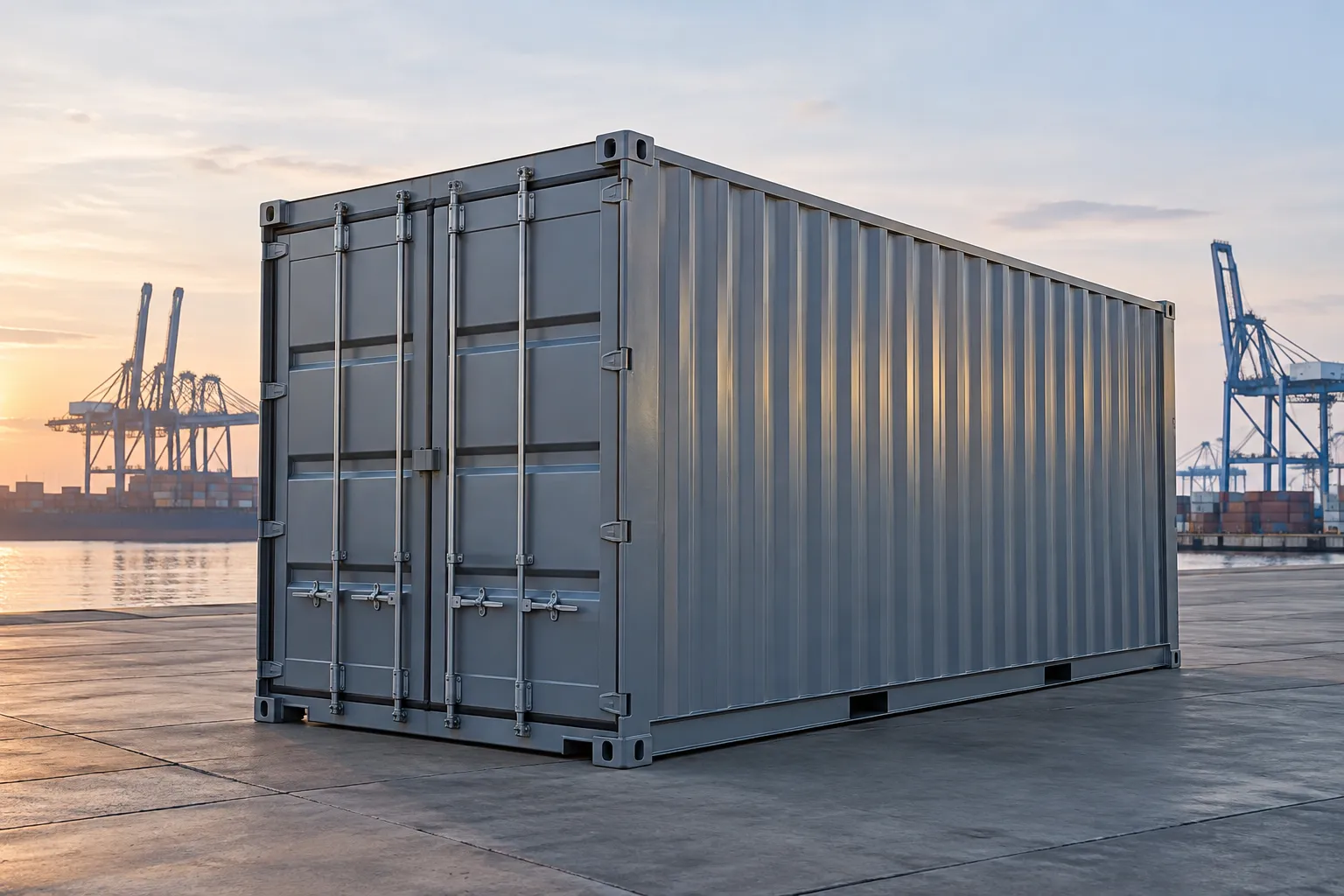
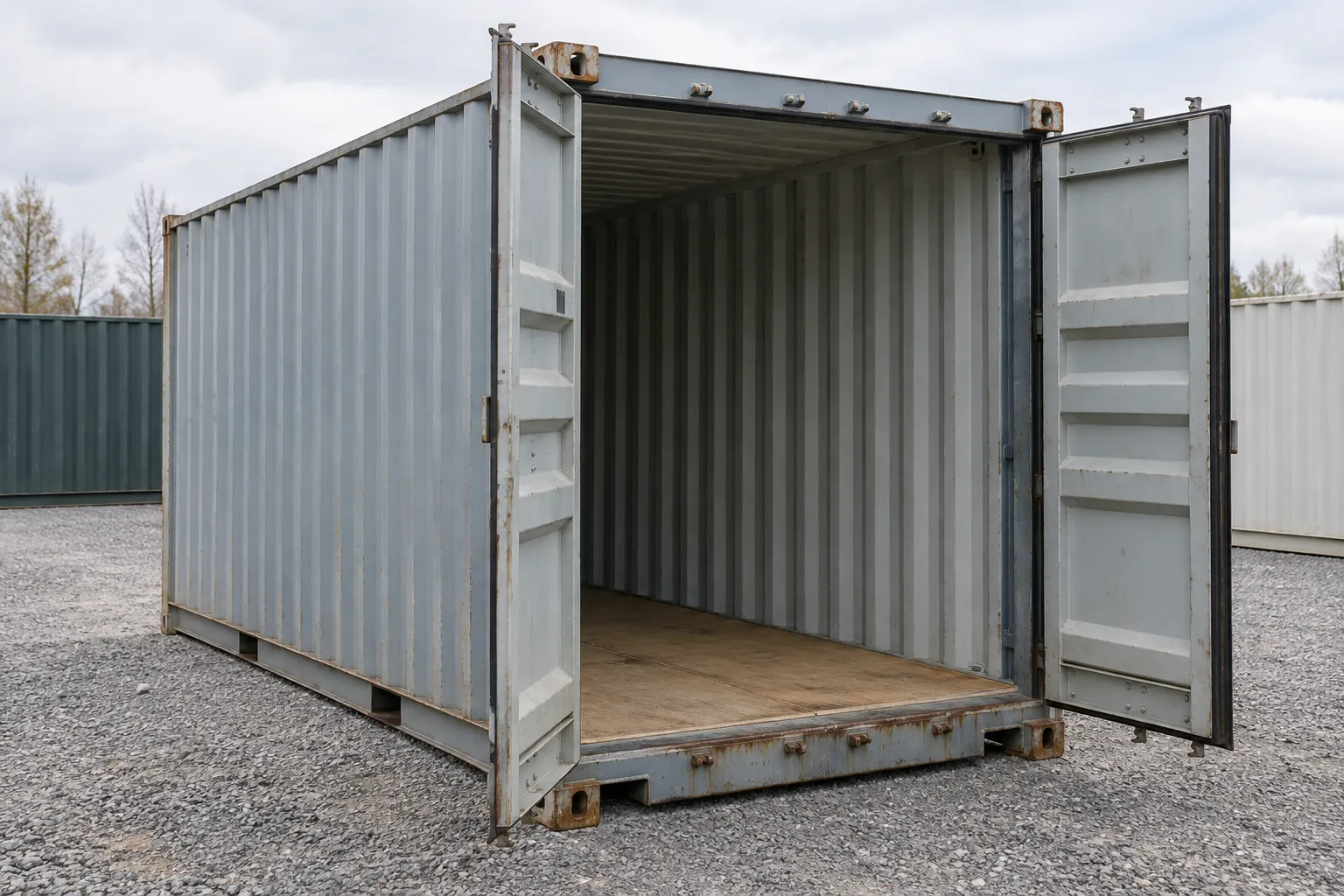
Grades, Condition & Maintenance
Shipping Container Door Gasket Replacement Kit: Match the Seal
A leaking door does not always need a new gasket. Identify the cause, document the seal profile and request an itemized parts quote before buying.
8 min readBy the Lease Lane Containers team
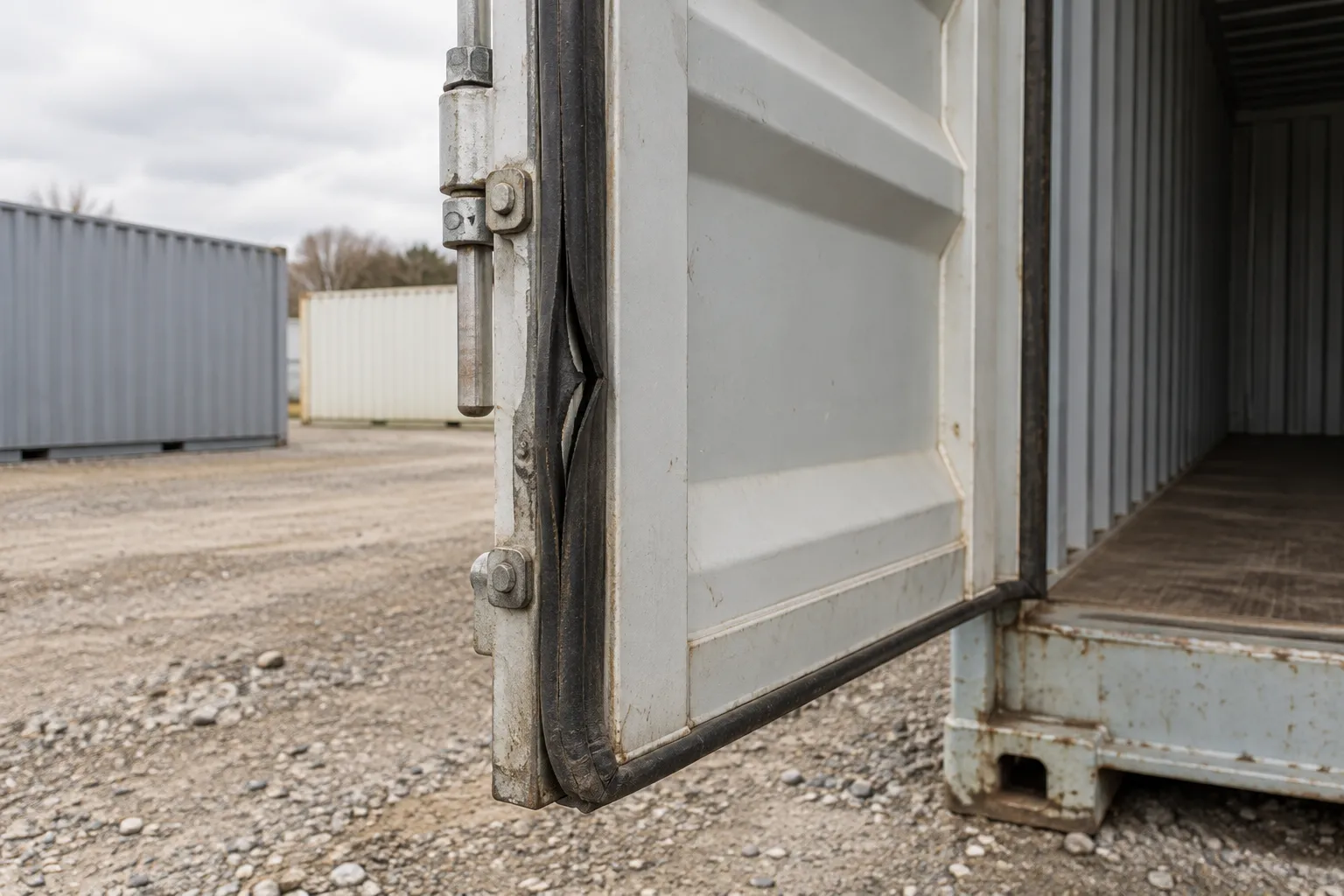
A shipping container door gasket replacement kit should match the existing seal profile, mounting method and door dimensions—not simply the container’s advertised size. First determine whether water enters through damaged rubber, poor door alignment or another opening. Then send clear photos and measurements for a compatibility check before ordering parts.
Availability note: A suitable replacement gasket is not confirmed in the supplied Lease Lane Containers catalog. Confirm seal availability and compatibility before publication or purchase; the accessories category alone does not establish that a matching kit is stocked.
Is the Leak Coming From the Gasket, Door Alignment or Somewhere Else?
A gasket works by compressing against a mating surface when the doors close. New rubber cannot compensate reliably for a bent frame, loose hinge or locking cam that fails to engage properly. TT Club’s guidance on container doors discusses seals and door components as important defenses against water ingress and operating problems.
For a shipping container door leaking water, start with the location and pattern of wetness. Water at the threshold may have traveled down from above; a puddle does not necessarily identify the entry point.
| Observation | Possible cause | What to request |
|---|---|---|
| Split, missing or hardened rubber at the wet area | Gasket deterioration | Matching seal and mounting-material quote |
| Intact rubber with uneven contact around the door | Alignment, hinge or locking-hardware problem | Door-operation assessment before parts selection |
| Loose retaining strip or rust beneath the seal | Failed attachment or damaged mounting steel | Retainer and substrate repair assessment |
| Moisture below roof seams or modified openings | Leak outside the cargo-door seal | Targeted investigation of the actual entry path |
| Widespread droplets on interior metal | Possible condensation | Moisture-source assessment rather than automatic gasket replacement |
Observe the doors from outside without forcing handles. Scraping, uneven gaps or a change in closing effort can indicate alignment problems. Uneven support beneath the container may also affect the door opening; have a qualified professional assess it rather than adjusting supports yourself.
Seasonal preparation is sensible, but weather headlines are not a diagnosis. NOAA’s El Niño winter outlook illustrates regional precipitation probabilities, not a prediction that an individual container will leak. Treat that linked outlook as historical context, not a current local forecast.
Which Photos and Measurements Identify the Correct Replacement Seal?
Prepare a small evidence package before removing anything. Photograph the doors closed, then open and safely secured. Identify left and right as viewed from outside, and label which edge appears damaged.
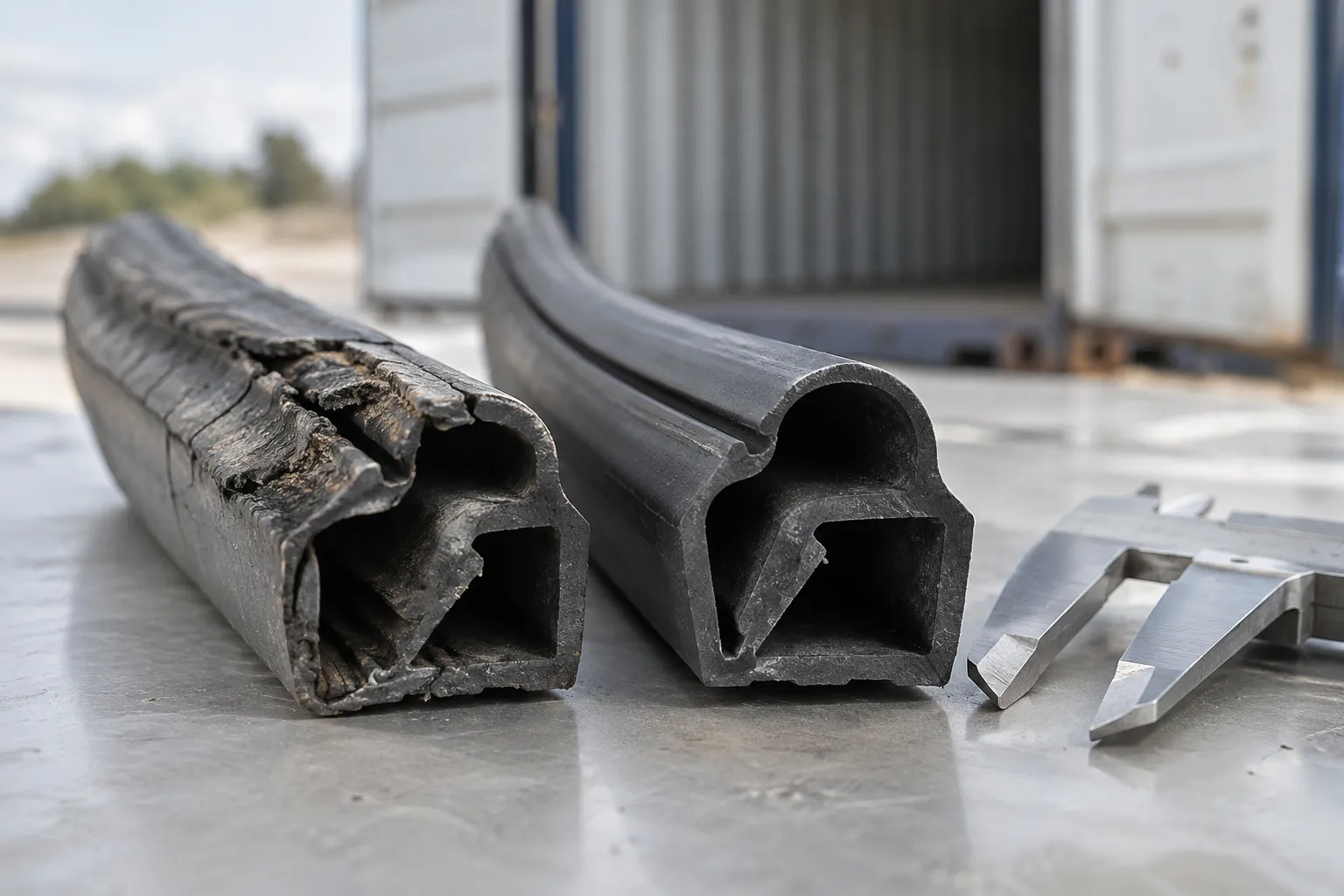
Photograph the whole assembly and the details
Include these views:
- Both closed doors, showing the surrounding frame and center overlap.
- Each open door’s complete gasket path, including top and bottom corners.
- Close-ups of damaged rubber alongside an intact section.
- The seal’s cross-sectional shape wherever it is already visible.
- Retaining strips, fastener heads and any loose or corroded attachment points.
- Hinges, locking rods, cams and keepers, particularly where operation is difficult.
- Manufacturer identification and door markings, if readable.
Do not cut out sound rubber just to obtain a sample. Ask whether photographs will suffice or whether a repairer should remove an already damaged section. A manufacturer name or identification plate is useful supporting evidence, but earlier repairs may have changed the doors or seals.
Measure the profile, not just its perimeter
Record each door leaf’s width and height, then measure the gasket’s actual mounting path. Note whether you measured outside edges, a retaining-strip centerline or another reference point. Use the same units throughout.
For the shipping container door gasket profile, record overall width, uncompressed projection where measurable, mounting-base dimensions, and the arrangement of lips or hollow sections. Include retainer width and fastener spacing where relevant. A ruler in the same plane as the detail helps a supplier interpret photographs, but does not replace written measurements.
Measure relaxed, intact rubber where possible; crushed or stretched sections can misrepresent the original profile. Let the supplier specify cutting allowances and corner construction rather than adding an arbitrary amount.
Does Container Length or Height Determine Gasket Compatibility?
Container size narrows the search; it does not establish fit. A 20ft container and a 40ft container may have similar end-door arrangements, yet different manufacturers, production runs or replacement doors can use different seals. High-cube height changes the required vertical coverage, but says nothing definitive about the cross-section.
Door configuration matters just as much. A 20ft high-cube container with double-end doors has more than one end-door assembly to document. Do not assume both ends use identical replacement parts, especially after previous repairs.
A 30ft storage container with roll-up access requires a different sealing assessment from conventional swing cargo doors. Roll-up bottom seals and guides are not interchangeable with a cargo-door perimeter gasket. Refrigerated doors and added personnel doors also need their own identification process.
For shipping container replacement door seals, have the supplier confirm:
- Which door and edge each part serves.
- Whether the center-overlap seal differs from perimeter sections.
- Whether the attachment method matches the existing assembly.
- Whether supplied corners are formed, joined or fabricated during installation.
Our container grades guide explains condition terminology, but a grade is not a replacement-part specification.
Partial Repair, Full Gasket or Complete Door Repair: What Should You Quote?
Ask for a repair scope based on the defect, not merely the smallest package available. The shipping container gasket kit vs complete seal decision usually comes down to the condition of the remaining rubber, the location of damage and whether approved joints can be made.
Partial repair may be reasonable for localized damage when surrounding rubber remains flexible, the mounting surface is sound and the seal supplier supports the joining method. A patch that adds thickness without restoring the intended profile may interfere with closing.
A full gasket for one door leaf may be preferable when that leaf has several damaged areas, hardened rubber or failing corners. Confirm whether “complete seal” means one door leaf, both leaves or only selected perimeter sections.
Complete door repair is the better quotation request when worn hinges, distorted steel, failed retainers or damaged locking components prevent even compression. Ask the repairer to separate necessary hardware work from optional improvements.
Do not approve replacement of the entire container solely because rubber has deteriorated. Conversely, repeated seal replacement is poor value if the underlying door geometry remains wrong. For context on broader condition issues, use our used-container inspection checklist; this parts guide is focused on an existing door problem.
Which Retainers, Fasteners and Installation Materials Are Included?
The phrase shipping container door gasket replacement kit does not define a standard package. One supplier may provide only rubber lengths; another may include corners, retaining strips and fasteners. Request a written bill of materials before comparing totals.
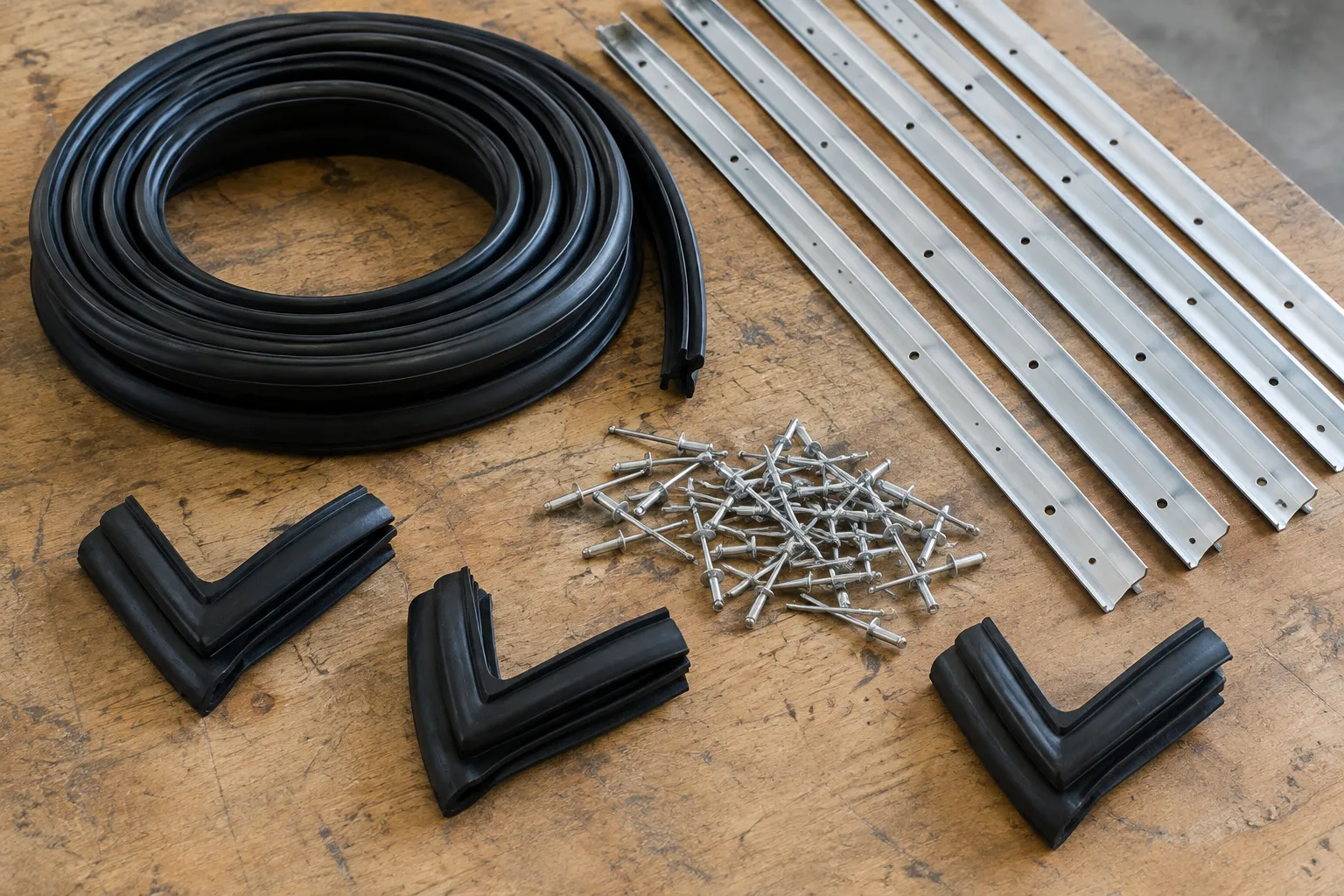
Ask the supplier to identify:
- Seal profile reference, material specification and intended exposure conditions.
- Number of door leaves covered and the length of every supplied section.
- Corner pieces, center-overlap components and any required joining materials.
- Retaining strips supplied versus existing strips approved for reuse.
- Fastener type, size, material and quantity.
- Compatible adhesive, primer or sealant, where the system requires it.
- Surface preparation, installation instructions and required tools.
Do not assume household weatherstripping, general-purpose adhesive or an extra bead of sealant is an acceptable substitute. The mounting arrangement must hold the seal in position while allowing the intended compression and door movement. Corroded mounting steel needs assessment before new fasteners are installed.
Door restraint is a separate safety requirement. A fold-away container door stay may be relevant where its fit and intended use are confirmed, but it is not a gasket component or a substitute for a repairer’s safe working procedure. Browse container accessories for listed products while requesting separate confirmation of seal availability.
How to Compare Parts, Labor and Downtime Costs
A useful shipping container door seal repair cost comparison includes more than the rubber. Request itemized totals for diagnosis, materials, removal, mounting-surface preparation, hardware correction, installation and final checks.
Also clarify whether the quote covers one leaf or the whole opening. Two estimates can appear very different because one assumes reusable retainers while the other includes replacement strips and corrosion repair.
Ask these questions before accepting a quote:
- Is compatibility confirmed from measurements, a sample or an on-site assessment?
- What hidden damage could change the price, and who approves additional work?
- Are travel, disposal and any required lifting equipment included?
- Must stored goods be moved, and who handles that work?
- What operational interruption should you plan for, including specified adhesive curing?
- What installation checks and written completion records are included?
There is no responsible universal repair total without the profile, quantity and labor scope. Obtain a written parts quote rather than estimating from an unrelated container or accessory price.
Replacement becomes a comparison only when repairs extend beyond the seal. For a genuinely comparable baseline, a 20ft used shipping container with cargo doors is $2,395, while a 20ft new one-trip container is $3,250. These are whole-container alternatives, not gasket prices or recommendations to replace a repairable unit.
Include moving contents and preparing the replacement location in that comparison. Review our container buying guide and shipping policy if replacement remains a practical option.
What Should a Qualified Repairer Check After Installation?
Installation is not complete when the last fastener is tightened. The repairer should verify that the gasket stays seated and makes consistent contact without excessive closing force.
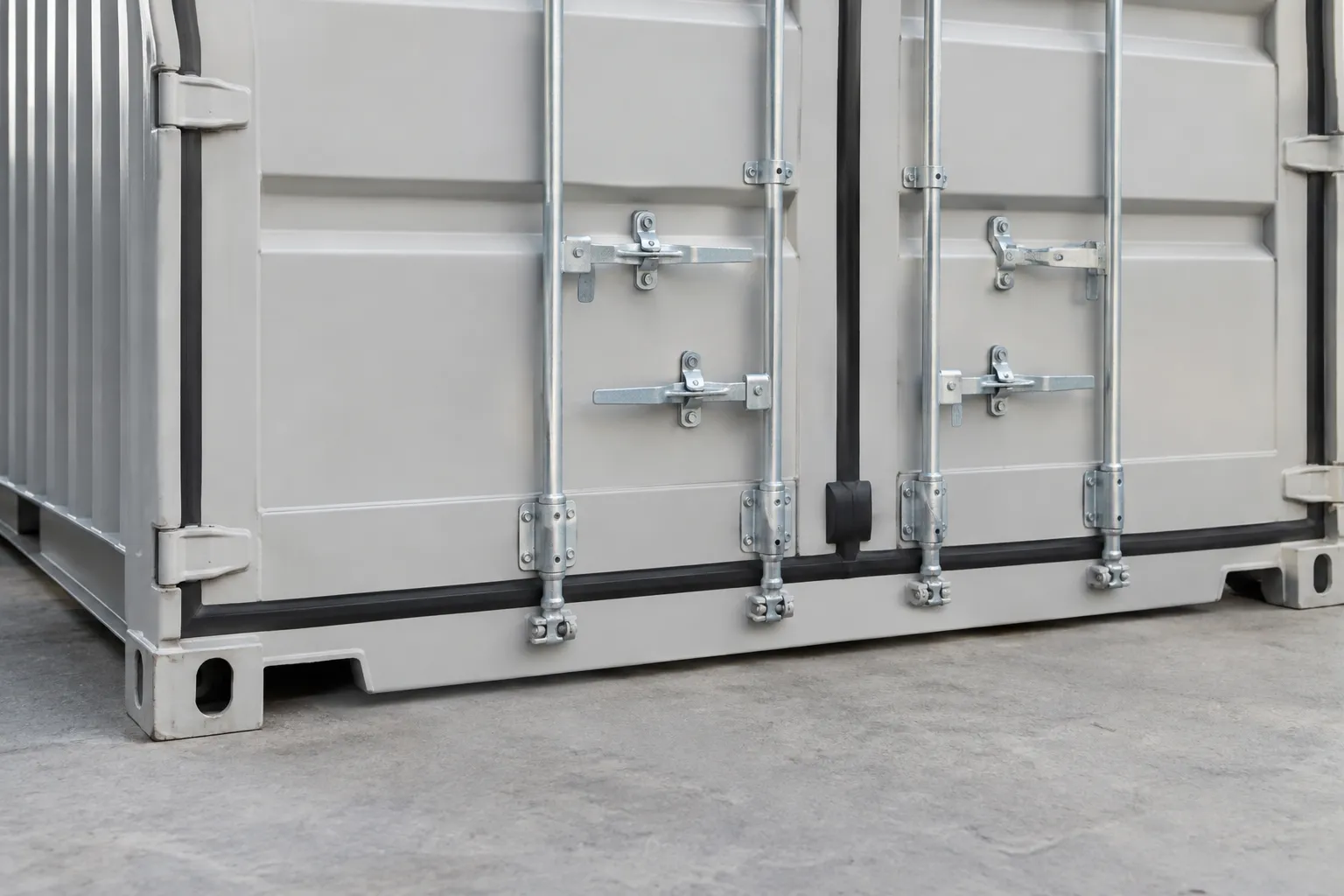
A useful handover checklist includes:
- Sound mounting surfaces and securely attached retainers.
- Corners and joints made according to the seal system’s instructions.
- No twisted, stretched, trapped or rolled sealing lips.
- Appropriate engagement of locking cams and keepers.
- Smooth hinge movement and correct door-closing sequence.
- No scraping or obvious unevenness suggesting unresolved alignment problems.
- A documented water-entry check appropriate to the repair scope.
A controlled water check can help locate remaining entry paths, but blasting seams with a pressure washer is not a substitute for an agreed test method. Follow specified curing requirements before testing bonded joints. Protect contents and electrical equipment during any water test.
Never allow someone to be locked inside for an inspection. Use a qualified repairer’s safe procedure with controlled access and communication. Heavy doors also need restraint against unexpected movement.
Have the repairer photograph completed corners, retainers and any corrected hardware. Retain the profile reference and parts list so a future repair does not restart the identification process. If locks are also being changed, our container lock-box and padlock fit guide addresses that separate compatibility question.
Request a Compatible Seal Quote—or Assess Whether Replacement Makes More Sense
Start with an accessory availability inquiry, not a replacement-container order. Send the door configuration, symptom description, photographs, measurements, required quantity and location. Request written confirmation of the matching profile, included materials and any recommended hardware assessment before ordering a shipping container door gasket replacement kit.
Lease Lane Containers’ supplied product list does not confirm a matching seal, so do not treat this guide as an in-stock offer. If extensive frame or door damage makes repair uneconomical, compare used shipping containers with new one-trip containers. Otherwise, prioritize a compatible-parts quote and repair the cause—not just the visible gap.
Frequently asked questions
No. Containers with similar overall dimensions can use different gasket profiles, retainers, corners and center-overlap arrangements. Manufacturer details help, but previous door repairs may have changed the parts. Send photographs and measurements of the actual assembly, then ask the supplier to confirm the profile and mounting method in writing before ordering.
Sometimes, if damage is localized, the surrounding rubber remains serviceable and the supplier supports an appropriate joining method. Hardened rubber, multiple tears or failed corners may justify replacing the full seal on that door leaf. Have the mounting steel and door alignment checked so the new section is not compensating for another problem.
The total depends on the seal profile, length, number of doors, retainer condition and labor required. Request separate amounts for parts, removal, corrosion repair, hardware adjustment, installation and final testing. A rubber-only quote is not directly comparable with a complete door-repair quote, and no matching gasket price is confirmed in the supplied catalog.
The supplied product catalog does not confirm a replacement door gasket kit or compatible seal inventory. Ask for availability confirmation using photographs, profile measurements and door details before planning a purchase. The accessories category contains other products, but its existence does not establish that a suitable replacement gasket is available.
Possible causes include incorrect seal profile, poor corner joints, loose retainers, uneven compression or unresolved hinge and locking-hardware problems. Water may also enter through a roof seam or another opening and travel toward the door. Have a qualified repairer trace the entry path and check operation rather than simply adding more sealant.
Sources & further reading
- TT Club — TT Talk: Container doors—maintaining the first line of defence
- NOAA — El Nino looms large over U.S. Winter Outlook
- Wisconsin Department of Natural Resources — Season dates and application deadlines
- New York State Adirondack Park Agency — Hunting and Fishing Cabins
- OSHA — US Department of Labor issues letter of interpretation on recording workplace injuries related to lithium-ion batteries
- NFPA 855 — Standard for the Installation of Stationary Energy Storage Systems
Talk to our Raleigh team
Ready to find the right container?
Get a written quote, check availability or ask about delivery to your site. Lease Lane Containers LLC answers every enquiry personally.
- Call us+1 (984) 219-9882
- Emailsales@leaselanecontainers.llc
- Visit5832 Lease Ln, Ste B, Raleigh, NC 27617
- Business hoursMon - Fri: 9:00 AM - 5:00 PM · Sat - Sun: Closed (ET)